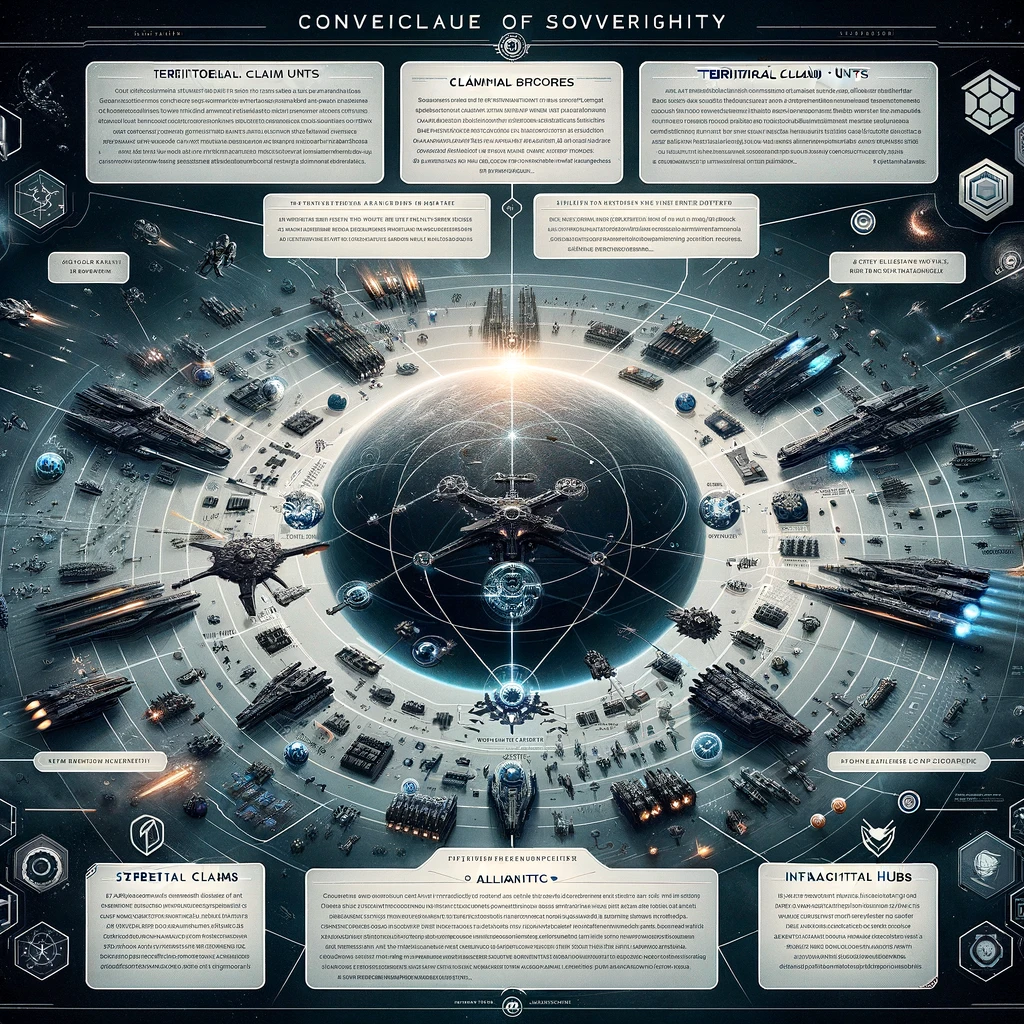
Sovereignty in EVE Online, often referred to as «sov,» is the mechanism by which player alliances claim and control space in null-sec (null security) regions, which are outside the jurisdiction of EVE’s four major empires. Sovereignty is critical for large-scale alliance warfare, resource exploitation, and provides strategic depth to the game’s universe. Here’s a beginner’s guide to understanding and engaging with sovereignty in EVE Online.
Understanding Sovereignty
- What is Sovereignty? It’s the ability of player alliances to claim ownership of null-sec systems, allowing them access to unique resources and the capability to install upgrades and infrastructure for defense, industry, and more.
- Why is it Important? Sovereignty allows alliances to control territories, mine valuable moons, spawn better NPC enemies (ratting) for income, and create staging areas for military operations. It’s also a status symbol within the EVE community.
Claiming Sovereignty
- Territorial Claim Units (TCUs): To claim a system, an alliance must deploy and online a TCU in that system. This act declares the system as «owned» by the alliance.
- Infrastructure Hubs (iHubs): After planting a TCU, alliances usually deploy an iHub, which enables system upgrades like better ore, more anomalies, and improved defenses.
- Keepstars and Fortizars: While not required for sovereignty, large citadels like Keepstars and Fortizars often serve as major hubs and defensive strongpoints within sovereign space.
The Mechanics of Sov Warfare
- Entosis Link: A module used to interact with sov structures (TCUs, iHubs, and other strategic assets) to either capture or defend sovereignty. The module requires the ship to remain stationary and in range, making the ship vulnerable to attack.
- Command Nodes: During a sov contest, command nodes spawn across the constellation. The attacking and defending forces must capture these nodes to either take over or defend the system.
- Vulnerability Windows: Sov structures are only vulnerable during specific time frames set by the owning alliance, usually aligned with their peak activity times to defend them.
Living in Sovereign Space
- Benefits: Sovereign space offers numerous benefits, including lucrative ratting sites, exclusive moon mining opportunities, and the ability to install powerful system upgrades and jump bridges.
- Responsibilities: Holding sov requires constant vigilance, as other player groups may attempt to capture your space. Alliances need to defend their space, maintain infrastructure, and manage diplomatic relations with neighbors.
Engaging with Sovereignty
- Joining an Alliance: For most players, engaging with sovereignty starts by joining an existing player alliance that holds or is contesting sov. Participating in alliance fleets and operations is a great way to learn the ropes.
- Sov Warfare: Sov warfare involves large-scale fleet battles, strategic planning, and often, espionage. It’s a complex, challenging, and rewarding aspect of EVE’s endgame.
- Diplomacy and Politics: Sovereignty is deeply tied to the game’s politics and diplomacy. Alliances often form coalitions, negotiate standings, and engage in both open warfare and behind-the-scenes negotiations.
Tips for New Players
- Start Small: Joining a large, established alliance might be overwhelming at first. Consider starting in a smaller, more new-player-focused group that is part of a larger coalition.
- Educate Yourself: Sov warfare and living in null-sec come with steep learning curves. Utilize alliance resources, ask questions, and participate in fleets to gain experience.
- Be Active: Sov space offers many opportunities for active players, from PvP and PvE to mining and industry. Find what interests you and get involved.
Sovereignty in EVE Online represents the game at its most complex and community-driven. It’s where the biggest stories in New Eden unfold, from massive battles to intricate diplomacy. For those who aspire to make their mark on the universe of EVE, engaging with sovereignty is a path to glory, riches, and perhaps, infamy.
Добавить комментарий