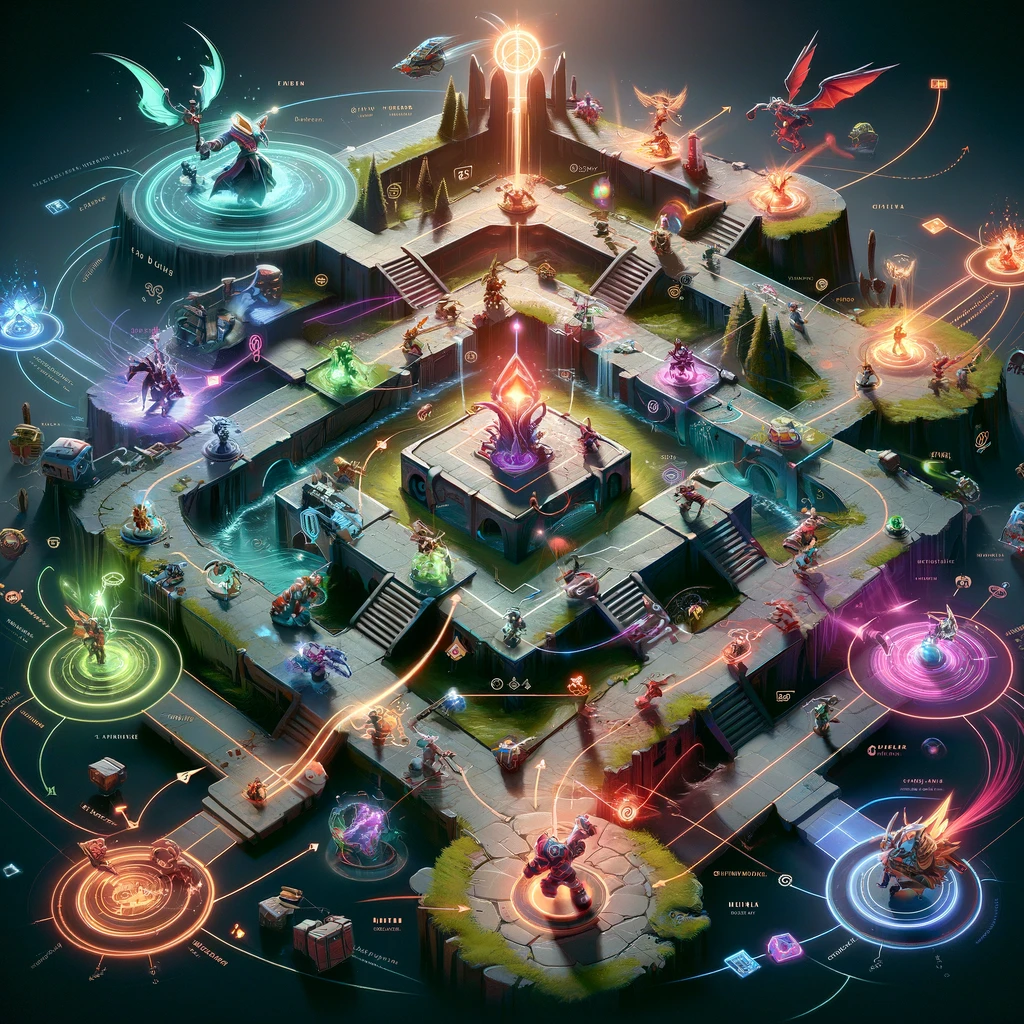
Effective strategies in Dota 2 can significantly enhance your gameplay, leading to more consistent victories. As of 2024, the meta has evolved, but the core principles of strategic play remain pivotal. Here are several strategies that have proven effective in Dota 2, encompassing early game tactics, mid-game maneuvers, and late-game decisions.
1. Laning and Early Game Strategy
- Dual Lanes: Most teams opt for dual lanes (2 heroes in both the safe and offlane) to ensure a balanced distribution of experience and to pressure the enemy carry. It’s vital to adapt your laning strategy based on the enemy’s setup to secure an early advantage.
- Harassment and Lane Control: Use your abilities and auto-attacks to harass enemy heroes, making it difficult for them to last-hit. Controlling lane equilibrium near your tower can make it safer to farm while exposing the enemy to ganks.
- Rune Control: Securing power runes every 2 minutes can give your mid-laner a significant advantage. Supports should prioritize securing these runes or denying them to the enemy.
2. Mid-Game and Rotation Strategies
- Smoke Ganks: Utilize Smoke of Deceit with your team to execute surprise ganks on key enemy heroes. Effective use of smoke can lead to picking off an enemy hero and subsequently securing objectives.
- Objective Gaming: Focus on taking down enemy towers after successful ganks to expand your map control. This opens up the enemy jungle for aggressive warding and limits their safe farming areas.
- Stacking Neutral Camps: Supports can significantly boost their team’s economy by stacking neutral camps, which the carry can later clear for a surge in gold and experience.
3. Late-Game and High Ground Siege
- Vision Control: Maintaining vision around key areas, especially Roshan, becomes crucial in the late game. Having superior vision can lead to advantageous fights and securing Roshan.
- Sieging High Ground: High ground assaults should be approached with caution. Utilize siege creeps and any Aegis advantage from Roshan. Chip away at the enemy’s base defenses with ranged attacks and spells, avoiding unnecessary risks.
- Split Pushing: When direct confrontations are unfavorable, applying pressure through split pushing can force the enemy to split their defenses, creating opportunities to pick them off or take objectives elsewhere.
4. Team Composition and Drafting
- Balanced Draft: Ensure your team has a balanced draft with a good mix of carry, support, initiation, and team fight potential. Counter-picking based on the enemy’s selection can also give you a strategic edge.
- Flexible Itemization: Encourage your team to adapt their item builds based on the game’s state. Items like Black King Bar, Lotus Orb, or Linken’s Sphere can be crucial in countering the enemy’s lineup.
5. Adaptation and Communication
- Adapt Strategies: Be ready to adapt your strategy based on how the game unfolds. Flexibility in decision-making can often catch the enemy off-guard and turn the tide in your favor.
- Effective Communication: Use voice or chat to communicate with your team. Sharing information on enemy movements, coordinating ganks, and planning team fights collectively can significantly improve your chances of winning.
In Dota 2, a game known for its depth and complexity, successful strategies often result from a combination of individual skill, team coordination, and adaptability. Staying informed about the current meta, understanding the strengths and weaknesses of your team’s draft compared to the enemy’s, and making decisions based on this knowledge are key to executing effective strategies in Dota 2.
Добавить комментарий