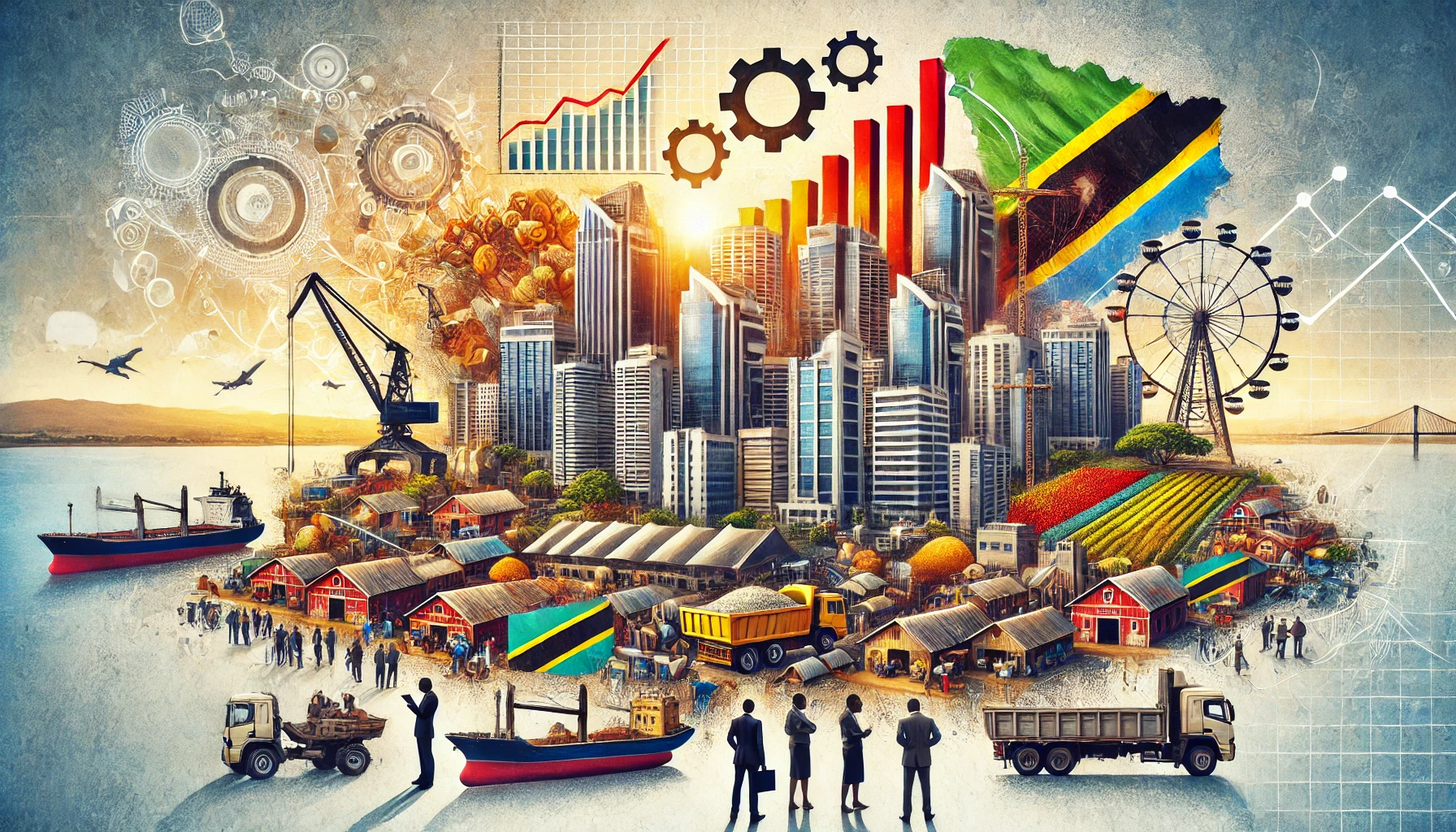
Economic Growth in Tanzania
Tanzania has emerged as one of the fastest-growing economies in Africa, driven by strong sectors such as agriculture, mining, tourism, and infrastructure development. With a stable political environment and ambitious economic reforms, the country continues to make significant progress in poverty reduction and industrialization.
Key Drivers of Economic Growth
1. Agriculture – The Backbone of the Economy
Agriculture contributes approximately 25% of Tanzania’s GDP and employs around 65% of the population. The country is a major producer of cash crops like coffee, tea, cashew nuts, and tobacco, as well as staple foods such as maize and rice. Government initiatives to improve irrigation, mechanization, and access to markets are boosting agricultural productivity.
2. Mining and Natural Resources
Tanzania is rich in minerals, gemstones, and natural gas, making mining a vital contributor to economic growth. The country is one of the world’s largest producers of gold and tanzanite. Recent investments in mining infrastructure and regulations favoring local participation have further strengthened this sector.
3. Tourism – A Major Foreign Exchange Earner
Tourism is a key pillar of Tanzania’s economy, contributing around 17% of GDP. Attractions like Serengeti National Park, Mount Kilimanjaro, and Zanzibar’s beaches draw millions of visitors annually. The government continues to invest in conservation, marketing, and infrastructure to sustain growth in this sector.
4. Infrastructure and Industrialization
Tanzania’s rapid infrastructure development has played a crucial role in economic expansion. Major projects like the Standard Gauge Railway (SGR), expansion of Dar es Salaam’s port, and new highways improve connectivity and facilitate trade. Additionally, the government’s industrialization drive aims to boost manufacturing and reduce dependence on imports.
5. Energy and Renewable Resources
Tanzania is investing heavily in energy production, particularly in hydropower, natural gas, and solar energy. Projects like the Julius Nyerere Hydropower Plant are expected to increase electricity generation, supporting industrial growth and rural electrification.
Challenges to Economic Growth
Despite Tanzania’s impressive economic progress, challenges remain, including:
- Unemployment and underemployment, particularly among youth.
- Dependence on agriculture, which is vulnerable to climate change.
- Bureaucratic barriers that affect investment and business growth.
- Infrastructure gaps, especially in rural areas.
Future Outlook
With continued investment in infrastructure, education, and private sector growth, Tanzania is well-positioned to sustain its economic momentum. The government’s Vision 2025 plan aims to transform Tanzania into a middle-income, semi-industrialized nation, focusing on job creation, innovation, and sustainable development.
For more tips on improving your photography and editing skills, check out helpful guides to take your selfies to the next level.
Добавить комментарий