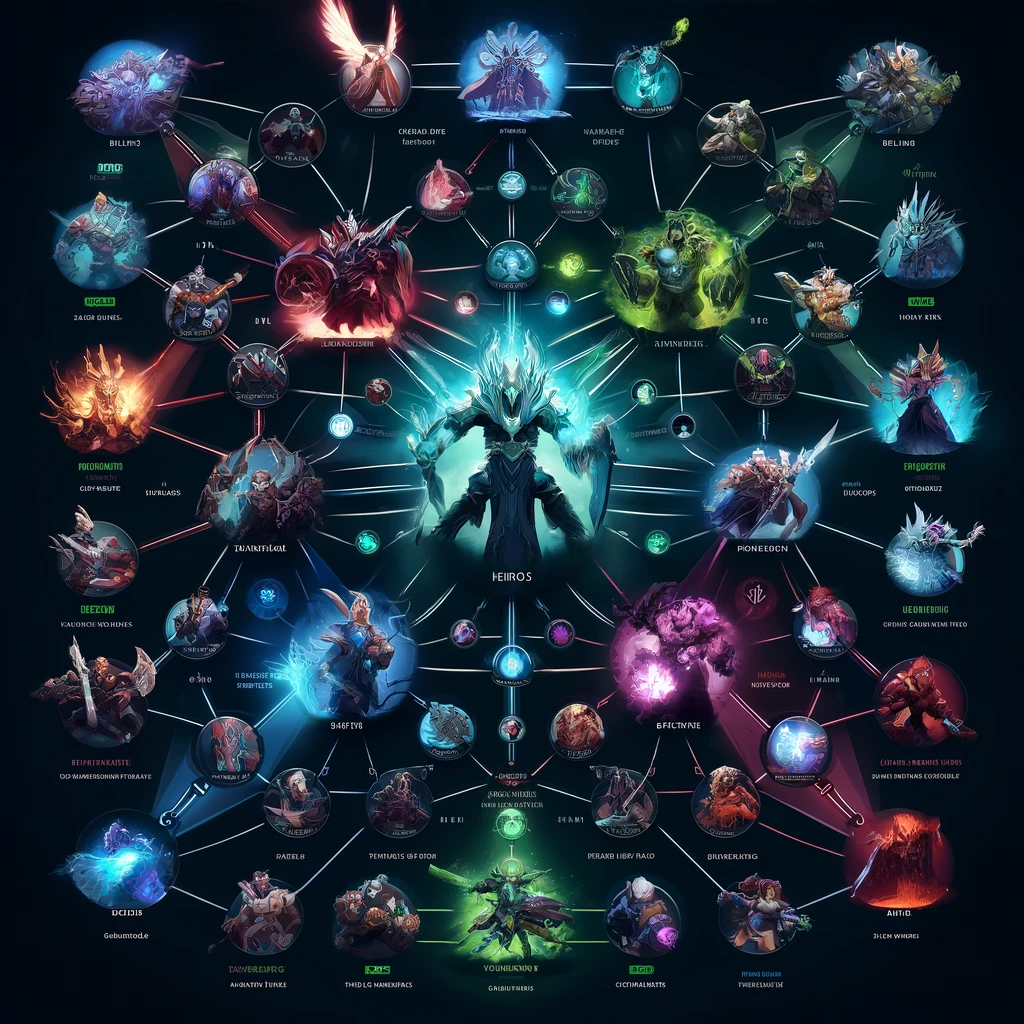
Understanding hero synergies in Dota 2 is vital for drafting effective team compositions and executing strategies that can dominate the opposition. Synergy occurs when two or more heroes combine their abilities in a way that enhances their effectiveness beyond what they could achieve individually. Recognizing and utilizing these synergies can lead to compelling gameplay advantages. Here’s a deeper look into how to understand and leverage hero synergies in Dota 2:
1. Complementary Abilities:
The most straightforward type of synergy involves heroes whose abilities directly complement each other, often resulting in powerful combinations or combos.
- Initiator + AoE Damage: Heroes who can group enemies together (e.g., Magnus with Reverse Polarity) synergize well with heroes possessing strong area damage (e.g., Invoker with Chaos Meteor).
- Save and Sustain: Heroes that can protect or save allies (e.g., Oracle with False Promise) work well with front-line initiators or carries that dive deep into fights (e.g., Huskar).
2. Attribute Amplification:
Some heroes have abilities that amplify certain attributes or strengths of their allies, making the entire team more formidable.
- Aura Stacking: Heroes like Vengeful Spirit (Vengeance Aura) and Beastmaster (Inner Beast) can stack auras to enhance the team’s physical damage output significantly.
- Movement and Attack Speed: Abilities or items that increase speed (e.g., Drum of Endurance or Io’s Tether) are highly synergistic with heroes that benefit from rapid positioning or attack speed.
3. Chain Stunning and Control:
A team with multiple sources of stuns or crowd control can chain these abilities to lock down key enemy heroes, preventing them from fighting back or escaping.
- Sequential Stuns: Heroes with reliable stuns (e.g., Lion with Earth Spike) can set up kills for allies with delayed stun abilities (e.g., Leshrac with Split Earth).
4. Pushing and Siege Capability:
Some heroes excel at pushing lanes and taking down towers. Combining these with heroes that offer protection or enhancement makes taking objectives easier.
- Healers and Pushers: Pairing heroes with healing abilities (e.g., Dazzle with Shadow Wave) with strong pushers (e.g., Shadow Shaman with Mass Serpent Ward) can sustain a push against enemy defenses.
5. Global Presence and Mobility:
Heroes that can quickly move across the map or affect distant areas synergize well, offering the ability to support or capitalize on each other’s actions from afar.
- Global Abilities: Heroes like Nature’s Prophet (Teleportation) and Spectre (Haunt) can instantly join fights, creating outnumbered situations in favor of their team.
6. Buffing and Empowering:
Heroes that can buff or empower their allies to enhance their damage output, survivability, or effectiveness in fights can create formidable combos.
- Damage Buffs: Heroes that offer damage-increasing buffs (e.g., Ogre Magi with Bloodlust) synergize well with hard-hitting carries (e.g., Phantom Assassin).
7. Counter-Synergies and Drafting:
While understanding synergies within your team is important, it’s also crucial to consider potential counter-synergies or weaknesses that the enemy team could exploit. Drafting should balance between establishing your own synergies and disrupting or countering the enemy’s strategies.
Recognizing and leveraging hero synergies in Dota 2 requires a deep understanding of hero roles, abilities, and how they interact with each other. Effective synergy can significantly enhance a team’s cohesion, strategy execution, and overall chances of victory. Experimenting with different hero combinations and strategies is key to uncovering powerful synergies that can surprise and overpower your opponents.
Добавить комментарий