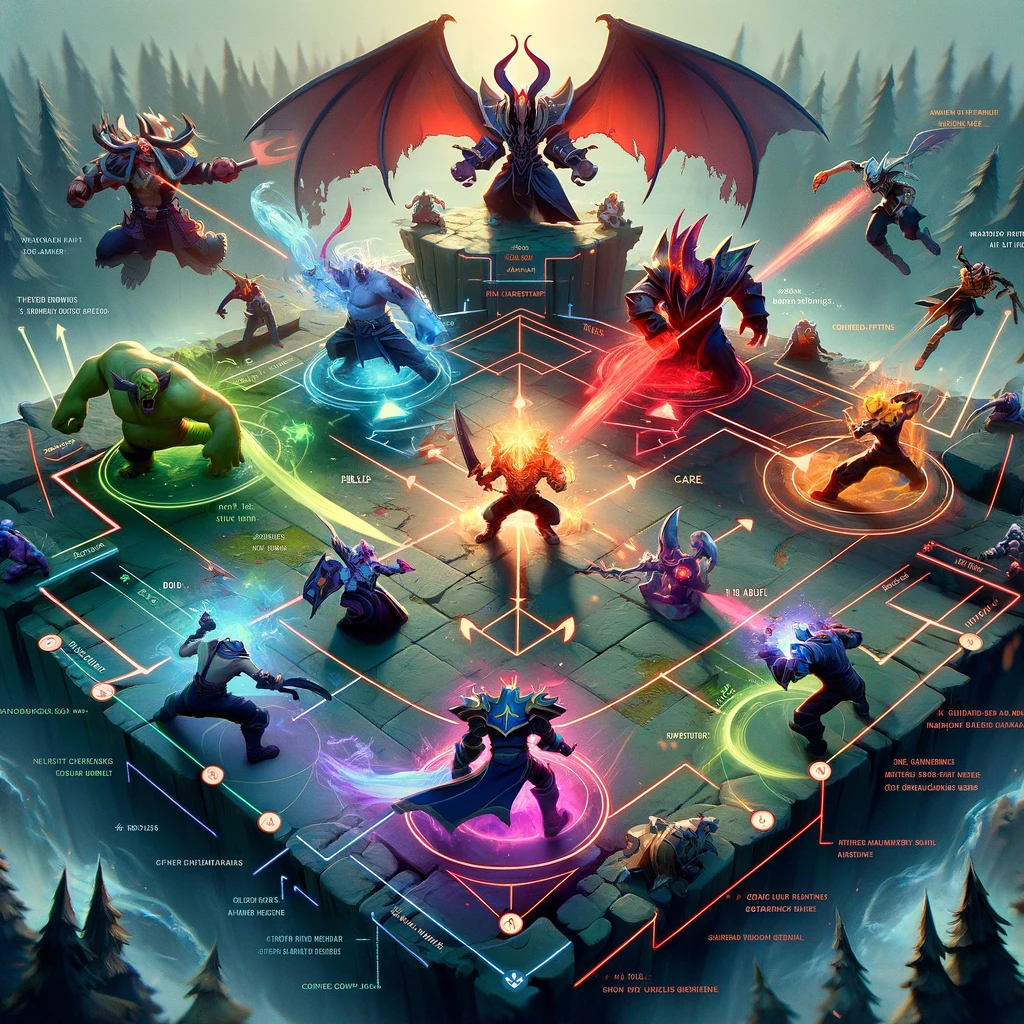
Positioning in Dota 2 team fights is crucial and often determines the outcome of the engagement before the first spell is even cast. Proper positioning depends on your role, the heroes involved, their power spikes, and the current state of the game. Here’s a guide to understanding and mastering team fight positioning for various roles in Dota 2.
Carries
- Frontline Carries: Heroes like Sven or Wraith King, who are tanky and rely on physical damage, should be at the forefront, ready to dish out damage but also absorb enemy spells. Positioning for these heroes involves staying close enough to initiate but being wary of enemy crowd control.
- Agility or Ranged Carries: Heroes such as Drow Ranger or Sniper need to maintain a safe distance, utilizing their range to deal damage while staying out of reach. Positioning behind frontline tanks or utilizing terrain for protection is key.
Supports
- Hard Supports: Heroes like Crystal Maiden or Witch Doctor, with crucial team fight ultimates, should position themselves where they can safely cast their spells without immediate interruption. Using items like Glimmer Cape or positioning near terrain that offers protection can be beneficial.
- Utility Supports: Heroes that offer buffs, healing, or have less impactful ultimates in terms of damage (such as Omniknight or Oracle) should prioritize staying alive to continuously aid their team, positioning themselves in the backlines or amongst their cores to offer support without being targeted first.
Initiators
- Blink Initiators: Heroes like Tidehunter or Axe, who initiate fights with Blink Dagger, should look for opportunities to catch as many opponents as possible with their disabling abilities. Positioning out of enemy vision, using Smoke of Deceit or waiting on high ground, can facilitate a successful initiation.
- Non-Blink Initiators: Heroes that initiate without Blink often rely on speed (Centaur Warrunner with Stampede) or durability (Underlord with Atrophy Aura). Positioning for these heroes involves being at the edges of the frontline, ready to engage swiftly on priority targets.
Disablers and Counter-Initiators
- Instant Disables: Heroes with quick disables (Lion with Hex, Earthshaker with Fissure) should position themselves where they can react to enemy movements, ideally hiding in fog or behind trees to surprise enemies.
- Counter-Initiators: Heroes best suited to respond to enemy initiation (Silencer with Global Silence, Enigma with Black Hole) need to stay back or out of sight, entering the fight after major enemy spells are used.
General Team Fight Positioning Tips
- High Ground Advantage: Always seek the high ground in fights. It offers vision advantages and forces enemies to fight with a miss chance if they don’t have vision.
- Utilize Vision: Fighting where you have vision, especially at night, can significantly impact your ability to pick the right targets and dodge enemy spells.
- Awareness of AoE Spells: Be wary of clumping together against heroes with powerful AoE control or damage spells (Magnus, Enigma). Spread out to minimize the impact of such abilities.
- Adaptability: Your ideal positioning may change as the fight unfolds. Be ready to move in to capitalize on weakened enemies or retreat if the tide turns against you.
Mastering positioning in Dota 2 team fights is a nuanced skill that evolves with experience, game sense, and adaptability. Recognizing the strengths and limitations of your hero in relation to your team’s and the enemies’ compositions is essential for making impactful decisions in the heat of battle.
Добавить комментарий