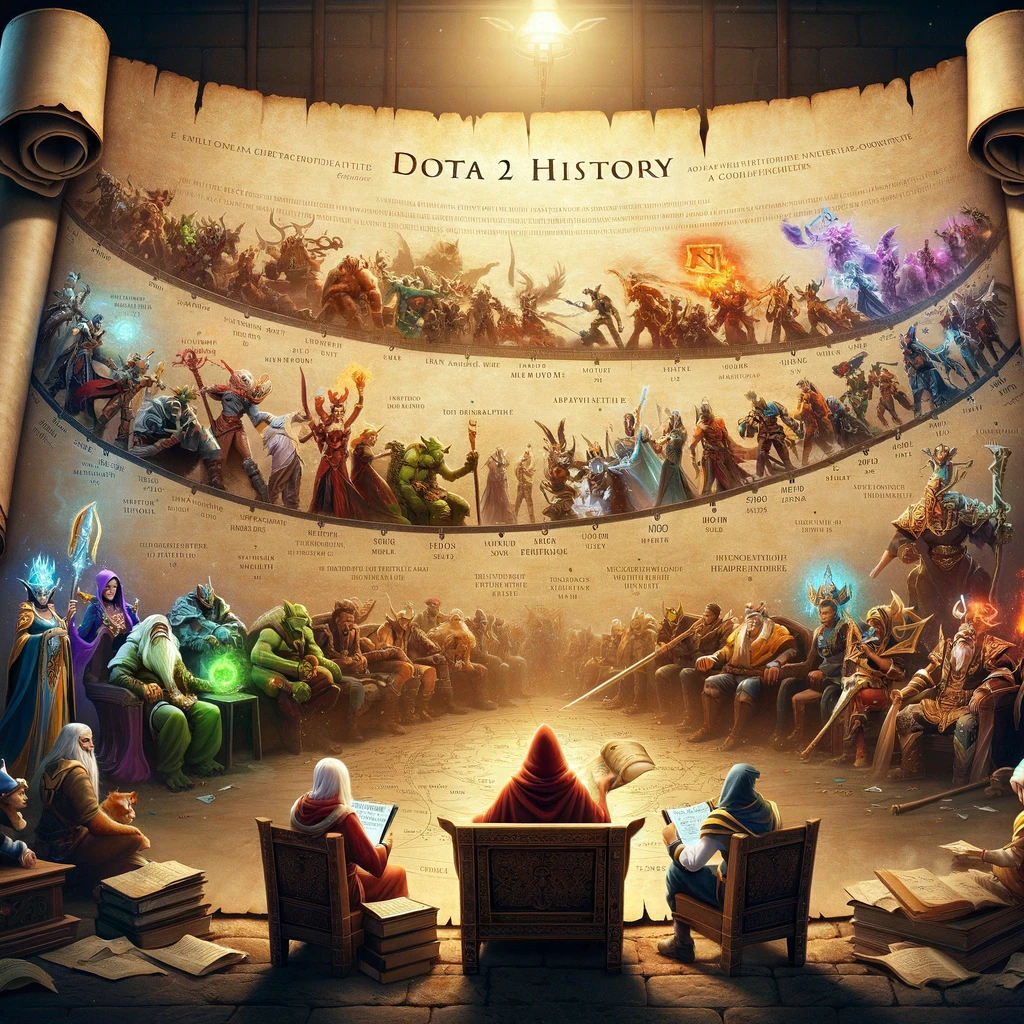
Dota 2’s history and origins trace back to the early 2000s, rooted in a community-developed mod for Blizzard Entertainment’s «Warcraft III: Reign of Chaos» and its expansion, «The Frozen Throne.» The mod, known as «Defense of the Ancients» (DotA), became a standout title in the burgeoning genre of multiplayer online battle arena (MOBA) games. Here’s a brief overview of how Dota 2 evolved from a community project to one of the most prominent esports titles in the world.
The Original DotA Mod
- Creation: The original DotA mod was created by a mapmaker known as Eul after the release of «Warcraft III» in 2002. The game combined elements of strategy, role-playing, and tower defense into a single, team-based experience.
- Development: DotA’s development was taken over by various modders over time. The most significant version, DotA Allstars, was developed by Steve «Guinsoo» Feak, and later by IceFrog, who introduced substantial updates and balance changes, solidifying its popularity.
Transition to Dota 2
- Announcement: Valve Corporation, seeing the potential in DotA’s expansive community and competitive depth, hired IceFrog in 2009 to lead the development of a standalone sequel. Dota 2 was officially announced in 2010.
- Development and Beta: Dota 2 was developed using Valve’s Source engine, aiming to replicate the gameplay of the original DotA while providing improvements in graphics, user interface, and online functionality. It entered a closed beta phase in 2011, with an open beta in 2013.
- Official Release: The game was officially released on July 9, 2013, on multiple platforms including Windows, Mac OS X, and Linux, transitioning to Valve’s new Source 2 engine in 2015 to further improve performance and graphics.
Esports and The International
- The International 2011: Valve quickly positioned Dota 2 as a major esports title, inaugurating The International (TI) in 2011, a tournament that has since become the most prestigious event in the Dota 2 calendar and one of the biggest in esports, noted for its massive crowd-funded prize pool.
- Growth of the Scene: The success of TI and Valve’s support for the competitive scene helped foster a robust ecosystem of tournaments, leagues, and events worldwide, with numerous organizations and teams emerging across regions.
Community and Continuous Development
- Updates and Balance Changes: IceFrog continued to play a key role in Dota 2’s development, regularly updating the game with new heroes, balance changes, and features, keeping the gameplay fresh and engaging.
- Community Contributions: Valve has embraced community contributions through the Steam Workshop, where artists and creators can submit cosmetic items and skins for inclusion in the game, with successful submissions earning a share of the revenue.
- Battle Pass and Events: Dota 2 has introduced various in-game events and the Battle Pass system, which includes seasonal content, exclusive cosmetics, and interactive features, further engaging the community and partially funding The International’s prize pool.
Dota 2 stands as a testament to the enduring appeal of its gameplay and the dedication of both its developers and community. From its origins as a simple mod to its current status as a cornerstone of the esports world, Dota 2’s journey is a remarkable example of how community-driven passion projects can evolve into major gaming phenomena.
Добавить комментарий