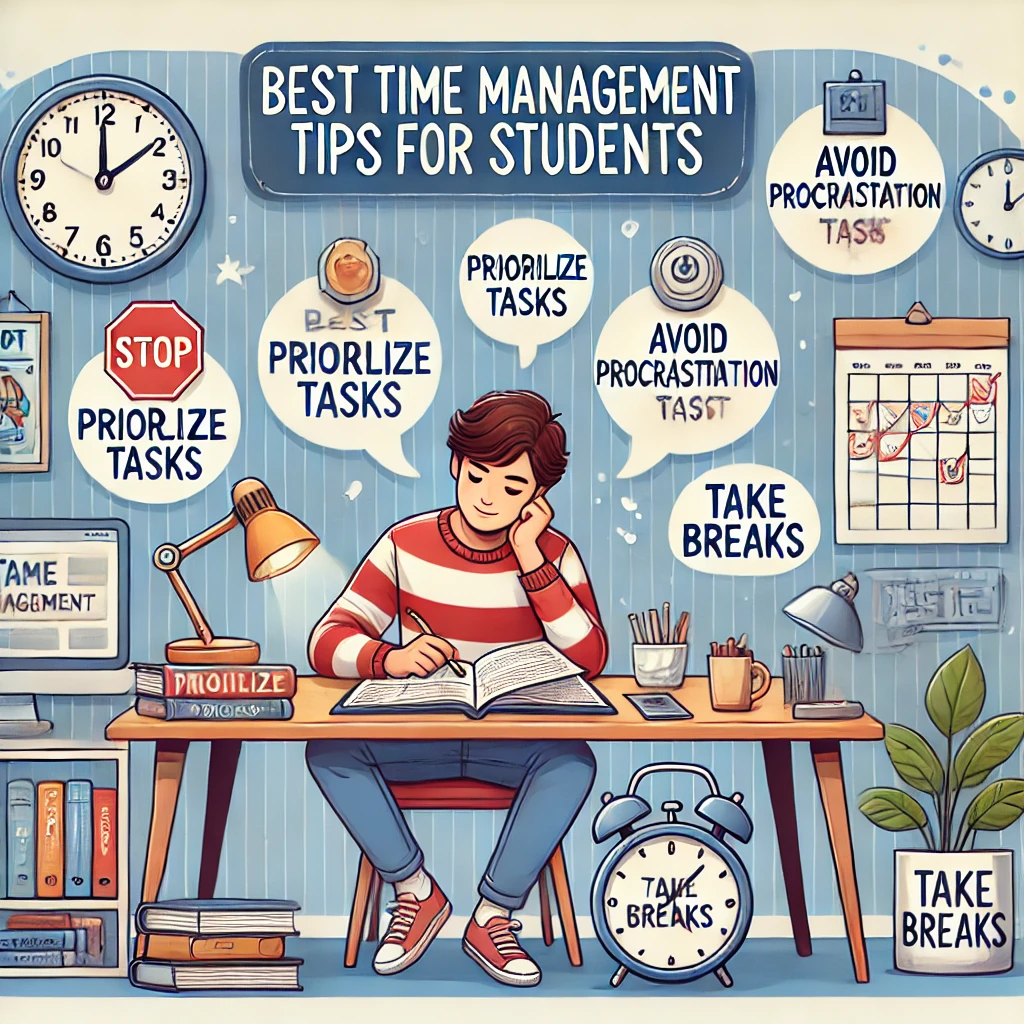
Best Time Management
Effective time management is essential for students to balance school, extracurricular activities, and personal life. With the right strategies, you can make the most of your time, reduce stress, and achieve your goals. Here are practical time management tips to help you stay organized and productive.
1. Use a Planner or Digital Calendar
Why It Helps:
Keeping track of deadlines and events ensures nothing gets forgotten.
How to Do It:
- Write down homework, test dates, and project deadlines in your planner.
- Use apps like Google Calendar or Notion to set reminders for important tasks.
- Schedule time blocks for study sessions, breaks, and activities.
Tip: Review your planner at the start and end of each day to stay on track.
2. Prioritize Tasks
Why It Helps:
Focusing on what’s most important prevents last-minute stress.
How to Do It:
- Use the Eisenhower Matrix: Categorize tasks as urgent, important, or less critical.
- Tackle high-priority assignments first before moving on to smaller tasks.
- Create a daily to-do list and check off completed items for motivation.
Tip: Limit yourself to 3–5 top priorities per day to avoid overwhelm.
3. Break Tasks into Smaller Steps
Why It Helps:
Large tasks feel more manageable when broken into smaller, actionable steps.
How to Do It:
- Instead of “Write an essay,” break it down into brainstorming, outlining, drafting, and editing.
- Set mini-deadlines for each step to stay on track.
- Reward yourself after completing each section to stay motivated.
Tip: Use tools like Trello to organize tasks into step-by-step cards.
4. Avoid Procrastination
Why It Helps:
Starting early reduces stress and allows time for revisions or unexpected delays.
How to Do It:
- Use the Two-Minute Rule: If a task takes less than two minutes, do it immediately.
- Break down intimidating tasks into very small steps to get started.
- Set short work sessions with a timer to build momentum.
Tip: Identify and eliminate distractions to maintain focus.
5. Follow the Pomodoro Technique
Why It Helps:
Structured work intervals boost focus and prevent burnout.
How to Do It:
- Work for 25 minutes on a specific task, then take a 5-minute break.
- After four sessions, take a longer 15–30-minute break.
- Use timers or apps like Focus Keeper to stay consistent.
Tip: Adjust session lengths to fit your personal concentration span.
6. Set Realistic Goals
Why It Helps:
Achievable goals keep you motivated and focused.
How to Do It:
- Break long-term goals into weekly or daily objectives.
- Use SMART goals (Specific, Measurable, Achievable, Relevant, Time-bound).
- Track progress to see how far you’ve come and where adjustments are needed.
Tip: Celebrate small wins to stay motivated.
7. Eliminate Distractions
Why It Helps:
A distraction-free environment helps you focus and finish tasks faster.
How to Do It:
- Turn off phone notifications or use apps like Forest to stay off social media.
- Create a quiet, dedicated workspace with minimal clutter.
- Use noise-canceling headphones or background music to drown out distractions.
Tip: Let friends and family know your study schedule to avoid interruptions.
8. Use Time Blocking
Why It Helps:
Allocating specific time slots for tasks keeps your day structured.
How to Do It:
- Divide your day into blocks for studying, activities, and breaks.
- Stick to your schedule and move on to the next task even if you don’t finish completely.
- Include buffer time between tasks for flexibility.
Tip: Reserve your most focused hours for high-priority tasks.
9. Learn to Say No
Why It Helps:
Overcommitting leads to stress and reduced productivity.
How to Do It:
- Politely decline invitations or tasks that interfere with your priorities.
- Focus on activities that align with your goals and values.
- Avoid multitasking, as it can reduce the quality of your work.
Tip: Remember, it’s okay to prioritize yourself and your workload.
10. Take Care of Your Health
Why It Helps:
Good physical and mental health improves focus and energy levels.
How to Do It:
- Get 7–9 hours of sleep each night to stay refreshed.
- Eat balanced meals and stay hydrated throughout the day.
- Incorporate regular physical activity, like stretching or short walks, into your routine.
Tip: Schedule downtime to relax and recharge, even on busy days.
11. Review and Reflect Regularly
Why It Helps:
Evaluating your progress helps you improve your time management strategies.
How to Do It:
- At the end of each week, review what worked and what didn’t.
- Adjust your schedule or goals based on your findings.
- Plan the next week with lessons learned in mind.
Tip: Journaling about your productivity can help you identify patterns and solutions.
Final Thoughts
Time management is a skill that takes practice, but with consistency and the right strategies, it can transform how you approach school and life. Start by incorporating a few tips into your routine, then gradually build on your successes.
For more tips and resources to stay organized and productive, check out helpful guides and take control of your time today!
Добавить комментарий