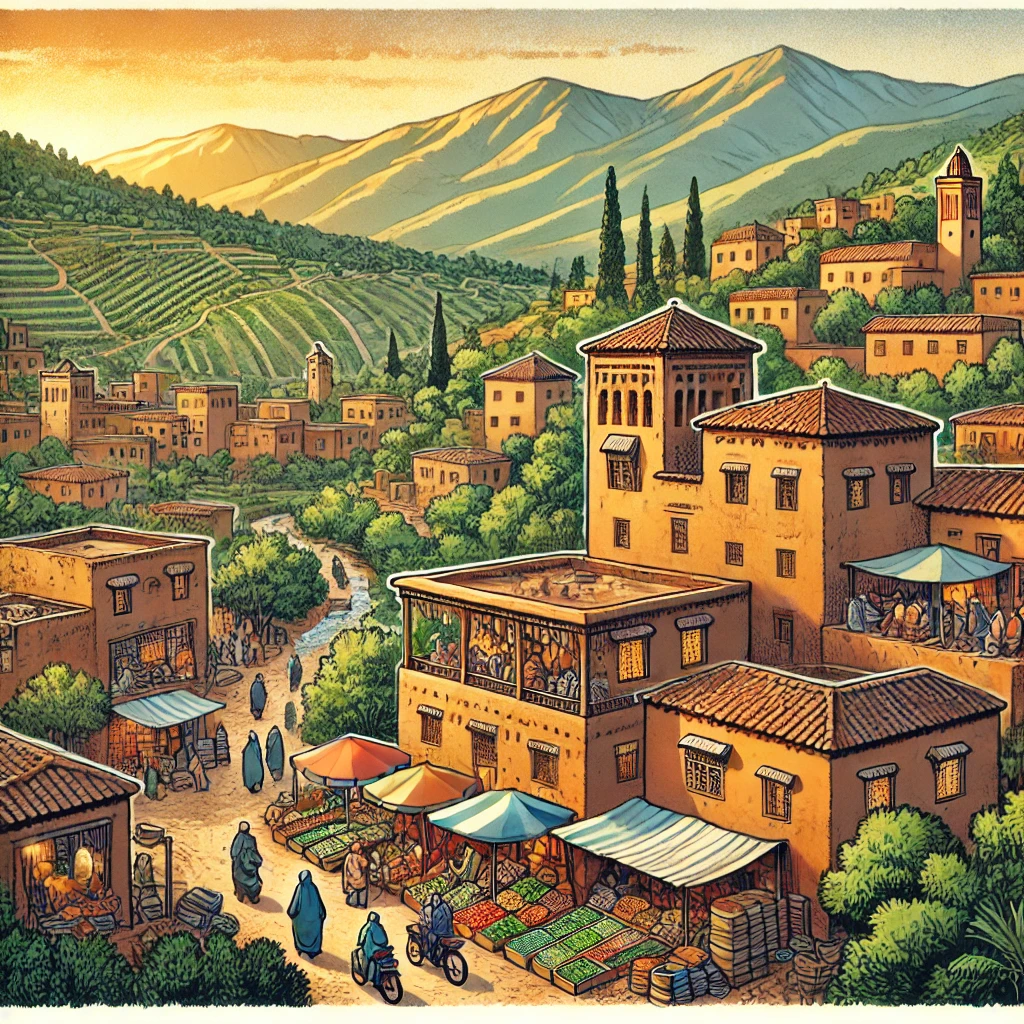
Berber Villages in Morocco
The Berber people, also known as the Amazigh, are the indigenous inhabitants of North Africa, with a rich history that dates back thousands of years. In Morocco, Berber villages are scattered across the Atlas Mountains, the Sahara Desert, and remote valleys, offering a glimpse into a way of life that has remained largely unchanged for centuries. These villages, known for their distinctive mud-brick houses, terraced farms, and vibrant traditions, provide an authentic cultural experience for travelers looking to explore Morocco beyond its bustling cities.
1. Aït Benhaddou – The Iconic Kasbah Village
One of the most famous Berber villages, Aït Benhaddou is a UNESCO World Heritage Site known for its fortified ksar (village) made of earthen clay. Located along the ancient caravan route between the Sahara and Marrakesh, it has been featured in numerous films and TV shows, including Gladiator and Game of Thrones.
- Highlights:
- Traditional mud-brick kasbahs with stunning desert backdrops
- Panoramic views from the top of the fortress
- A glimpse into Morocco’s medieval trading history
2. Imlil – The Gateway to Mount Toubkal
Nestled in the High Atlas Mountains, Imlil is a picturesque Berber village that serves as the starting point for treks to Mount Toubkal (4,167m), the highest peak in North Africa. Despite its growing popularity, it retains its authentic mountain charm, with stone-built homes, terraced fields, and friendly locals.
- Highlights:
- Ideal for hiking and trekking adventures
- Traditional Berber guesthouses (gîtes) offering warm hospitality
- Stunning views of snow-capped peaks and green valleys
3. Chefchaouen’s Surrounding Berber Villages
While Chefchaouen is known for its blue-painted streets, the surrounding Rif Mountain villages offer a quieter and more traditional Berber experience. These villages are home to farmers and artisans who have preserved age-old agricultural and weaving techniques.
- Highlights:
- Beautiful olive groves and terraced farms
- Handwoven rugs and blankets made by Berber women
- A chance to experience authentic Amazigh culture away from the tourist crowds
4. Aroumd – A Hidden Gem in the Atlas Mountains
Aroumd is a small and less-visited Berber village just above Imlil. Unlike many Moroccan villages, it is built using dark volcanic rock, giving it a unique appearance against the backdrop of the Atlas Mountains.
- Highlights:
- Stunning views of the Aït Mizane Valley
- Authentic Berber hospitality in family-run lodges
- A peaceful alternative to the more touristy Imlil
5. Merzouga’s Nomadic Berber Camps
Located on the edge of the Sahara Desert, Merzouga is not just famous for its massive sand dunes but also for its Berber nomadic communities. Many of these communities still practice a semi-nomadic lifestyle, moving with their livestock across the desert.
- Highlights:
- Overnight stays in traditional Berber desert camps
- Camel trekking through the Erg Chebbi dunes
- Listening to Gnawa music around the campfire under a star-filled sky
6. Taliouine – The Saffron Capital of Morocco
Taliouine, located in the Anti-Atlas Mountains, is Morocco’s saffron-growing region, where Berber farmers have cultivated the spice for generations. The village is surrounded by vast saffron fields, which bloom in purple during the harvest season.
- Highlights:
- Visit to local saffron farms and cooperatives
- Learning about traditional saffron harvesting techniques
- Sampling saffron-infused Moroccan dishes and tea
Why Visit Berber Villages in Morocco?
- Authentic Cultural Experience – Unlike the tourist-heavy cities, Berber villages offer a glimpse into Morocco’s ancient traditions and a way of life deeply connected to nature.
- Breathtaking Scenery – From snow-capped peaks to golden deserts, these villages are set against some of the most stunning landscapes in Morocco.
- Warm Hospitality – The Berber people are known for their generosity, often welcoming visitors with mint tea and home-cooked tagine.
- Rich History and Architecture – Ancient kasbahs, mud-brick houses, and centuries-old farming terraces tell stories of resilience and adaptation to the harsh environment.
Conclusion
Exploring Berber villages in Morocco is like stepping into a world where time moves slower, traditions are cherished, and landscapes are awe-inspiring. Whether trekking in the Atlas Mountains, visiting a desert nomad camp, or wandering through a historic kasbah, these villages offer a truly immersive experience.
For more tips on improving your photography and editing skills, check out helpful guides at ocean.co.ua to take your selfies to the next level.
Добавить комментарий