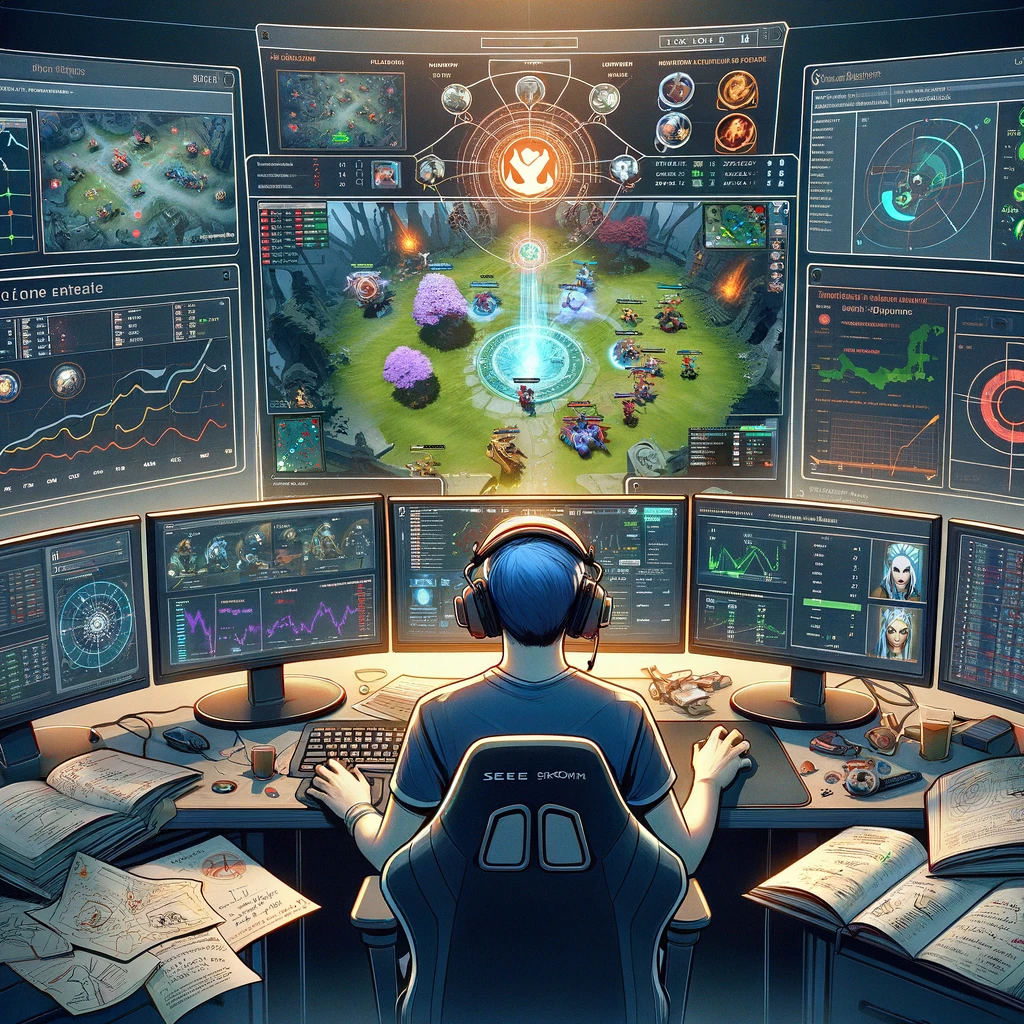
Analyzing Dota 2 gameplay is a crucial skill that can significantly improve your understanding of the game and enhance your performance. Whether you’re a player looking to climb the ranks or a fan wanting to deepen your appreciation of professional matches, here are key aspects to focus on while analyzing Dota 2 gameplay.
Understanding the Draft
- Team Composition: Look at the synergy between heroes on each team. Consider how abilities complement each other and the potential for combo plays.
- Counters: Identify if any heroes have been picked as direct counters to the enemy team’s choices. This could influence lane matchups and team fights.
- Winning Conditions: Determine what each team needs to achieve to win the game. This could be securing the early game, controlling the map, or reaching a late-game power spike.
Laning Phase Analysis
- Lane Matchups: Evaluate the matchups in each lane. Consider which side has the advantage in terms of hero abilities, potential for harassment, and kill threat.
- Resource Management: Notice how players manage their health, mana, and cooldowns. Efficient use of resources can lead to lane dominance.
- Creep Equilibrium: Pay attention to how players control the lane’s creep wave. Maintaining equilibrium near their tower can offer safety from ganks and better farming opportunities.
Mid-Game Movements and Objectives
- Rotation and Ganking: Identify key rotations from supports or mid-laners to secure kills or relieve pressure from lanes. Effective rotations can significantly impact the game’s flow.
- Objective Control: Observe how teams prioritize objectives like towers, Roshan, and outpost control. Securing these objectives offers map control, gold, and experience advantages.
- Vision and Map Control: Analyze the placement of Observer and Sentry Wards. Vision control is crucial for making informed decisions, spotting enemy movements, and securing objectives.
Team Fight Execution
- Positioning: Note the positioning of carries, supports, and initiators before and during team fights. Good positioning can make the difference in a fight’s outcome.
- Ability Usage: Evaluate how players use their abilities, particularly how they initiate fights, chain stuns, or save teammates. Look for efficiency in skill usage and cooldown management.
- Focus Targets: Identify the focus targets in team fights. Teams often aim to quickly take down key enemy heroes that pose the greatest threat or have crucial abilities.
Late-Game Decision Making
- Itemization: Assess the item choices of each hero. Late-game items can drastically change a hero’s effectiveness, and counter-itemization can turn fights.
- High Ground Defense/Offense: Analyzing high ground sieges can reveal how teams strategize to break base defenses or defend their own. Pay attention to sieging techniques and defensive formations.
- Buyback Usage: Notice how and when players use buybacks. Late-game buybacks are critical and can either save a game or be wasted resources if not used strategically.
Additional Tips for Analyzing Gameplay
- Compare Different Perspectives: Watching the game from both the winning and losing team’s perspectives can offer insights into decision-making and strategy from both sides.
- Professional Commentary: Listening to professional commentators and analysts during matches can provide additional insights and explanations for team strategies and player decisions.
- Discussion with Others: Engaging in discussions with other players or fans about the game can expose you to different viewpoints and strategies you might not have considered.
Analyzing Dota 2 gameplay is a skill that develops with time and practice. By focusing on these aspects, you can gain a deeper understanding of the game, allowing you to improve your play or enjoy professional matches on another level.
Добавить комментарий