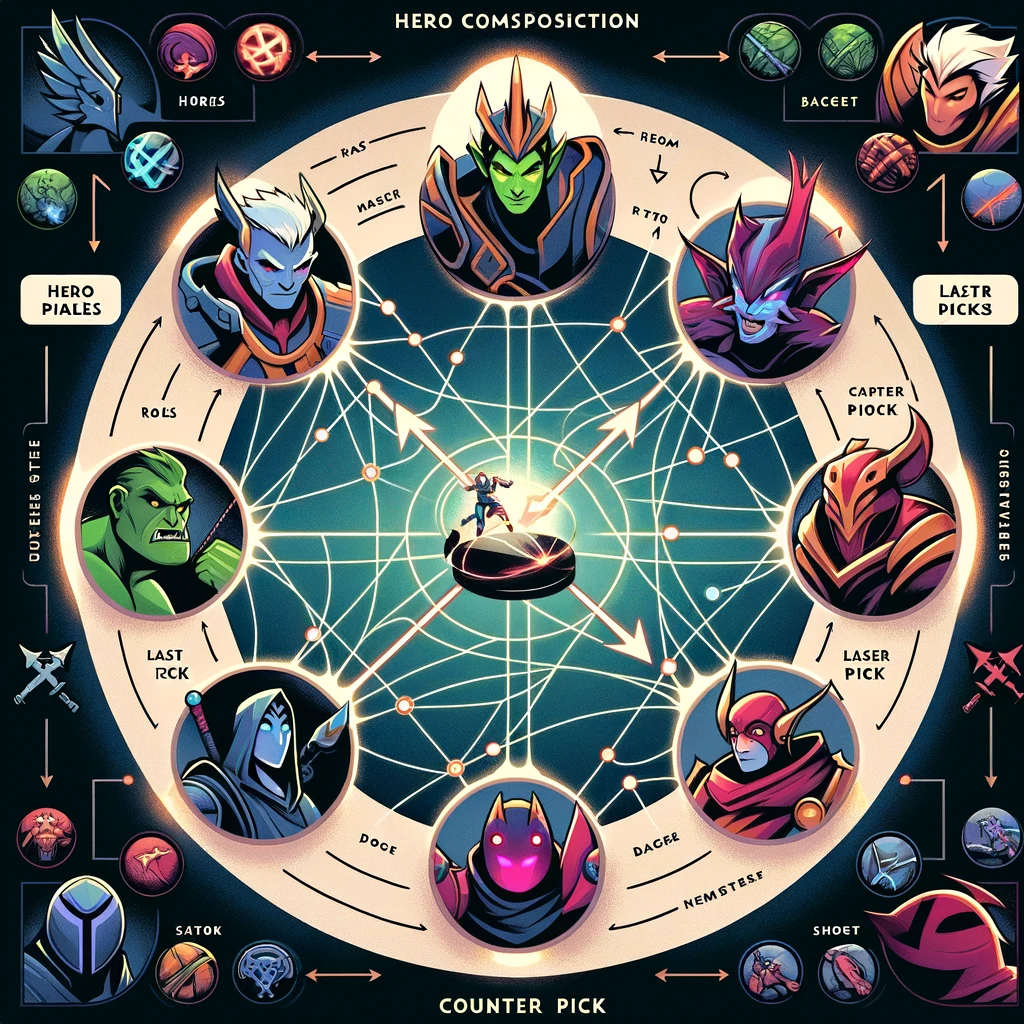
Drafting in Dota 2 is a complex and critical phase that can significantly influence the outcome of the game. Whether you’re playing in ranked matches or just casually with friends, understanding the basics of drafting can give you a significant advantage. Here’s a guide to get you started with the drafting process in Dota 2:
1. Understand the Roles:
Each team typically consists of five roles:
- Position 1 (Carry): Focuses on farming and becomes powerful later in the game.
- Position 2 (Midlaner): Solos the middle lane to gain a level advantage and control the tempo.
- Position 3 (Offlaner): Tanks and initiates fights; usually lanes in the most challenging lane.
- Position 4 (Soft Support): Assists the offlaner, secures runes, and provides utility.
- Position 5 (Hard Support): Supports the carry, buys wards, and ensures the carry can farm safely.
2. Analyzing the Enemy Draft:
Pay attention to the enemy’s picks and bans. Identify their strategy:
- Team Composition: Are they focusing on early aggression, late-game, team fights, split pushing, etc.?
- Hero Counters: Consider heroes that counter their strengths or exploit their weaknesses.
- Lane Matchups: Think about how your lanes will match up against theirs and try to secure favorable matchups.
3. Building Your Team:
While drafting, build a balanced team that addresses the following:
- Damage Type: Ensure you have a mix of physical and magical damage.
- Initiation and Counter-initiation: Have heroes that can start fights and save teammates.
- Waveclear: Ability to quickly clear minion waves is essential for defense and push.
- Tower Pushing: Having one or more heroes that can damage towers effectively can determine game pace.
- Roshan Control: Heroes that can take down Roshan can provide a significant advantage.
4. Synergy:
Draft heroes that work well together. Look for combinations of abilities that can be powerful in team fights or in securing kills.
5. Flexibility:
Try to pick heroes that can be played in multiple roles, especially in the first few picks. This keeps your strategy ambiguous and prevents the enemy from countering your draft early.
6. Comfort Picks:
While meta heroes can be strong, it’s important that players are comfortable with their heroes. A well-played «comfort pick» can often outperform a poorly-played «meta pick.»
7. Last Pick Advantage:
The last pick can be crucial, especially for mid-lane matchups. Use it to secure a favorable lane or to complete your team composition with a hero that fits perfectly or counters the enemy’s draft effectively.
8. Bans:
Use bans to remove heroes that:
- Counter your strategy.
- Enhance the enemy’s lineup significantly.
- Are generally considered overpowered in the current meta.
- Are comfort picks for the enemy team (if you know their preferences).
Post-Draft:
After drafting, discuss the game plan with your team. Ensure everyone knows their roles, objectives, and what the team aims to achieve at different stages of the game.
Practice:
Drafting is an art that improves with practice and experience. Don’t be afraid to experiment with different strategies and learn from both successes and failures.
Remember, a good draft alone won’t win the game, but it can give you a significant advantage. Good communication, adaptability, and in-game decision-making are equally important to capitalize on your draft and secure the victory.
Добавить комментарий