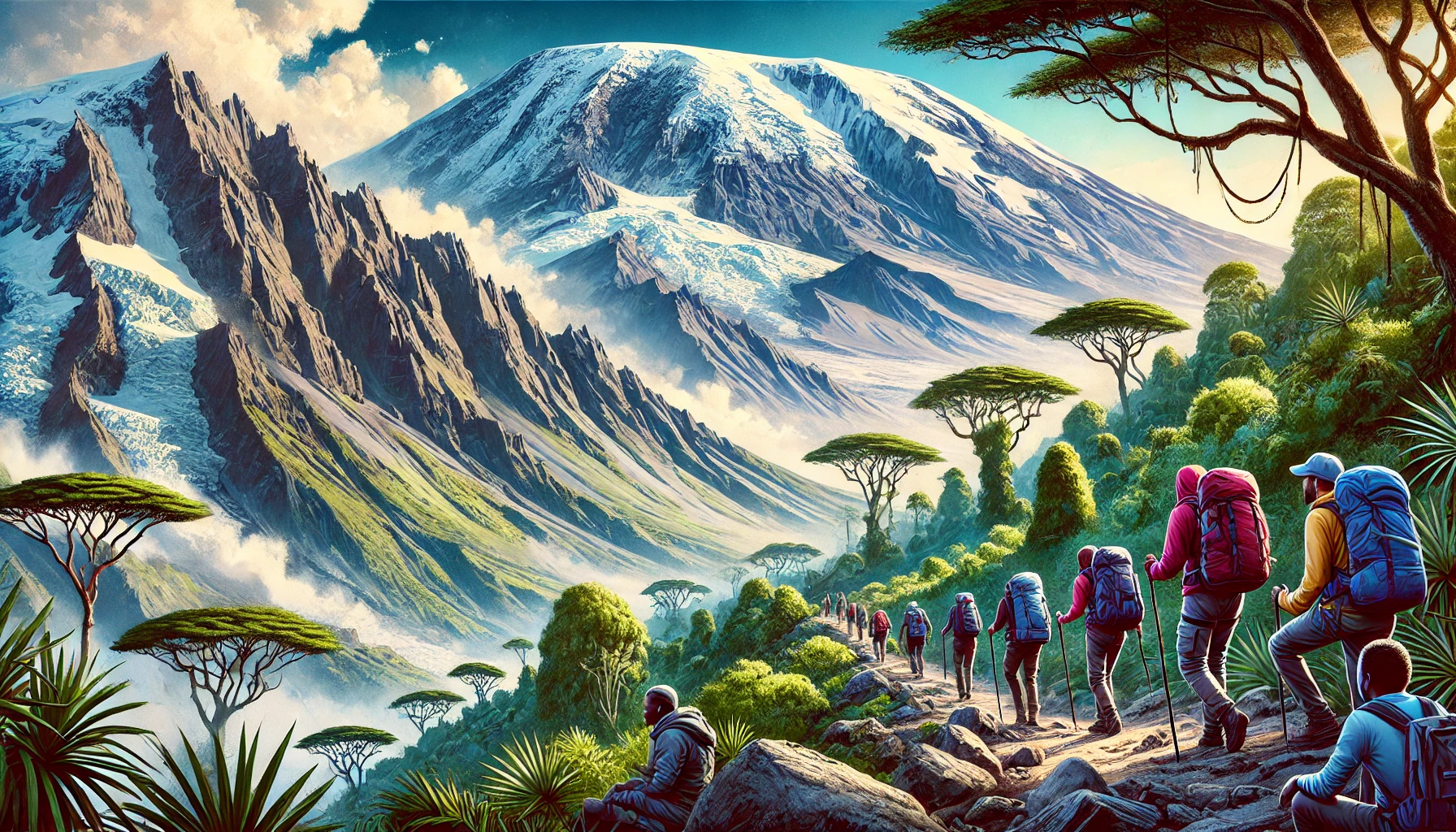
Climbing Mount Kilimanjaro
Mount Kilimanjaro, the tallest mountain in Africa at 5,895 meters (19,341 feet), is a dream destination for adventurers and nature lovers. Located in Tanzania, this iconic peak attracts thousands of climbers each year, offering breathtaking scenery and a once-in-a-lifetime challenge. Whether you’re an experienced trekker or a first-time climber, here’s everything you need to know about conquering Mount Kilimanjaro.
1. Choosing the Right Route
There are several routes to the summit, each with different levels of difficulty, scenery, and success rates.
1. Marangu Route («Coca-Cola Route»)
- Duration: 5-6 days
- Difficulty: Moderate
- Accommodation: Huts
- Best For: Budget climbers and those seeking a shorter trek.
- Downside: Lower success rate due to shorter acclimatization time.
2. Machame Route («Whiskey Route»)
- Duration: 6-7 days
- Difficulty: Challenging but rewarding
- Accommodation: Tents
- Best For: Adventurous trekkers looking for stunning scenery.
- Downside: Steeper sections require good physical fitness.
3. Lemosho Route
- Duration: 7-8 days
- Difficulty: Moderate to difficult
- Accommodation: Tents
- Best For: Those seeking high success rates and scenic beauty.
- Downside: More expensive due to longer duration.
4. Rongai Route
- Duration: 6-7 days
- Difficulty: Moderate
- Accommodation: Tents
- Best For: Climbers who prefer a less crowded route with gradual ascent.
- Downside: Less scenic than Machame or Lemosho.
5. Northern Circuit Route
- Duration: 9-10 days
- Difficulty: Moderate
- Accommodation: Tents
- Best For: Highest success rate due to excellent acclimatization.
- Downside: The longest and most expensive option.
2. Best Time to Climb Kilimanjaro
The best months for climbing Kilimanjaro are January–March and June–October, offering dry weather and clear views.
- January–March: Colder but quieter, with possible snow at the summit.
- June–October: Warmer and more popular, but can be crowded.
- Avoid: April-May and November due to heavy rains.
3. Physical Preparation
Kilimanjaro is a non-technical climb, meaning no ropes or climbing equipment are needed. However, good physical fitness is essential.
- Train for Endurance: Long hikes with a backpack (5-10 km daily).
- Strength Training: Leg and core exercises for stamina.
- Altitude Acclimatization: If possible, hike at high altitudes before your trip.
4. Altitude Sickness & Acclimatization
Altitude sickness is one of the biggest challenges climbers face. To reduce the risk:
- Choose a longer route for gradual acclimatization.
- Follow the «Pole Pole» (slow and steady) pace.
- Stay hydrated and drink at least 3-4 liters of water daily.
- Consider medication like Diamox if recommended by a doctor.
5. Packing Essentials
A well-prepared gear list is crucial for a successful climb.
Clothing:
✅ Base layers (moisture-wicking)
✅ Insulated jacket (for summit night)
✅ Waterproof jacket and pants
✅ Warm gloves and hat
Footwear:
✅ Sturdy, broken-in hiking boots
✅ Warm socks
Other Essentials:
✅ Sleeping bag (rated for -10°C to -20°C)
✅ Headlamp (for early morning summit push)
✅ Trekking poles (reduce strain on knees)
✅ Sunglasses and sunscreen (strong UV at high altitude)
6. The Climb: What to Expect
Day 1-4: Gradual Ascent
- Hike through rainforests, moorlands, and alpine deserts.
- Enjoy breathtaking views of glaciers and volcanic landscapes.
Summit Night:
- Starts at midnight for a sunrise summit.
- The final push to Uhuru Peak is tough due to cold and altitude.
- The reward? Unforgettable views from the highest point in Africa!
7. Cost of Climbing Kilimanjaro
- Budget: $1,500–$2,500 (group climbs, basic services).
- Mid-Range: $2,500–$4,000 (better guides, more comfort).
- Luxury: $4,000+ (private climbs, top-tier gear, premium tents).
Prices include park fees, guide fees, food, and porters but exclude flights, visas, and gear rental.
8. Why Climb Kilimanjaro?
✅ No technical skills required – anyone with determination can do it!
✅ One of the Seven Summits (highest peaks on each continent).
✅ Stunning landscapes – from tropical rainforests to glaciers.
✅ A personal challenge and bucket-list adventure.
Final Thoughts
Climbing Mount Kilimanjaro is an unforgettable experience that combines adventure, breathtaking scenery, and personal triumph. With the right preparation, a good guide, and a positive mindset, reaching the «Roof of Africa» is within your reach!
For more tips on improving your photography and editing skills, check out helpful guides to take your selfies to the next level.
Добавить комментарий