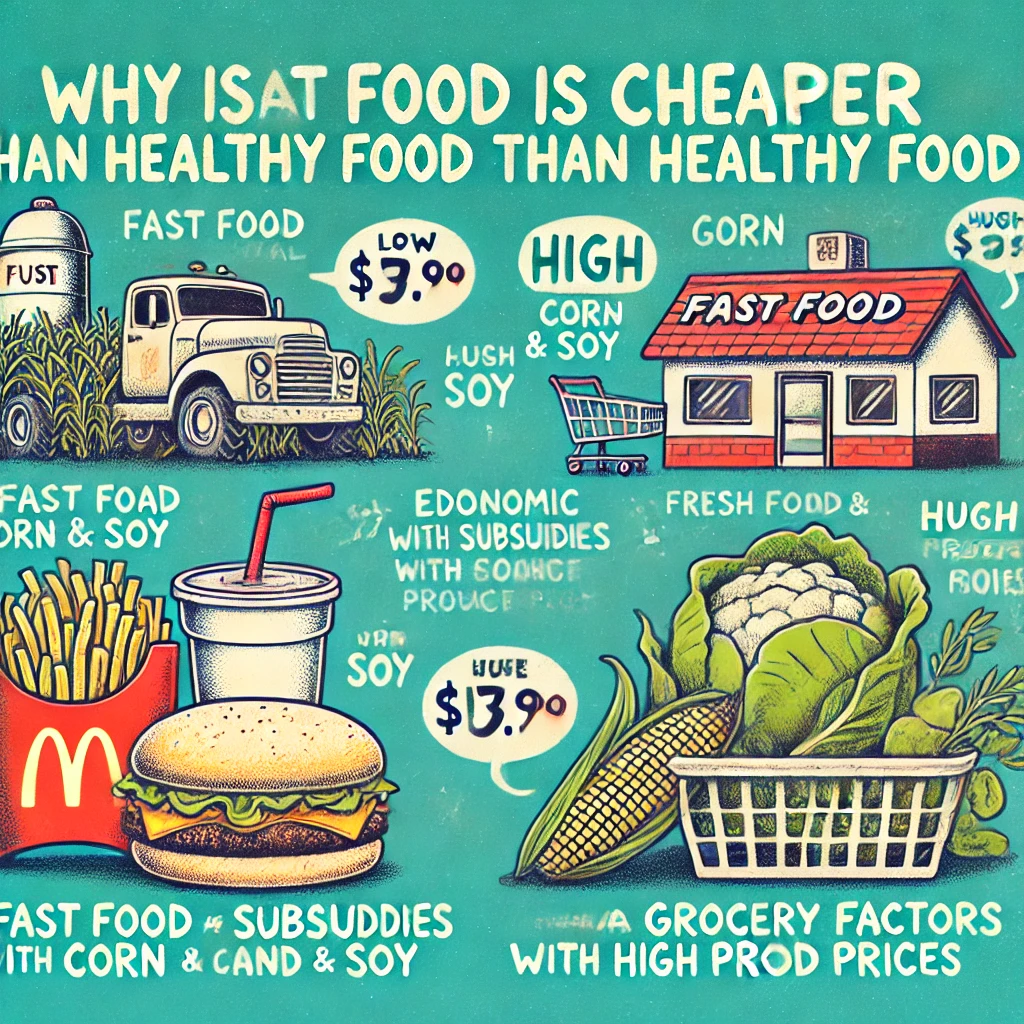
Why Is Fast Food Cheaper Than Healthy Food in the US?
If you’ve ever wondered why a fast food meal costs less than a fresh salad or a basket of produce, you’re not alone. The affordability of fast food compared to healthy options is a well-known paradox that impacts the diets and health of millions of Americans. The reasons behind this disparity are complex and rooted in economic, agricultural, and societal factors. Here’s a breakdown of why fast food is often cheaper than healthy food in the US.
1. Government Subsidies for Unhealthy Ingredients
The US government heavily subsidizes certain crops, which are the backbone of processed and fast food.
- Corn, Soy, and Wheat Subsidies: These crops are used to produce cheap ingredients like high-fructose corn syrup, hydrogenated oils, and refined flours, which are prevalent in fast food.
- Lack of Support for Fresh Produce: Fruits, vegetables, and other healthy foods receive far less government funding, making them more expensive for consumers.
- Impact on Prices: As a result, the raw ingredients for fast food are significantly cheaper than those for fresh, whole foods.
2. Economies of Scale in Fast Food
Fast food chains operate on massive scales, allowing them to keep costs low.
- Mass Production: Fast food companies buy ingredients in bulk, which reduces costs through economies of scale.
- Streamlined Operations: Chains like McDonald’s and Taco Bell standardize their cooking processes to save time and money.
- Prepackaged Foods: Many fast food items are partially pre-cooked or processed, reducing labor and preparation costs.
3. Processed Food Has a Longer Shelf Life
Fast food and processed foods are designed to last longer, which reduces waste and lowers costs for manufacturers.
- Preservatives: Additives and preservatives extend the shelf life of processed foods, making storage and distribution cheaper.
- Fresh Food Spoilage: Healthy options like fruits, vegetables, and fresh meats spoil quickly, leading to higher costs for retailers and consumers.
- Frozen and Canned Options: While healthier frozen and canned foods exist, fresh produce is often priced higher due to perishability.
4. Labor Costs Are Lower for Fast Food
Fast food preparation requires less labor compared to sourcing, handling, and preparing fresh, healthy ingredients.
- Minimal Prep Time: Fast food meals are often pre-cooked or require minimal preparation.
- Automation: Fast food chains rely on machines and streamlined cooking processes to reduce the need for skilled labor.
- Healthy Food Prep: Fresh, healthy meals often require chopping, peeling, and cooking, which adds labor costs for both manufacturers and restaurants.
5. Marketing and Consumer Demand
Fast food is aggressively marketed, creating a perception of value and convenience that drives demand.
- Low-Cost Advertising: Fast food chains spend billions on advertising, emphasizing affordability and convenience.
- Convenience Over Health: Consumers often prioritize speed and cost over nutritional value, driving higher demand for fast food.
- Healthy Food Marketing: Fresh and healthy options are often marketed as premium products, leading to higher prices and less accessibility.
6. Food Deserts and Accessibility
Not all Americans have equal access to healthy food, especially in rural and low-income areas.
- Food Deserts: Many low-income neighborhoods lack access to grocery stores or farmers’ markets, leaving residents reliant on fast food.
- Transportation Costs: Without a car, buying fresh produce can be difficult and expensive in areas without public transit options.
- Fast Food Ubiquity: In contrast, fast food restaurants are widespread and conveniently located, making them a more accessible option.
7. High Costs of Organic and Specialty Foods
While fast food ingredients are subsidized and mass-produced, organic and specialty foods are often more expensive.
- Cost of Certification: Organic farmers must pay for certifications and adhere to stricter standards, increasing their production costs.
- Smaller Farms: Small-scale farms don’t benefit from the same economies of scale as industrial farms.
- Perception of Health Foods: Health-conscious branding can drive up the price of products, even when alternatives are available.
8. Supply Chain Challenges
Healthy foods, particularly fresh produce, have more complicated supply chains than fast food.
- Transportation Costs: Fresh produce requires refrigeration during transport, which adds to distribution costs.
- Seasonality: Fruits and vegetables are seasonal, meaning prices fluctuate throughout the year.
- Imports: Many healthy foods are imported, adding tariffs and transportation costs that increase prices for consumers.
9. Time Costs of Healthy Eating
For many families, the perceived time cost of cooking healthy meals outweighs the financial savings.
- Convenience of Fast Food: Fast food requires no preparation, cooking, or cleanup, making it a more appealing option for busy individuals.
- Meal Prep Time: Healthy eating often involves shopping, prepping, and cooking, which can be challenging for those with limited time or resources.
10. Cultural and Social Norms
American culture plays a significant role in the popularity of fast food over healthier options.
- Value Perception: A $5 fast food combo meal feels like a better deal compared to spending the same amount on a few vegetables or fresh meat.
- Portion Sizes: Fast food meals often come in large portions, reinforcing the idea that they provide more value.
- Cultural Preferences: Fast food has become ingrained in American culture as a quick, affordable, and satisfying option for meals.
11. Efforts to Make Healthy Food More Affordable
Despite these challenges, efforts are being made to improve access to affordable healthy food:
- Farmers’ Markets and CSAs: Buying directly from local farmers can reduce costs and increase access to fresh produce.
- SNAP Benefits: The Supplemental Nutrition Assistance Program (SNAP) provides financial assistance for low-income households to purchase groceries, including fresh produce.
- Government Initiatives: Programs like the Healthy Food Financing Initiative (HFFI) aim to bring grocery stores and fresh food retailers to underserved areas.
Final Thoughts
Fast food is cheaper than healthy food in the US due to a combination of government subsidies, economies of scale, longer shelf lives, and marketing practices. While these factors make fast food an affordable and convenient option, they also highlight the systemic challenges of making healthy eating accessible to all. For those looking to prioritize health without overspending, strategies like shopping seasonal produce, using farmers’ markets, and meal prepping can help bridge the gap.
For more tips on saving money and eating healthy, check out helpful guides to make informed food choices without breaking the bank.
Добавить комментарий