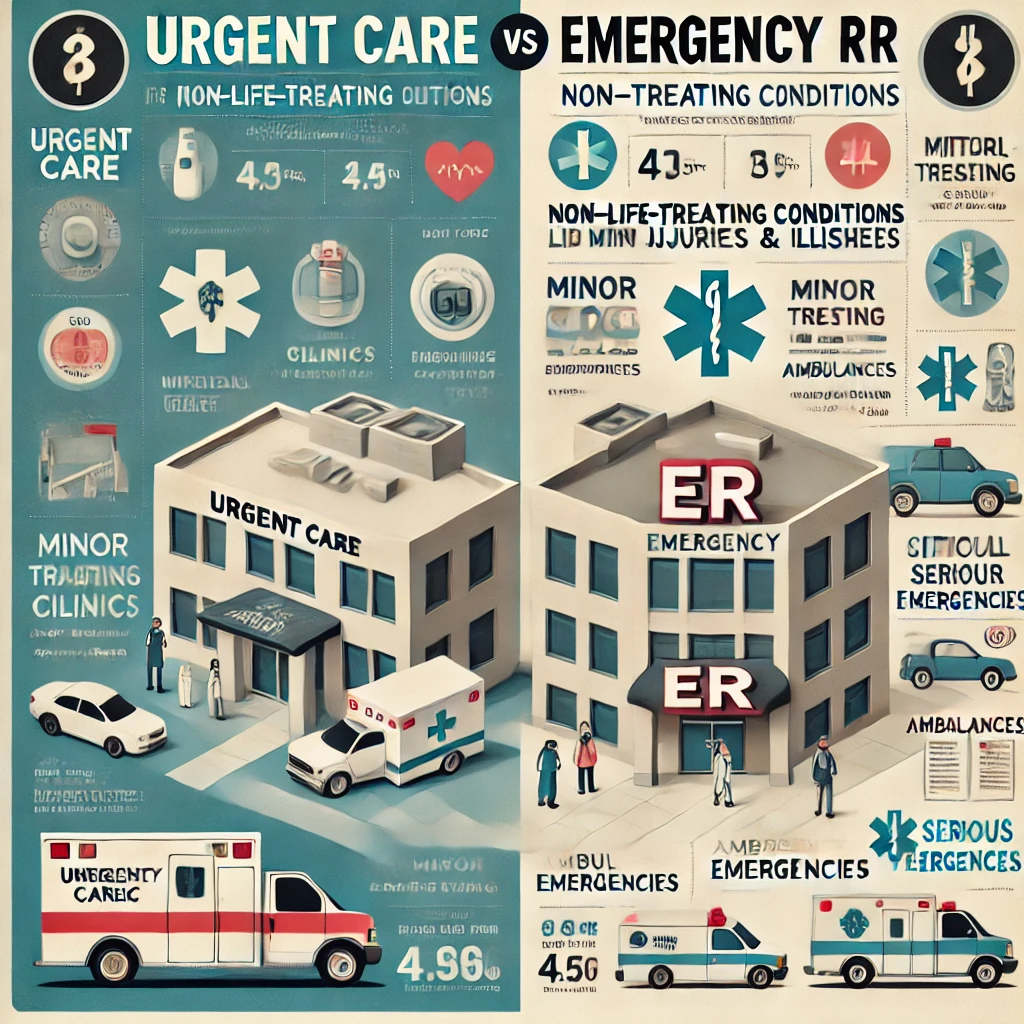
Difference Between Urgent Care
If you experience a medical issue in the United States, you may find yourself wondering whether to go to an urgent care center or the emergency room (ER). Both facilities provide medical care but are designed to handle different types of situations. Choosing the right one can save you time, money, and ensure you get the appropriate care quickly. Below, we’ll break down the key differences between urgent care and the ER, and when to choose each.
1. What Is Urgent Care?
Urgent care centers are walk-in clinics that treat non-life-threatening illnesses or injuries that still require prompt medical attention. They serve as a middle ground between primary care doctors and emergency rooms.
When to Go to Urgent Care
- Minor injuries: Sprains, strains, minor fractures, or small cuts needing stitches.
- Mild illnesses: Fever, flu, colds, sore throat, ear infections, or urinary tract infections (UTIs).
- Skin issues: Rashes, minor burns, insect bites.
- Other conditions: Vomiting, diarrhea, mild dehydration.
Key Features of Urgent Care
- Convenience: No appointment needed; first-come, first-served basis.
- Cost: Generally much cheaper than the ER (often comparable to a doctor’s office visit).
- Hours: Open extended hours, including evenings and weekends, but not 24/7.
- Services: Many centers offer on-site X-rays, lab tests, and basic prescriptions.
Average Cost of Urgent Care
- Without insurance: $100–$200 per visit, depending on the condition.
- With insurance: Co-pays typically range from $20–$50.
2. What Is the Emergency Room (ER)?
Emergency rooms are designed to handle severe, life-threatening conditions or medical emergencies that require immediate attention. They are equipped with advanced diagnostic tools and specialists to provide critical care.
When to Go to the ER
- Life-threatening conditions: Heart attack symptoms (chest pain, shortness of breath), stroke symptoms (slurred speech, numbness, weakness).
- Severe injuries: Major fractures, head trauma, gunshot wounds, or deep lacerations.
- Uncontrollable bleeding: Heavy bleeding that doesn’t stop after applying pressure.
- Difficulty breathing: Severe asthma attacks, choking, or respiratory distress.
- Severe pain: Intense abdominal pain, severe burns, or acute back pain.
- Poisoning or overdose: Ingesting toxic substances or drug overdoses.
- Mental health crises: Suicidal thoughts, psychosis, or severe anxiety attacks.
Key Features of the ER
- Open 24/7: Available at any time, day or night.
- Comprehensive care: Staffed with specialists and advanced equipment for critical care.
- Triage system: Patients are treated based on the severity of their condition, not the order they arrive.
Average Cost of the ER
- Without insurance: $1,200–$3,000 or more per visit.
- With insurance: Co-pays range from $100–$500 or higher, depending on your plan and deductible.
3. Key Differences Between Urgent Care and the ER
| Feature | Urgent Care | Emergency Room (ER) |
|---|---|---|
| Type of Care | Non-life-threatening issues | Severe, life-threatening emergencies |
| Hours | Extended hours (not 24/7) | Open 24/7 |
| Cost | Affordable (often <$200 without insurance) | Expensive (can exceed $1,000) |
| Wait Time | Shorter (30 minutes to 1 hour) | Longer (depends on triage severity) |
| Equipment | Limited diagnostics (X-rays, basic labs) | Advanced diagnostics and specialists |
4. When in Doubt, Choose the ER
If you’re unsure whether your condition is an emergency, it’s better to err on the side of caution and go to the ER. Symptoms like chest pain, difficulty breathing, or severe injuries should never be ignored.
Additionally, if you call 911, emergency responders will transport you to the nearest ER, not an urgent care center.
5. Common Mistakes People Make
Going to the ER for Minor Issues
- Many people visit the ER for conditions that could be treated at urgent care, resulting in longer wait times and higher costs.
Ignoring Serious Symptoms
- Delaying care for serious symptoms like heart attack or stroke because of concerns about cost or uncertainty about the severity can be dangerous. Always seek emergency care if needed.
6. Insurance and Payment Considerations
Urgent Care Costs
- Most insurance plans cover urgent care visits with lower co-pays than the ER.
- If uninsured, urgent care is typically much more affordable than the ER.
ER Costs
- Emergency rooms are significantly more expensive. Insurance may cover much of the cost, but you’ll still face higher co-pays and deductibles compared to urgent care.
7. Tips for Choosing the Right Facility
a. Ask Yourself These Questions:
- Is my condition life-threatening? → Go to the ER.
- Can this wait until tomorrow or be treated quickly? → Try urgent care.
b. Call Ahead:
- Some urgent care centers let you check wait times or make online reservations, which can save you time.
c. Know Your Nearest Facilities:
- Find the closest urgent care and ER locations before an emergency arises, so you’re prepared.
Final Thoughts
Knowing the difference between urgent care and the ER can save you time, money, and stress when seeking medical attention in the US. Urgent care is ideal for minor, non-life-threatening issues, while the ER is necessary for severe emergencies. Making the right choice ensures you get the care you need while avoiding unnecessary expenses and wait times.
For more tips on navigating healthcare and managing medical costs, check out helpful guides to make informed decisions for you and your family.
Добавить комментарий