How Do Credit Scores Work
Understanding how credit scores work is essential for anyone looking to manage their finances in the United States. Your credit score plays a crucial role in determining your ability to secure loans, credit cards, housing, and even some jobs. Below, we’ll break down how credit scores work, what factors impact them, and why they matter.
1. What Is a Credit Score?
A credit score is a three-digit number that reflects your creditworthiness, or how likely you are to repay borrowed money. Lenders, landlords, and other institutions use this score to assess the risk of offering you credit or services.
- Credit scores in the US typically range from 300 to 850.
- Higher scores indicate better creditworthiness, while lower scores suggest higher risk.
2. Who Calculates Your Credit Score?
Your credit score is calculated by credit bureaus using information from your credit report. The three major credit bureaus in the US are:
- Equifax
- Experian
- TransUnion
These bureaus use algorithms like the FICO Score and VantageScore to generate your credit score based on the information in your credit history.
3. What Factors Affect Your Credit Score?
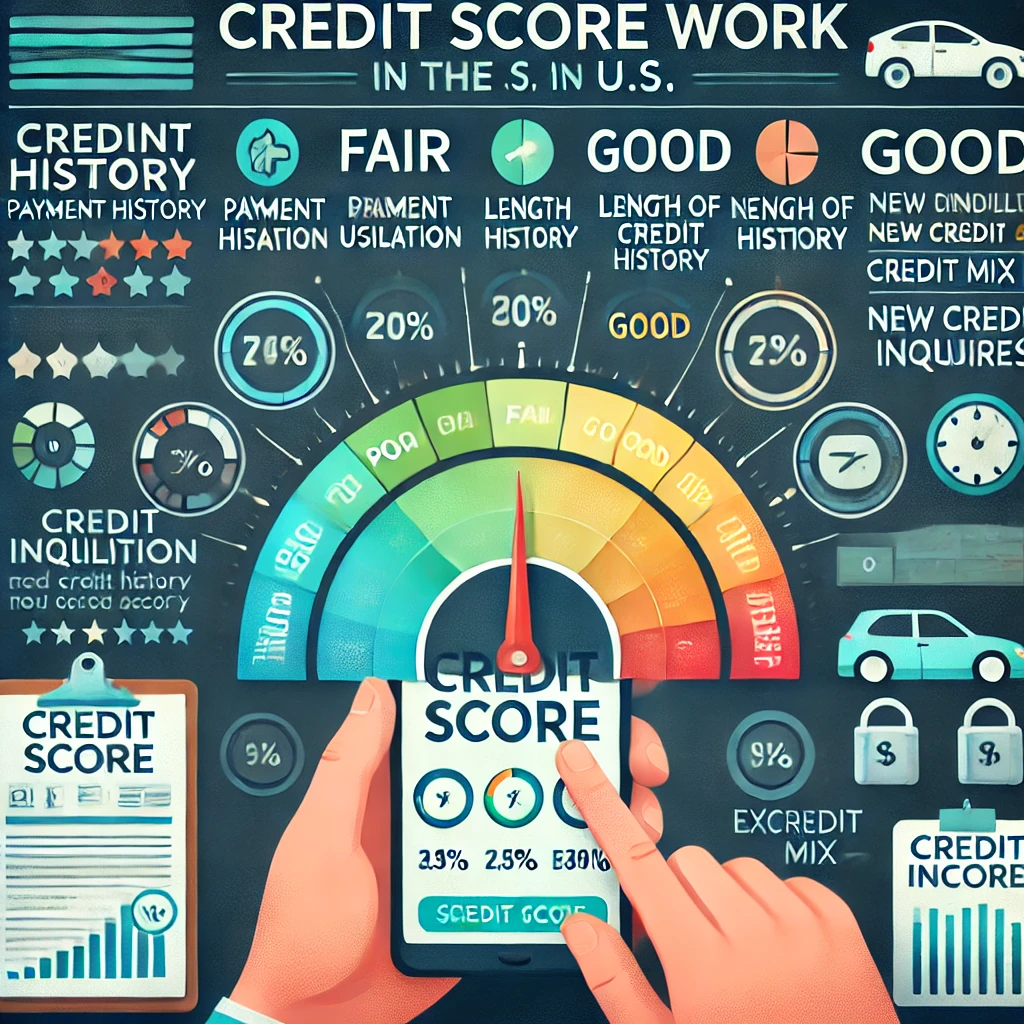
Your credit score is determined by several key factors, each weighted differently in the scoring model:
a. Payment History (35%)
This is the most important factor in your credit score. Lenders want to see that you’ve made payments on time.
- Late payments, defaults, and accounts sent to collections will negatively impact your score.
- Consistently paying bills on time helps boost your score.
b. Credit Utilization (30%)
This measures how much of your available credit you’re using.
- A lower credit utilization ratio is better; aim to use less than 30% of your available credit.
- For example, if you have a credit limit of $10,000, try to keep your balance below $3,000.
c. Length of Credit History (15%)
The longer your credit accounts have been open, the better.
- This factor considers the age of your oldest account, the average age of all your accounts, and how recently you’ve used them.
- Opening and closing accounts frequently can shorten your credit history and lower your score.
d. Credit Mix (10%)
Having a variety of credit types (credit cards, auto loans, mortgages, etc.) shows lenders you can manage different kinds of debt.
- While it’s not a major factor, a healthy credit mix can slightly improve your score.
e. New Credit (10%)
Opening too many new credit accounts in a short period can hurt your score.
- Each time you apply for credit, a hard inquiry is added to your report, which may lower your score temporarily.
- Multiple hard inquiries in a short time signal financial instability to lenders.
4. Why Does Your Credit Score Matter?
Your credit score affects many aspects of your financial life:
- Loan Approval and Interest Rates: A higher score increases your chances of approval for loans and qualifies you for lower interest rates.
- Renting an Apartment: Landlords often check your credit score to determine whether you’re a reliable tenant.
- Employment Opportunities: Some employers review credit reports as part of their hiring process, especially for financial roles.
- Insurance Premiums: In some states, insurance companies use credit scores to determine premiums for auto and home insurance.
5. How to Check Your Credit Score?
You can check your credit score for free through several platforms:
- AnnualCreditReport.com: Federal law allows you to request a free credit report from each bureau once a year.
- Credit Card Providers: Many banks and credit card companies offer free access to your FICO or VantageScore.
- Credit Monitoring Services: Apps like Credit Karma or Experian provide free score updates and monitoring.
6. How to Improve Your Credit Score?
If your credit score needs improvement, here are actionable steps you can take:
- Pay Bills on Time: Set up automatic payments to avoid missed due dates.
- Reduce Credit Card Balances: Aim to keep your credit utilization below 30%.
- Avoid Applying for Too Much Credit: Limit new credit applications to avoid multiple hard inquiries.
- Monitor Your Credit Report: Regularly review your credit report for errors or fraudulent activity. Dispute inaccuracies with the credit bureau.
- Keep Old Accounts Open: Even if you no longer use a credit card, keeping the account open can help maintain a longer credit history.
7. What Is a Good Credit Score?
While the exact definition of a «good» credit score can vary, here’s a general breakdown:
- Excellent (800-850): Exceptional creditworthiness.
- Very Good (740-799): Low risk for lenders.
- Good (670-739): Most borrowers in this range are approved for loans with reasonable terms.
- Fair (580-669): Higher interest rates may apply; lenders may see you as a moderate risk.
- Poor (300-579): Significant difficulty in securing loans or credit.
Final Thoughts
Credit scores are a critical component of financial health in the US. By understanding how they work and focusing on good credit habits like paying bills on time and managing credit utilization, you can build and maintain a strong credit score over time.
For more tips on managing your finances and improving your financial literacy, check out helpful guides to take control of your money with confidence.
Добавить комментарий