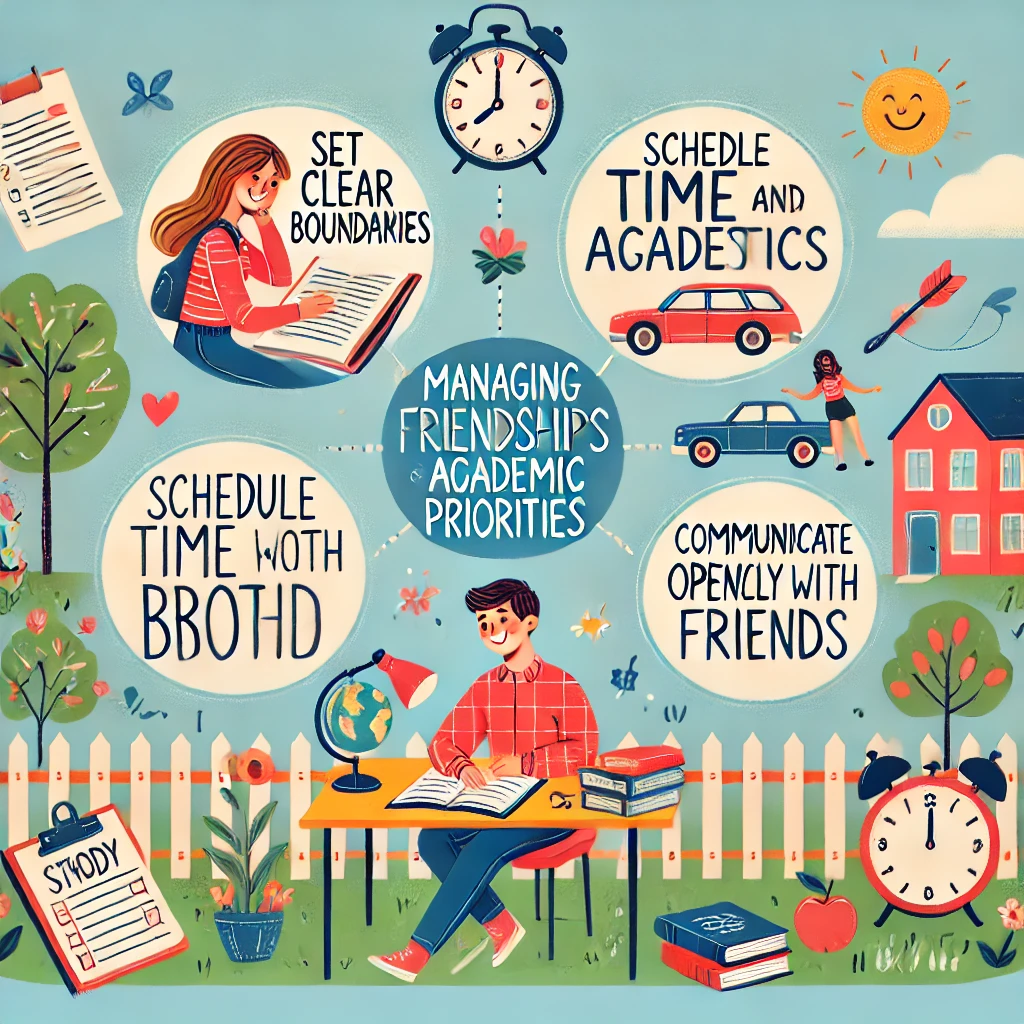
Friendships and Academic Priorities
Balancing friendships and academic responsibilities can be challenging, especially in high school when both feel equally important. Striking a balance is key to maintaining strong relationships while achieving your goals. Here are practical tips to help you manage your time and energy effectively.
1. Set Clear Priorities
Why It Helps:
Knowing what’s most important allows you to allocate your time wisely.
How to Do It:
- Make a list of your academic goals, like maintaining good grades or completing a project.
- Identify your most important friendships and focus on nurturing those relationships.
- Remember that certain times, like exam periods, may require more focus on academics.
Tip: Communicate your priorities to your friends so they understand your commitments.
2. Create a Schedule
Why It Helps:
A clear schedule ensures you have time for both studying and socializing.
How to Do It:
- Use a planner or digital calendar to block out study times and social activities.
- Plan short breaks during study sessions to check in with friends or hang out.
- Reserve weekends or specific evenings for fun with friends.
Tip: Stick to your schedule, but allow flexibility for special events or emergencies.
3. Combine Study and Social Time
Why It Helps:
Studying with friends can make academic work more enjoyable and productive.
How to Do It:
- Form a study group to review material, solve problems, or prepare for exams.
- Quiz each other on topics to make learning interactive and fun.
- Set clear goals for your study sessions to stay on track.
Tip: Balance work and play—study first, then reward yourselves with a fun activity.
4. Practice Open Communication
Why It Helps:
Being honest about your needs fosters understanding and prevents conflicts.
How to Do It:
- Let your friends know when you need to focus on schoolwork.
- Be upfront about your availability, especially during busy times.
- Encourage friends to share their own schedules so you can plan together.
Tip: A supportive friend will respect your priorities and cheer you on.
5. Learn to Say No
Why It Helps:
Avoiding overcommitment allows you to focus on what truly matters.
How to Do It:
- Politely decline invitations when you need to study or rest.
- Suggest alternative plans, like meeting after your schoolwork is done.
- Remember that saying no doesn’t mean you’re rejecting the friendship.
Tip: Use phrases like, “I’d love to, but I have to finish this assignment first.”
6. Limit Time on Social Media
Why It Helps:
Social media can distract from both academics and meaningful friendships.
How to Do It:
- Set time limits for apps that consume your attention.
- Focus on in-person interactions rather than online communication.
- Use social media to coordinate plans but avoid endless scrolling.
Tip: Turn off notifications during study sessions to stay focused.
7. Use Friendship as Motivation
Why It Helps:
Supportive friends can inspire you to stay on top of your academic responsibilities.
How to Do It:
- Share your academic goals with friends who encourage you to succeed.
- Celebrate each other’s achievements, like acing a test or finishing a project.
- Offer and accept help with challenging assignments or subjects.
Tip: Surround yourself with friends who value academics as much as you do.
8. Reflect on Your Time Management
Why It Helps:
Evaluating how you spend your time ensures balance and reduces stress.
How to Do It:
- At the end of each week, review how much time you dedicated to studying and socializing.
- Adjust your schedule if one area feels neglected.
- Identify moments when multitasking might have been counterproductive.
Tip: Use apps like Notion or Google Calendar to track your time and tasks.
9. Address Conflicts Early
Why It Helps:
Resolving issues quickly prevents misunderstandings and keeps relationships healthy.
How to Do It:
- Talk openly with friends if they feel neglected or if you feel overwhelmed.
- Use “I” statements to express your feelings without placing blame (e.g., “I feel stressed when…”).
- Work together to find compromises that work for both your schedules.
Tip: Balance is a shared effort—friends should also understand your need for academic focus.
10. Prioritize Self-Care
Why It Helps:
Taking care of yourself ensures you have the energy to invest in both academics and friendships.
How to Do It:
- Get 7–9 hours of sleep each night to stay refreshed and focused.
- Eat nutritious meals and stay hydrated throughout the day.
- Take breaks for relaxation or hobbies that recharge you.
Tip: A healthy mind and body make it easier to manage responsibilities and relationships.
Sample Balanced Weekly Schedule
| Day | Time | Activity |
|---|---|---|
| Monday | 4:00 PM – 5:30 PM | Homework and study time |
| 5:30 PM – 6:00 PM | Catch up with friends (call/text) | |
| Wednesday | 4:00 PM – 5:00 PM | Study group with friends |
| 5:00 PM – 6:00 PM | Relax or pursue a hobby | |
| Saturday | 2:00 PM – 5:00 PM | Hang out with friends (movie/game) |
Final Thoughts
Balancing friendships and academic priorities takes planning and communication, but it’s worth the effort. By setting boundaries, staying organized, and fostering supportive relationships, you can excel in school while maintaining meaningful connections.
For more tips on managing time and relationships, explore helpful resources to build a balanced and fulfilling high school experience!
Добавить комментарий