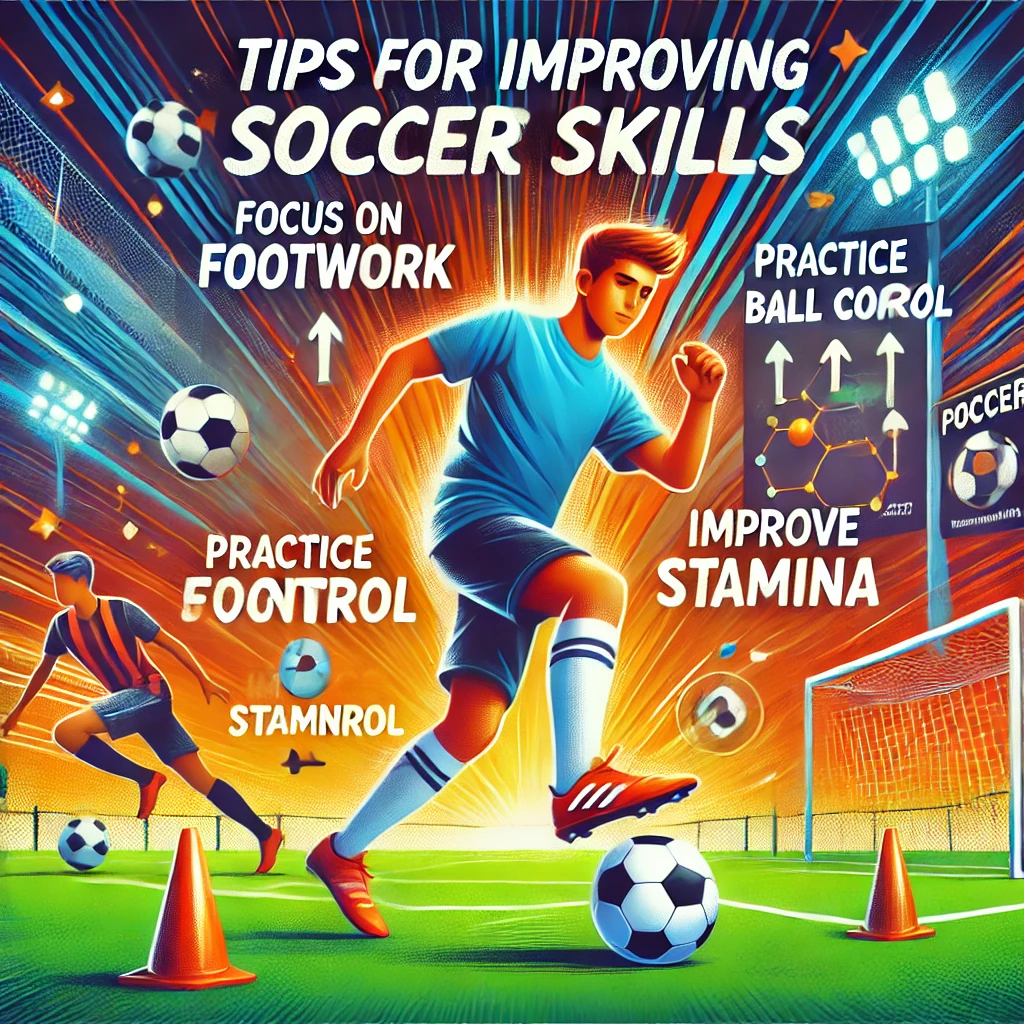
Soccer Skills
Becoming a better soccer player takes practice, discipline, and a willingness to learn. Whether you’re a beginner or looking to take your game to the next level, these tips will help you improve your skills and become more effective on the field.
1. Master Ball Control
Why It’s Important:
Good ball control allows you to maintain possession and execute precise moves.
How to Practice:
- Dribbling Drills: Use cones to practice weaving in and out while keeping the ball close.
- Toe Taps: Tap the top of the ball lightly with alternating feet.
Inside-Outside Touches: Dribble using the inside and outside of your feet to change direction.
Tip: Keep your eyes up while dribbling to improve awareness.
2. Improve Passing and Receiving
Why It’s Important:
Accurate passing and clean receptions help maintain possession and create scoring opportunities.
How to Practice:
- Wall Passes: Kick the ball against a wall and trap it when it returns.
- One-Touch Passing: Work with a partner to pass the ball using only one touch.
- Receiving Control: Practice trapping the ball with your foot, thigh, or chest.
Tip: Focus on passing with the inside of your foot for accuracy.
3. Work on Shooting Accuracy
Why It’s Important:
Scoring goals requires precision and the ability to shoot under pressure.
How to Practice:
- Target Practice: Set up targets in the goal and aim for specific spots.
- Volleys: Practice striking the ball while it’s in the air.
- Weak-Foot Shooting: Spend time improving shots with your non-dominant foot.
Tip: Keep your body over the ball when shooting to avoid hitting it too high.
4. Develop Your Defending Skills
Why It’s Important:
Good defending prevents opponents from scoring and disrupts their attacks.
How to Practice:
- 1v1 Drills: Practice defending against a partner in one-on-one situations.
- Positioning: Learn to stay between your opponent and the goal.
- Tackling: Work on timing your tackles to win the ball without fouling.
Tip: Stay low and use quick, small steps to maintain balance.
5. Enhance Your Fitness
Why It’s Important:
Soccer requires endurance, speed, and strength.
Fitness Drills:
- Sprints: Practice short bursts of speed to simulate game scenarios.
- Interval Training: Alternate between high-intensity running and rest periods.
- Strength Exercises: Focus on squats, lunges, and core work to build stability.
Tip: Combine cardio and strength training for a balanced fitness routine.
6. Focus on Position-Specific Skills
Why It’s Important:
Different positions require different strengths and abilities.
Examples:
- Forwards: Practice shooting, quick turns, and positioning near the goal.
- Midfielders: Work on passing accuracy, vision, and stamina.
- Defenders: Focus on tackling, marking, and clearing the ball.
- Goalkeepers: Practice diving saves, reflex drills, and communication.
Tip: Understand the role and responsibilities of your position.
7. Improve Game Awareness
Why It’s Important:
Knowing what’s happening around you helps you make better decisions.
How to Improve:
- Play Small-Sided Games: These force you to make quick decisions in tight spaces.
- Watch Matches: Study professional games to learn positioning and strategies.
- Communicate: Talk with teammates during play to stay coordinated.
Tip: Keep your head up and scan the field regularly.
8. Learn New Skills and Tricks
Why It’s Important:
Mastering skills like stepovers and fake moves can outsmart defenders.
Skills to Try:
- Stepovers: Fake a movement to one side, then go the other way.
- Body Feints: Use your body to trick opponents into thinking you’re moving a certain direction.
- Cruyff Turn: Turn sharply by dragging the ball back with your inside foot.
Tip: Practice slowly at first, then increase speed as you get comfortable.
9. Play Regularly
Why It’s Important:
The more you play, the more you’ll improve in real-game scenarios.
Ideas:
- Join a local team or league.
- Play pickup games with friends.
- Use solo time to practice skills and techniques.
Tip: Vary your practice sessions to keep them engaging.
10. Stay Mentally Strong
Why It’s Important:
Soccer is as much a mental game as it is physical.
Tips:
- Stay Positive: Learn from mistakes instead of getting discouraged.
- Set Goals: Aim for specific improvements, like better passing or endurance.
- Visualize Success: Imagine yourself making great plays to build confidence.
Tip: Celebrate small wins to stay motivated.
11. Practice Consistently
Why It’s Important:
Consistent effort is key to long-term improvement.
How to Stay Consistent:
- Set aside time for practice each week.
- Rotate between fitness, technical skills, and game practice.
- Track your progress and adjust your goals as needed.
Tip: Even 15–20 minutes of focused practice a day can make a big difference.
Final Thoughts
Improving your soccer skills takes dedication and a willingness to push yourself. Focus on fundamentals, challenge yourself with new techniques, and play regularly to gain experience. With consistent effort, you’ll see noticeable improvements in your game and confidence on the field. Keep practicing, and have fun!
Добавить комментарий