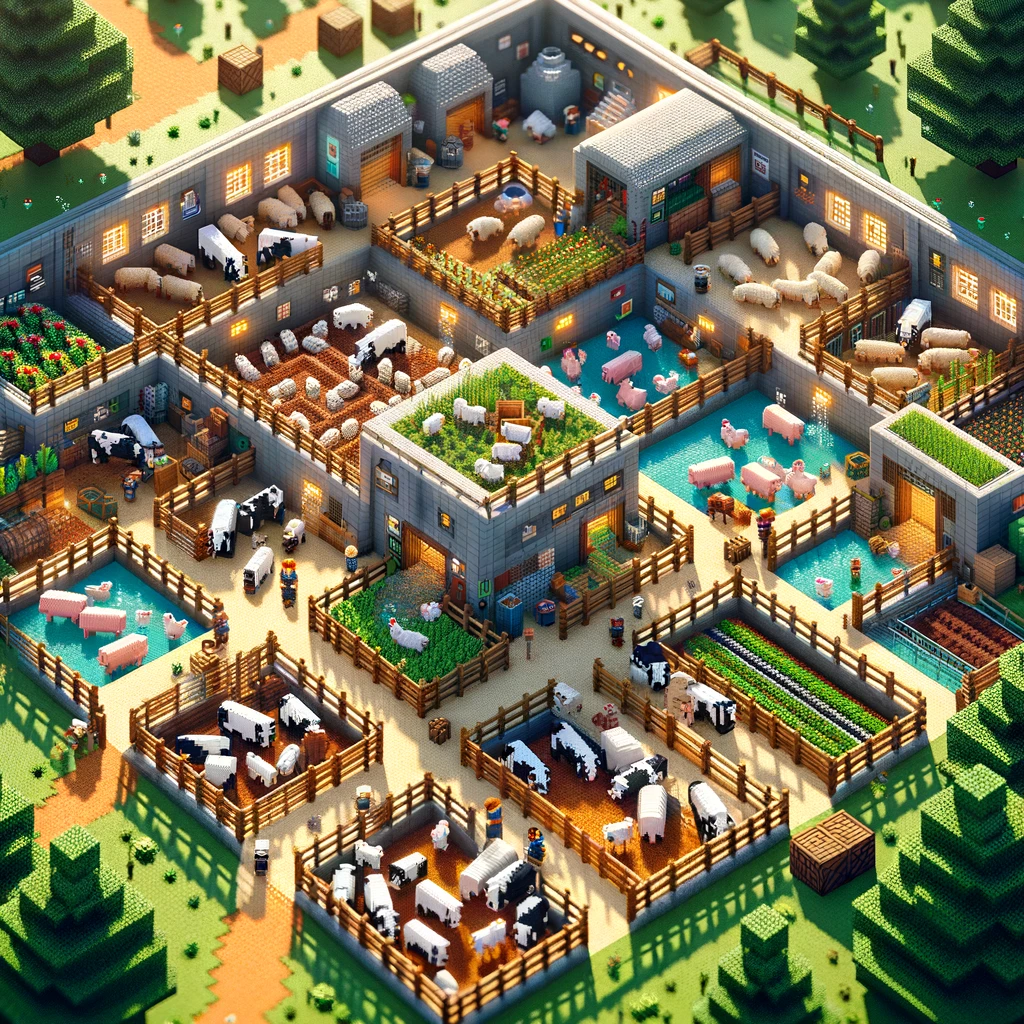
In the vast world of Minecraft, where Creepers roam and the nights are dark and full of terrors, one of the most comforting sights is that of your own animal farm. It’s not just about the aesthetic, though; these farms are vital for survival, providing food, materials, and sometimes a bit of company in the otherwise lonely world. Let’s dive into the art of setting up your own Minecraft animal farm, where efficiency meets the pastoral idyll.
Choosing Your Critters
First things first, you need to decide which animals to farm. Each animal brings something unique to the table:
- Cows: Excellent for leather and beef. Plus, milk is a great antidote to poison.
- Sheep: Wool galore, and if you’re into mutton, they’ve got that too.
- Pigs: Once the staple for food, now somewhat overshadowed by cows and sheep, but who can resist those cute faces?
- Chickens: Eggs, feathers, and chicken dinners. They’re low maintenance and highly productive.
- Rabbits: For the adventurous farmer, rabbits provide meat, hides, and rabbit’s feet (for brewing).
- Horses, Donkeys, Mules: Not for food, obviously, but for transportation and storage.
Setting Up the Farm
Location is key. You want your farm close enough to your base for easy access but not so close that you hear animals all day and night. Here’s a step-by-step guide to setting up:
- Fencing or Walls: Ensure your animals are secure from mobs. A 2-block high wall or fence should suffice. Add gates for easy entry and exit.
- Separate Pens: Each animal type should have its own pen for ease of feeding and breeding. Trust me, trying to feed chickens in a pen full of cows is no picnic.
- Water: Animals don’t actually need water to survive in Minecraft, but a water trough adds a nice touch of realism to your farm.
- Shelter: While not strictly necessary, providing shelter protects your animals from lightning strikes and adds to the farm’s aesthetic.
Breeding Your Animals
The heart of animal farming is breeding. Almost all animals are bred with different types of food:
- Cows and Sheep: Wheat
- Pigs: Carrots, potatoes, or beetroots
- Chickens: Seeds (any kind)
- Rabbits: Carrots, dandelions, or golden carrots
When animals are fed, they enter «love mode» and pair off to produce baby animals, which grow up to provide more resources. The more animals you breed, the more resources you’ll have at your disposal.
Automating Your Farm
For the tech-savvy farmer, automation is the next step. While setting up redstone contraptions might take a bit of learning, it’s worth the effort. Here are a few ideas:
- Egg Collectors: A simple hopper and chest system under your chickens can collect eggs for you.
- Wool Shearers: More complex, but a system with pistons can automatically shear sheep.
- Automatic Breeders: The most complex, involving dispensers, water channels, and timing circuits to feed and sort animals.
Tips for Efficient Farming
- Rotation: Breed different animal types in rotation to ensure a steady supply of resources without overloading any pen.
- Expansion: Don’t be afraid to expand your farm as your needs grow. More animals mean more resources.
- Naming: For pets or particularly valuable animals, name tags prevent them from despawning.
Conclusion
Whether it’s the simple joy of shepherding a flock of sheep into a pen or the more complex pleasure of designing an automated egg collector, animal farming in Minecraft adds a rewarding layer to the game. It provides essential resources for survival and creative endeavors, and with a bit of effort, your farm can become not just a source of materials but a cornerstone of your Minecraft world. So, grab your wheat, seeds, and carrots, and start farming. Who knows? You might just find that amidst the mining and the crafting, farming is where your heart lies.
Добавить комментарий