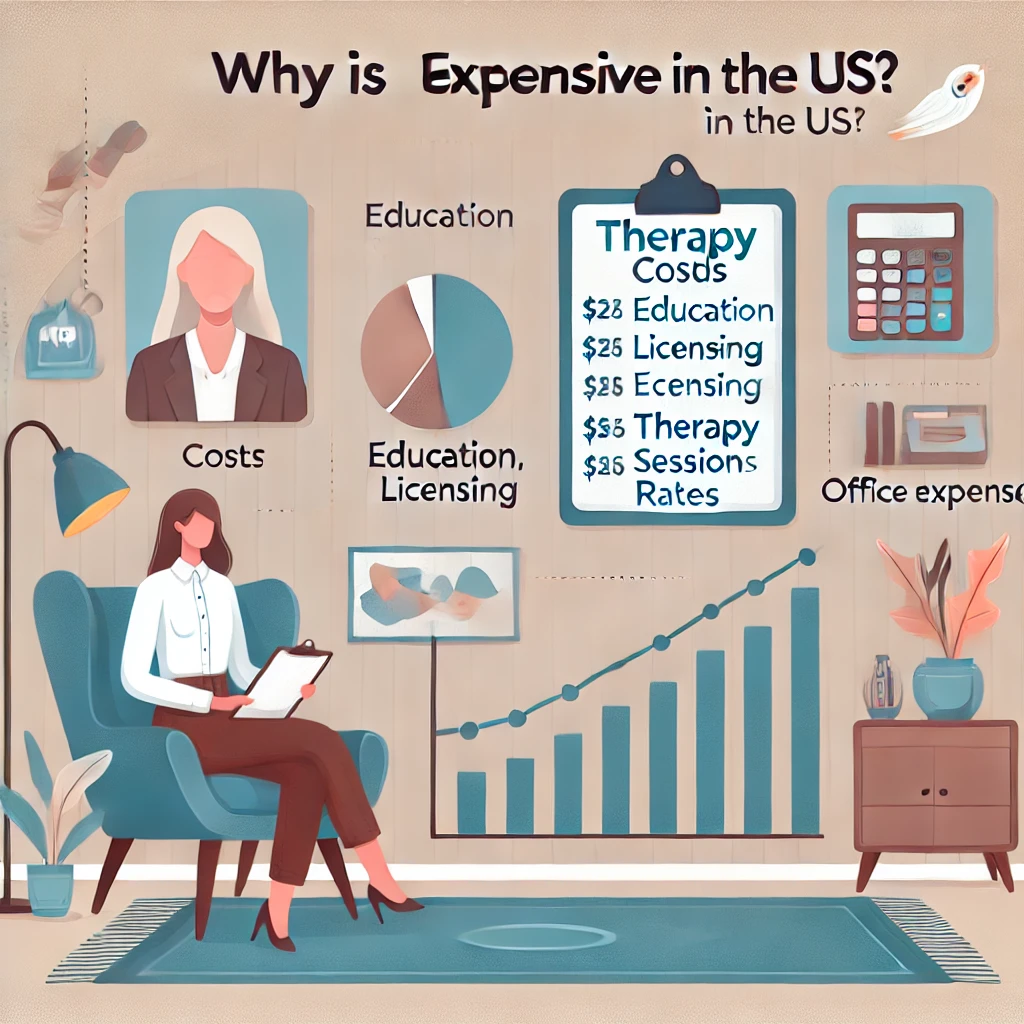
Why Is Therapy So Expensive in the US?
Therapy in the United States is often associated with high costs, making it inaccessible for many people who need mental health care. This expense is influenced by various systemic, professional, and economic factors. Let’s explore why therapy is so costly in the US.
1. Lengthy Education and Training for Therapists
Becoming a licensed therapist requires extensive education and training, which often includes:
- A bachelor’s degree.
- A master’s or doctoral degree in psychology, counseling, or social work.
- Hundreds of hours of supervised clinical experience.
- Passing rigorous licensing exams.
This process can take 6–10 years and costs tens of thousands of dollars in tuition and other expenses. Therapists must charge fees that help them recover these costs and sustain their practice.
2. High Overhead Costs
Operating a private practice comes with significant expenses, such as:
- Office Space: Renting or maintaining a therapy office, especially in urban areas, is costly.
- Insurance: Therapists must carry malpractice insurance, which can be expensive.
- Licensing Fees and Continuing Education: Therapists are required to renew licenses and attend regular training, which adds to their expenses.
- Administrative Costs: Scheduling, billing, and maintaining client records require time and resources.
All these overhead costs are factored into therapy fees.
3. Limited Insurance Coverage
Many health insurance plans in the US provide limited or no coverage for mental health services, leaving patients to pay out-of-pocket. Even when therapy is covered:
- High Deductibles: Patients often need to meet high deductibles before coverage kicks in.
- Restricted Networks: Insurers may only cover therapists within a specific network, limiting options and creating demand for out-of-network providers who charge higher fees.
- Session Limits: Some plans cap the number of therapy sessions covered, forcing patients to pay for additional sessions themselves.
4. High Demand for Mental Health Services
The demand for therapy has increased in recent years due to rising awareness of mental health issues and the effects of societal stressors, such as the COVID-19 pandemic. This demand often outpaces the supply of qualified therapists, especially in rural or underserved areas, leading to higher prices.
5. Time-Intensive Nature of Therapy
Therapy is a highly individualized service that requires significant time and attention from the therapist. Unlike other professions where practitioners can serve multiple clients simultaneously, therapists typically dedicate an hour or more to one client at a time, limiting the number of clients they can see in a day.
6. Business Costs in Private Practice
Therapists in private practice must handle all aspects of their business, including:
- Marketing their services.
- Managing administrative tasks like billing and insurance claims.
- Covering unpaid time for missed or canceled appointments.
These factors contribute to the higher rates charged by private practitioners compared to those employed by larger organizations.
7. Lack of Government Funding and Support
In many countries, therapy is subsidized or covered by public healthcare systems. In the US, however, mental health care often relies on private insurance or out-of-pocket payments. While some federal programs, such as Medicaid, cover therapy, not all therapists accept these forms of payment due to low reimbursement rates.
8. Stigma and Barriers to Access
The stigma around seeking mental health care can discourage investment in accessible services. As a result, mental health care systems remain underfunded and fragmented, leaving therapy as a costly, privatized service for many Americans.
9. Specialization and Expertise
Therapists who specialize in specific areas, such as trauma, eating disorders, or couples counseling, often charge higher rates due to their advanced training and expertise. These specialized services, while valuable, come at a premium.
10. Economic Factors
Rising inflation and the cost of living also affect therapy prices. Therapists, like other professionals, adjust their rates to reflect economic changes and maintain their own financial well-being.
Conclusion
Therapy is expensive in the US due to factors like extensive training requirements, high operating costs, limited insurance coverage, and increasing demand. While the cost can be a barrier, options such as sliding-scale fees, nonprofit organizations, and teletherapy services are available to help make therapy more affordable.
For more tips on improving your photography and editing skills, check out helpful guides to take your selfies to the next level.
Добавить комментарий