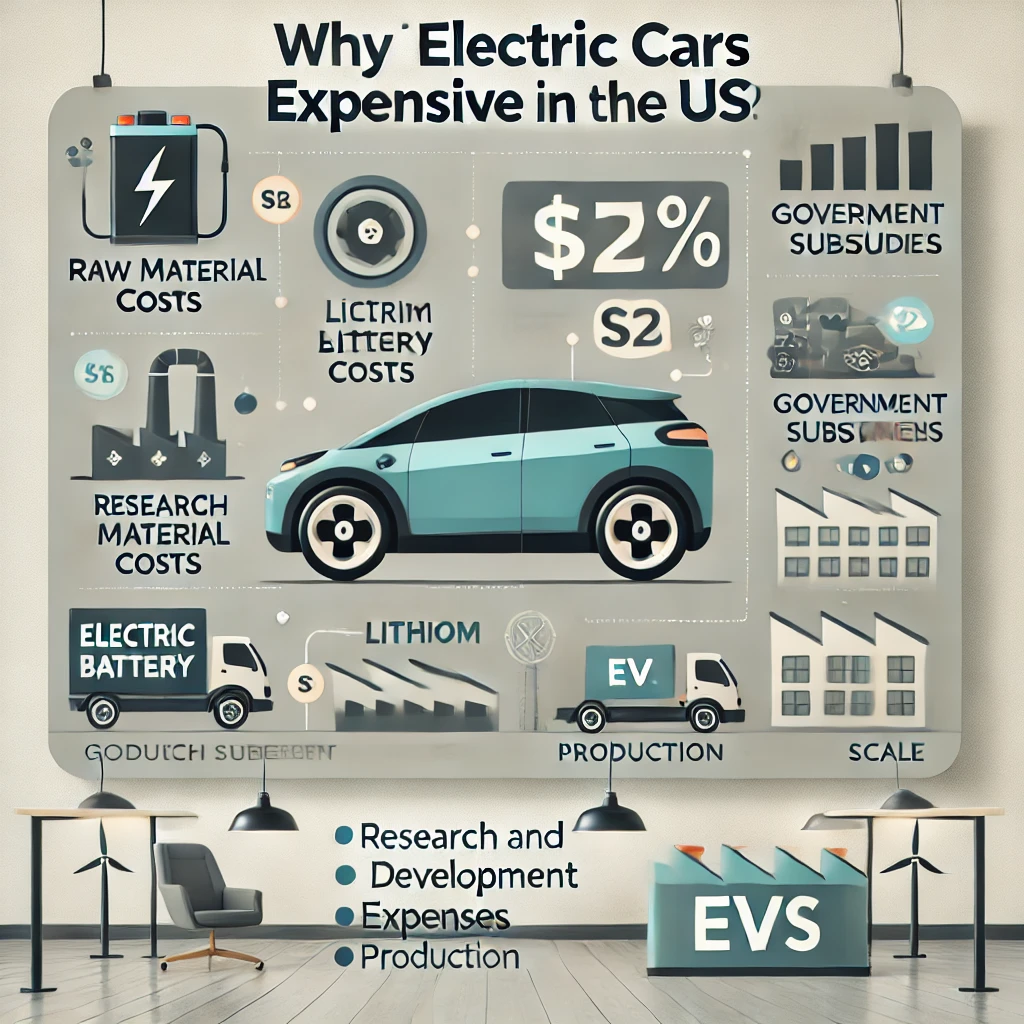
Why Are Electric Cars So Expensive in the US?
Electric cars (EVs) have gained significant popularity in recent years, driven by environmental concerns and advancements in technology. However, many potential buyers in the United States are deterred by their high price tags. So, why are electric vehicles so expensive compared to traditional gas-powered cars? Let’s explore the key reasons.
1. High Production Costs
One of the primary reasons for the steep price of electric cars is the cost of production. Unlike internal combustion engines, EVs rely on advanced batteries, which are expensive to manufacture. Lithium-ion batteries, the most commonly used type, require rare materials such as lithium, cobalt, and nickel. These materials are not only costly but also difficult to source, increasing overall production expenses.
Moreover, the technology behind electric powertrains and software for managing battery efficiency adds to the manufacturing cost. Although prices for EV batteries are steadily declining due to economies of scale, they remain a significant factor in the high retail price of electric cars.
2. Limited Manufacturing Scale
Another contributing factor is the relatively limited production scale of electric vehicles compared to traditional cars. Gasoline-powered vehicles have been mass-produced for over a century, allowing automakers to streamline production processes and reduce costs significantly. In contrast, EV manufacturing is still developing, with fewer factories dedicated to their production. This smaller scale leads to higher per-unit costs for electric vehicles.
3. Research and Development Expenses
Automakers invest heavily in research and development (R&D) to improve battery performance, range, and charging speed. These innovations require significant resources, and the costs are often passed on to the consumer. As companies compete to make EVs more efficient and appealing, the initial R&D costs contribute to the high upfront price of these vehicles.
4. Charging Infrastructure Development
While not directly affecting the sticker price, the cost of building a nationwide charging infrastructure indirectly adds to the overall expenses related to EV ownership. Automakers often partner with governments or private companies to fund the development of charging networks. These costs, while shared, can influence the overall market pricing of electric cars.
5. Government Incentives and Market Dynamics
In the US, government incentives play a role in shaping EV pricing. Federal tax credits and state subsidies help offset the cost of electric vehicles, but these benefits are often factored into the pricing strategy of automakers. For instance, manufacturers may price their EVs higher, knowing buyers will receive tax credits. Additionally, the limited supply of EVs relative to high demand can push prices up.
6. Luxury Market Positioning
Many electric cars are positioned as luxury vehicles, targeting affluent consumers. Premium features such as advanced autopilot systems, high-end interiors, and superior performance capabilities justify higher price points. Brands like Tesla have popularized this approach, creating a perception that EVs are synonymous with luxury.
Conclusion
In summary, the high cost of electric cars in the US can be attributed to factors like expensive battery production, limited manufacturing scale, R&D expenses, and the nascent state of charging infrastructure. However, as technology advances and production scales up, prices are expected to drop, making electric vehicles more accessible to a broader audience.
For more tips on improving your photography and editing skills, check out helpful guides to take your selfies to the next level: ocean.co.ua.
Добавить комментарий