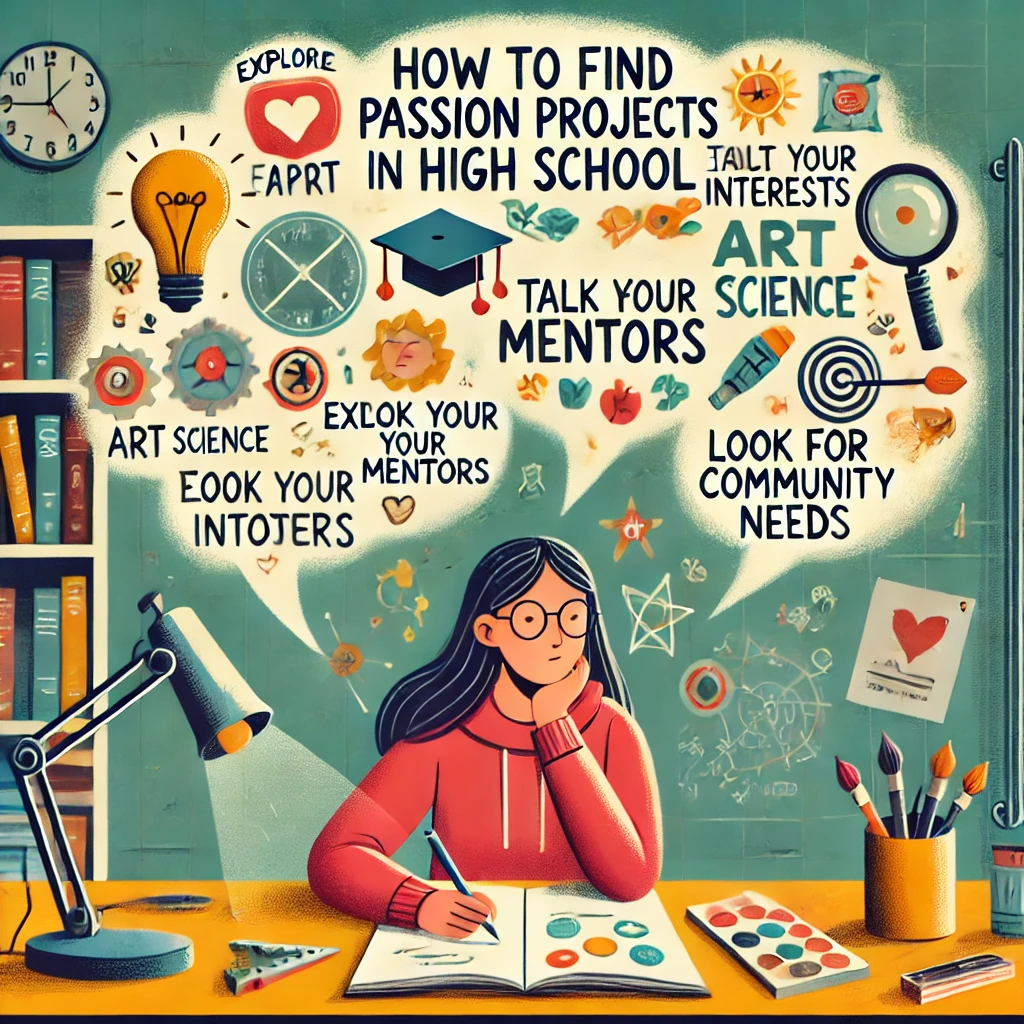
How to Find Passion Projects in High School
Passion projects are an excellent way to explore your interests, develop new skills, and stand out in college applications. Whether you’re into science, art, business, or activism, finding the right project can be both exciting and rewarding. Here’s a step-by-step guide to help you discover and create meaningful passion projects during high school.
1. Reflect on Your Interests and Strengths
Why It Helps:
Understanding what excites you ensures your project will be enjoyable and sustainable.
How to Do It:
- List your hobbies, favorite subjects, and personal skills.
- Think about issues you care deeply about, such as climate change, education, or mental health.
- Consider what you’ve always wanted to learn or try, like coding, painting, or event planning.
Tip: Choose something that aligns with your values and natural curiosity.
2. Look for Inspiration Around You
Why It Helps:
Exploring ideas from your environment sparks creativity and provides direction.
How to Do It:
- Talk to teachers, mentors, or family members about potential project ideas.
- Observe challenges in your school or community that you could address.
- Research online platforms like YouTube, TED Talks, or blogs for examples of teen projects.
Tip: Browse social media or websites like Pinterest for ideas in areas like art, writing, or entrepreneurship.
3. Start Small and Build Gradually
Why It Helps:
Beginning with a manageable project prevents burnout and builds confidence.
How to Do It:
- Focus on one specific idea, like creating a blog about mental health or starting a recycling program.
- Dedicate a set amount of time each week to work on your project.
- Expand the scope of your project as you gain experience and momentum.
Tip: Small wins can lead to big achievements, so don’t worry if your project seems simple at first.
4. Align with Your Future Goals
Why It Helps:
Passion projects that connect to your long-term plans make you more focused and motivated.
How to Do It:
- Think about potential college majors or career paths, like engineering, teaching, or filmmaking.
- Create a project that allows you to explore that field, such as building a robot or tutoring younger students.
- Use the project to showcase your dedication and initiative in applications or interviews.
Tip: Colleges and employers love to see projects that demonstrate commitment and creativity.
5. Involve Your Community
Why It Helps:
Community-focused projects have a broader impact and often gain more support.
How to Do It:
- Organize a food or clothing drive for local charities.
- Start a peer mentoring group to help fellow students with academics or personal challenges.
- Partner with local businesses or organizations to address community needs.
Tip: Engaging with your community can help you build connections and gain valuable insights.
6. Use Online Tools and Resources
Why It Helps:
Digital platforms offer tools to kickstart and manage your project efficiently.
How to Do It:
- Use platforms like Canva for graphic design, Wix for building a website, or YouTube for sharing videos.
- Explore free coding tutorials on Codecademy or Khan Academy to develop tech skills.
- Join online communities or forums related to your interests for support and ideas.
Tip: Technology can amplify your project’s reach and impact.
7. Collaborate with Others
Why It Helps:
Working with friends or mentors adds perspective and makes the process more enjoyable.
How to Do It:
- Partner with classmates who share similar interests or goals.
- Ask a teacher or coach to guide you through your project.
- Join school clubs or extracurricular activities that align with your idea, like debate, art, or robotics.
Tip: Collaboration can open doors to resources and opportunities you might not have on your own.
8. Make It Sustainable
Why It Helps:
A long-term project showcases dedication and allows you to achieve greater results.
How to Do It:
- Plan your project in phases, setting milestones along the way.
- Regularly evaluate your progress and adjust as needed.
- Create a system that allows the project to continue even if you move on, like training someone else to take over.
Tip: Sustainability is especially impressive on college applications and resumes.
9. Showcase Your Project
Why It Helps:
Sharing your work highlights your accomplishments and inspires others.
How to Do It:
- Document your project with photos, videos, or a blog.
- Present your results at school events, community gatherings, or online platforms.
- Include your project in your portfolio, college applications, or LinkedIn profile.
Tip: Use social media to reach a wider audience and attract support for your efforts.
10. Examples of Passion Projects for High School Students
Academic-Related:
- Write a research paper on a topic you love and submit it to a teen journal.
- Start a book club focused on diverse authors or genres.
- Create a science experiment and document your findings.
Creative:
- Launch a YouTube channel or podcast about a niche topic.
- Design a clothing line or create custom artwork to sell online.
- Write and self-publish a novel, poetry collection, or comic.
Community-Oriented:
- Organize a local cleanup or environmental awareness campaign.
- Start a support group for teens dealing with stress or anxiety.
- Create a workshop or class to teach younger students a skill you’ve mastered.
Final Thoughts
Finding and developing a passion project in high school is an opportunity to explore your interests, make a difference, and showcase your creativity. Start with what excites you, and don’t be afraid to experiment. Remember, it’s not just about the results—it’s about the journey and what you learn along the way.
For more ideas and resources to kickstart your project, explore helpful guides and turn your passion into action!
Добавить комментарий