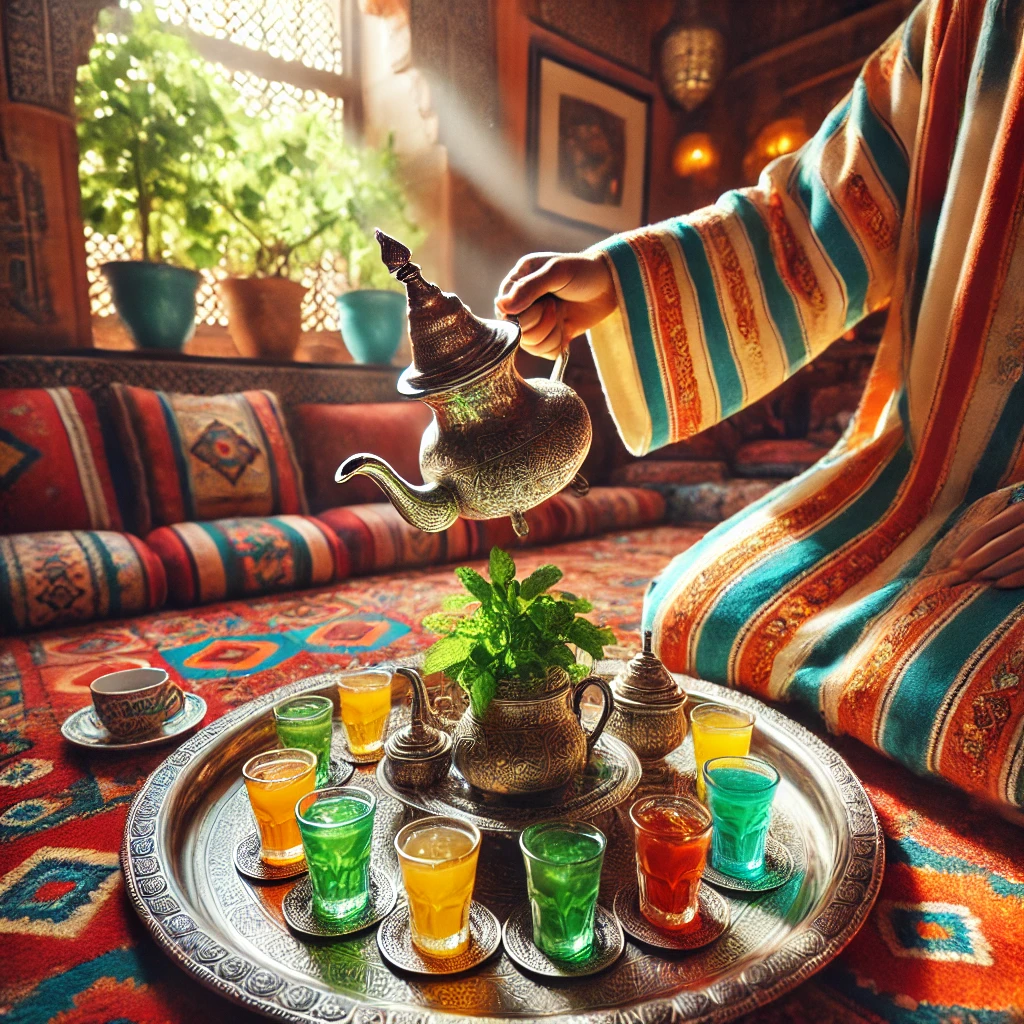
Tea Culture in Morocco
Tea is more than just a beverage in Morocco—it is a symbol of hospitality, tradition, and social connection. Known as Atay, Moroccan tea culture is deeply rooted in daily life, with its preparation and serving considered an art form. Whether in a bustling souk, a quiet riad, or a family gathering, tea is an essential part of Moroccan hospitality.
1. History of Moroccan Tea
- Tea was introduced to Morocco in the 18th century, likely by British merchants.
- It quickly became a national tradition, blending with local customs and flavors.
- Today, Morocco is one of the world’s largest importers of green tea, particularly Chinese Gunpowder tea.
2. The Iconic Moroccan Mint Tea
- Known as: Atay B’nana (Mint Tea).
- Ingredients: Green tea, fresh mint leaves, sugar, and sometimes herbs like wormwood or lemon verbena.
- Flavor Profile: Sweet, refreshing, and aromatic.
3. The Ritual of Moroccan Tea Preparation
Making Moroccan tea is a ceremonial process that requires patience and skill:
- Boil water in a traditional metal teapot (berrad).
- Add green tea leaves, rinse with hot water, and discard the first infusion to remove bitterness.
- Add fresh mint and sugar, then pour boiling water over the mixture.
- Simmer for a few minutes, allowing flavors to blend.
- Aerate the tea by pouring it from a height into small glasses, creating a foamy top.
4. The Importance of Tea in Moroccan Hospitality
- Serving tea is a sign of respect and friendship.
- Guests are always offered tea upon arrival at homes, shops, or gatherings.
- Traditionally, three glasses of tea are served, each with a different strength:
- First glass: Light and delicate.
- Second glass: Balanced and flavorful.
- Third glass: Strong and intense.
5. Where to Experience Moroccan Tea Culture
- Traditional Riads: Experience tea in beautifully decorated courtyards.
- Souks and Cafés: Sip mint tea while watching daily life unfold in cities like Marrakech and Fes.
- Desert Camps: Enjoy tea ceremonies under the stars in the Sahara.
6. Beyond Mint Tea: Other Moroccan Herbal Infusions
- Sheba Tea: Made with wormwood, offering a slightly bitter taste.
- Louiza Tea: Infused with lemon verbena for a citrusy aroma.
- Cinnamon and Ginger Teas: Popular during colder months.
A Timeless Tradition
Moroccan tea culture is more than just a drink—it’s a warm invitation to slow down, connect, and savor the moment. Whether at a family gathering or a traditional market, the ritual of tea remains a cherished part of Moroccan life.
For more tips on improving your photography and editing skills, check out helpful guides to take your selfies to the next level.
Добавить комментарий