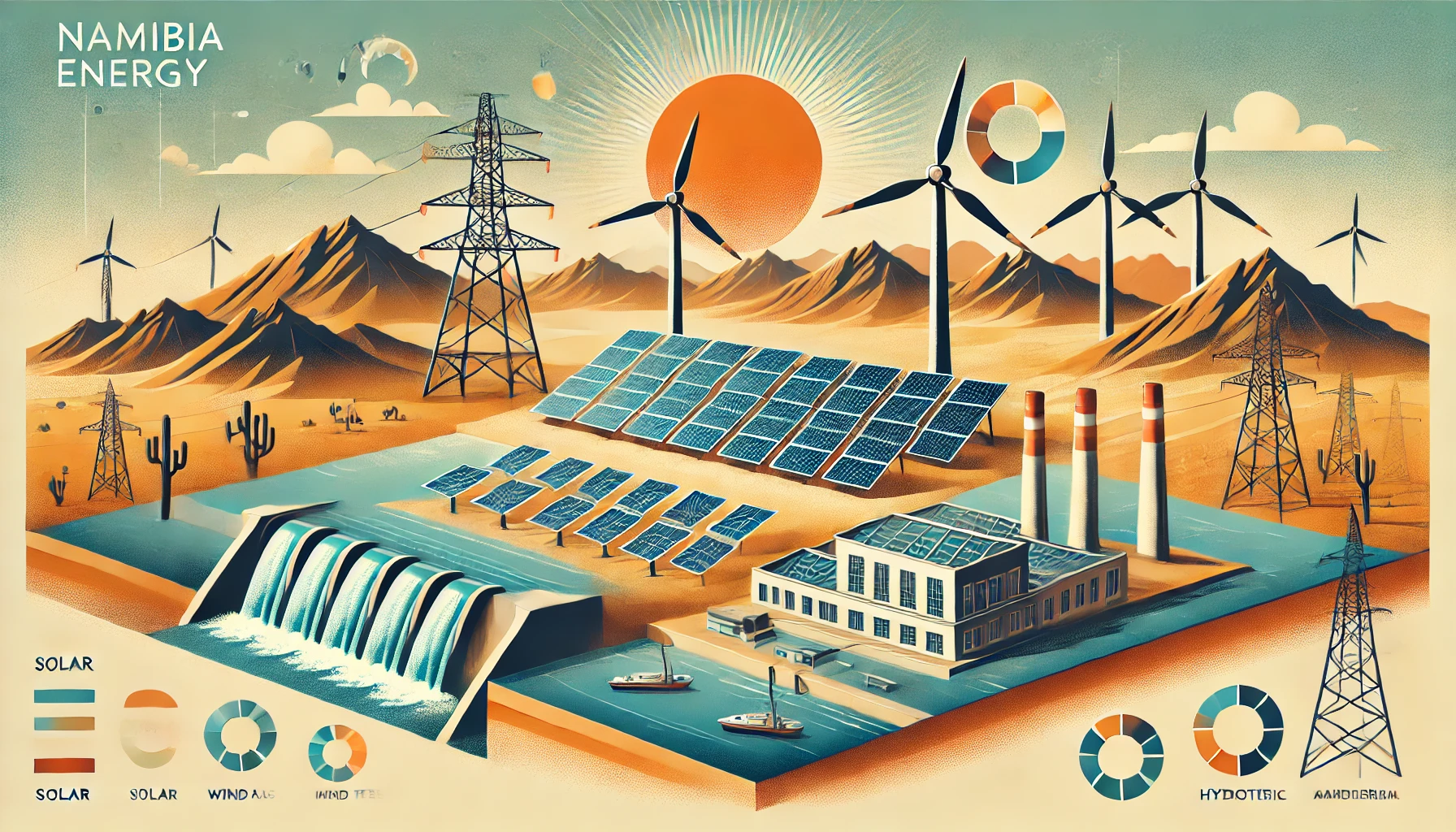
Renewable Energy in Namibia
Namibia is rapidly emerging as a leader in renewable energy in Africa, leveraging its abundant natural resources to transition toward sustainable power generation. With vast solar potential, strong winds, and innovative green hydrogen projects, the country is positioning itself as a hub for clean energy in the region.
1. Solar Energy – A Key Resource
Namibia enjoys over 300 days of sunshine per year, making solar power the most viable renewable energy source. Large-scale solar farms, such as the Omburu Solar Plant and the Rosh Pinah Solar Park, contribute to the national grid, reducing reliance on imported electricity. Off-grid solar home systems are also improving energy access in rural areas.
2. Wind Energy – Harnessing Coastal Winds
The coastal areas of Namibia, particularly around Lüderitz and Walvis Bay, have strong and consistent winds, ideal for wind power generation. The Lüderitz Wind Power Project is among the key initiatives aimed at expanding wind energy capacity.
3. Hydropower – Utilizing the Kunene River
Hydropower plays a significant role in Namibia’s energy mix, with the Ruacana Hydropower Station on the Kunene River providing a major share of the country’s electricity. However, fluctuating rainfall patterns affect its reliability, increasing the need for diversified renewable sources.
4. Green Hydrogen – The Future of Energy
Namibia is investing heavily in green hydrogen production, using solar and wind energy to generate hydrogen through electrolysis. The Southern Corridor Development Initiative aims to establish Namibia as a key exporter of green hydrogen and ammonia, attracting global investors and positioning the country as a leader in Africa’s energy transition.
5. Government Policies and Investments
Namibia has introduced several policies to encourage renewable energy adoption, including:
- The Renewable Energy Feed-In Tariff (REFIT) – Supports independent power producers.
- National Energy Policy (2017) – Aims to increase the share of renewables in the energy mix.
- Public-Private Partnerships – Encourage investment in solar, wind, and hydrogen projects.
Challenges and Future Prospects
Despite its progress, Namibia faces challenges such as high initial investment costs, grid infrastructure limitations, and water scarcity for hydrogen production. However, with increasing international support and technological advancements, the country is on track to become a regional renewable energy powerhouse.
Conclusion
Namibia’s commitment to solar, wind, hydropower, and green hydrogen is transforming its energy landscape. By embracing renewables, the country is not only securing energy independence but also contributing to global climate goals.
For more tips on improving your photography and editing skills, check out helpful guides to take your selfies to the next level.
Добавить комментарий