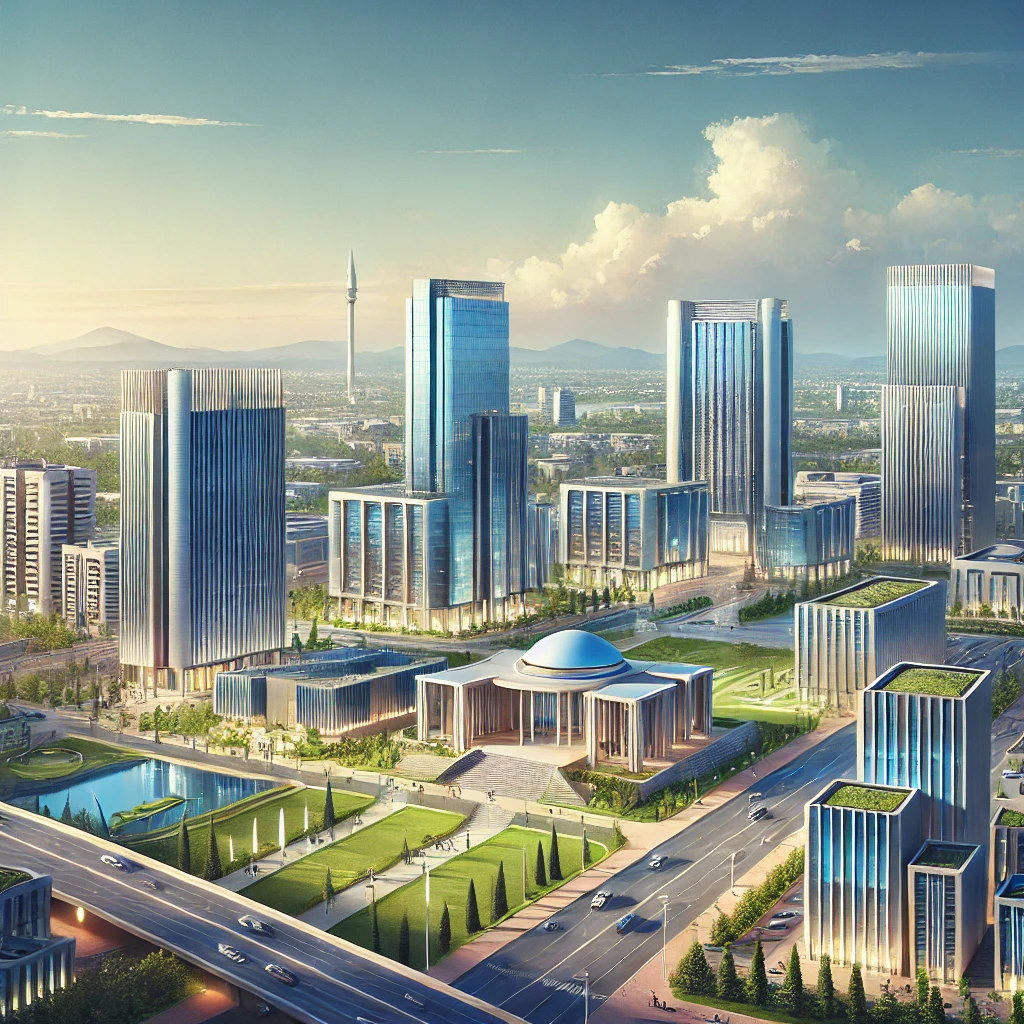
Modern Architecture in Abuja, Nigeria
Abuja, the capital of Nigeria, is a city that blends modern architecture with cultural and historical influences. Since becoming the capital in 1991, Abuja has rapidly developed into a planned city with striking skyscrapers, government buildings, and innovative structures that showcase Nigeria’s progress. Here’s a look at some of the most impressive examples of modern architecture in Abuja.
1. Nigerian National Mosque
Architectural Style: Islamic Modernism
Completed: 1984
One of the most iconic landmarks in Abuja, the Nigerian National Mosque features a golden dome and four towering minarets. It serves as the country’s central mosque and is a masterpiece of Islamic-inspired modern architecture.
- Key Features:
- A grand golden dome, visible from miles away.
- Traditional Islamic geometric patterns combined with contemporary design.
- A large prayer hall accommodating thousands of worshippers.
2. Nigerian National Christian Centre
Architectural Style: Neo-Gothic & Contemporary
Completed: Early 2000s
Located near the National Mosque, the Nigerian National Christian Centre stands as a symbol of religious unity. The structure is known for its towering spires, stained glass windows, and modern Gothic influences.
- Key Features:
- A unique triangular shape with soaring spires.
- Stunning stained glass windows that depict biblical scenes.
- A modern interior with high ceilings and an open-concept design.
3. Central Bank of Nigeria (CBN) Headquarters
Architectural Style: High-Tech & Corporate Modernism
Completed: 2003
The CBN Headquarters is one of the tallest buildings in Abuja and an example of sleek corporate modernism. It represents Nigeria’s financial power and economic growth.
- Key Features:
- Glass and steel façade for a futuristic look.
- An environmentally friendly energy-efficient design.
- A symbol of Nigeria’s growing influence in global finance.
4. Nigerian Communications Commission (NCC) Headquarters
Architectural Style: Postmodern & Futuristic
Completed: 2015
The NCC Headquarters is a bold statement of Nigeria’s advancements in telecommunications and technology. The building features a unique curved design with a futuristic feel.
- Key Features:
- A wave-like façade symbolizing communication signals.
- A smart building with sustainable energy solutions.
- Located in Maitama, one of Abuja’s most prestigious districts.
5. Millennium Tower and Cultural Centre
Architectural Style: Futuristic & High-Tech
Status: Under Construction (Planned Completion TBD)
The Millennium Tower is set to be Abuja’s tallest structure, standing at 170 meters (558 feet). Designed to be a cultural hub, it will include museums, exhibition halls, and recreational areas.
- Key Features:
- A futuristic design resembling a twisting glass column.
- A panoramic viewing platform at the top.
- A planned cultural village showcasing Nigerian heritage.
6. Shehu Musa Yar’Adua Centre
Architectural Style: Minimalist & Contemporary
Completed: 2002
Named after the late General Shehu Musa Yar’Adua, this center serves as a memorial and conference venue. Its modern design incorporates simple geometric lines and open spaces.
- Key Features:
- A sleek glass and concrete structure.
- A memorial fountain and reflecting pool.
- A library and exhibition space dedicated to Nigeria’s political history.
7. Abuja City Gate
Architectural Style: Symbolic Modernism
Completed: 1991
The Abuja City Gate is an architectural monument that welcomes visitors into the capital. It is a symbolic structure representing unity, progress, and the transition from Lagos to Abuja as Nigeria’s capital.
- Key Features:
- A minimalist design incorporating Nigerian motifs.
- Often lit up at night for national celebrations.
- A landmark for official state events.
Conclusion
Abuja’s modern architecture reflects Nigeria’s growth, cultural diversity, and ambition. From futuristic skyscrapers to iconic religious landmarks, the city continues to evolve as a center of political, economic, and technological innovation.
For more tips on improving your photography and editing skills, check out helpful guides to take your selfies to the next level.
Добавить комментарий