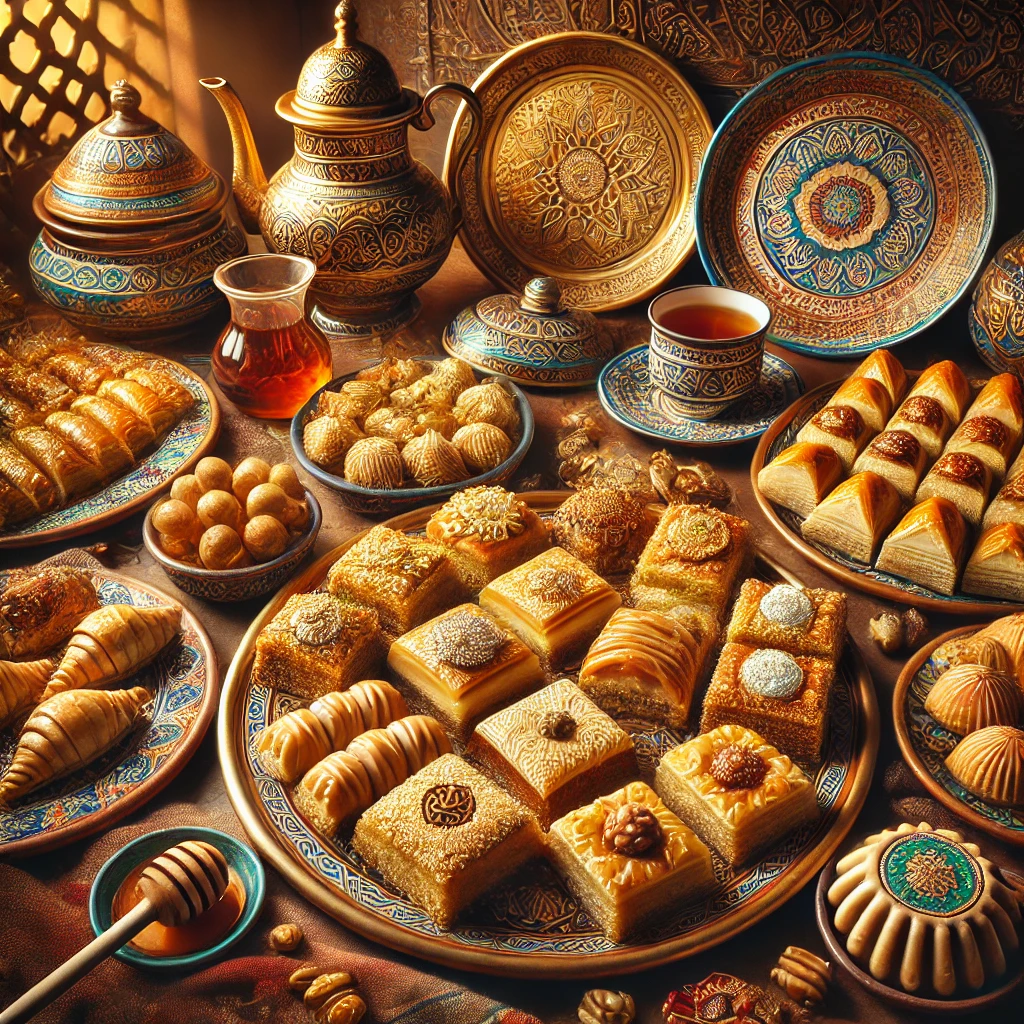
Desserts from North Africa
North African cuisine is famous for its rich flavors, fragrant spices, and delightful desserts that blend Arabic, Berber, French, and Mediterranean influences. From honey-soaked pastries to almond-filled delicacies, North African sweets are an essential part of celebrations, family gatherings, and daily tea rituals. Here’s a look at some of the most beloved desserts from North Africa.
1. Baklava (Across North Africa)
Originally from the Ottoman Empire, baklava is a popular dessert in North Africa, especially in Algeria and Tunisia. This layered phyllo pastry is filled with chopped nuts (almonds, walnuts, or pistachios) and sweetened with honey or orange blossom syrup. It’s often enjoyed with mint tea.
2. Makroud (Algeria & Tunisia)
Makroud is a semolina-based pastry filled with date paste and flavored with cinnamon and orange blossom water. The dough is cut into diamond shapes, fried, and then dipped in honey. This treat is particularly popular during Ramadan and festive occasions.
3. Basbousa (Egypt & Libya)
Also known as Revani or Hareesa, this semolina cake is sweetened with rose or orange blossom syrup and often topped with almonds or coconut. Its moist texture and subtle sweetness make it a favorite in tea houses and family gatherings.
4. Chebakia (Morocco)
A Ramadan staple, chebakia is a deep-fried sesame cookie shaped into a flower-like form, soaked in honey, and sprinkled with sesame seeds. Its crunchy texture and spiced flavor (cinnamon, anise, and saffron) make it a unique Moroccan delicacy.
5. Zalabia (Egypt & Tunisia)
Also known as Luqaimat, zalabia are small deep-fried dough balls soaked in honey or sugar syrup. These light, crispy treats are especially popular during Ramadan and celebrations.
6. M’hanncha (Morocco & Algeria)
Meaning “The Snake” in Arabic, M’hanncha is a coiled pastry made from phyllo dough and almond paste, flavored with cinnamon, orange blossom water, and honey. This dessert is often served at weddings and special events.
7. Kaak Warka (Tunisia)
A delicate and rosewater-scented almond pastry, Kaak Warka is a small, ring-shaped cookie made from fine flour and filled with sweet almond paste. These elegant treats are traditionally served at weddings and special gatherings.
8. Sfenj (Morocco & Algeria)
Known as North African doughnuts, Sfenj are fluffy, deep-fried pastries often dusted with sugar or drizzled with honey. They are commonly enjoyed for breakfast or as a midday snack with mint tea.
9. Assida (Libya & Tunisia)
A unique and comforting dish, Assida is a soft, pudding-like dessert made from flour, butter, and sugar, typically served with honey or date syrup. It is traditionally eaten with hands during special occasions like Mawlid (the Prophet’s birthday).
10. Dried Fruits & Nuts with Honey (Across North Africa)
Many North African desserts incorporate dates, figs, almonds, and walnuts, often drizzled with honey and cinnamon. These simple yet delicious treats are a staple in Moroccan and Tunisian cuisine.
Best Pairings for North African Desserts
- Mint Tea: The sweet and aromatic Moroccan mint tea perfectly balances the richness of North African sweets.
- Arabic Coffee: Strong, spiced coffee enhances the flavors of nut-based pastries like baklava and makroud.
- Milk or Yogurt: Some desserts, like Assida, are traditionally eaten with milk for a creamy contrast.
Experience North African Desserts
If you want to try these treats at home, look for semolina, dates, honey, and orange blossom water, which are key ingredients in many North African sweets. Or, better yet, visit a Moroccan, Tunisian, or Algerian bakery to taste these authentic delights!
For more tips on improving your photography and editing skills, check out helpful guides to take your selfies to the next level at ocean.co.ua.
Добавить комментарий