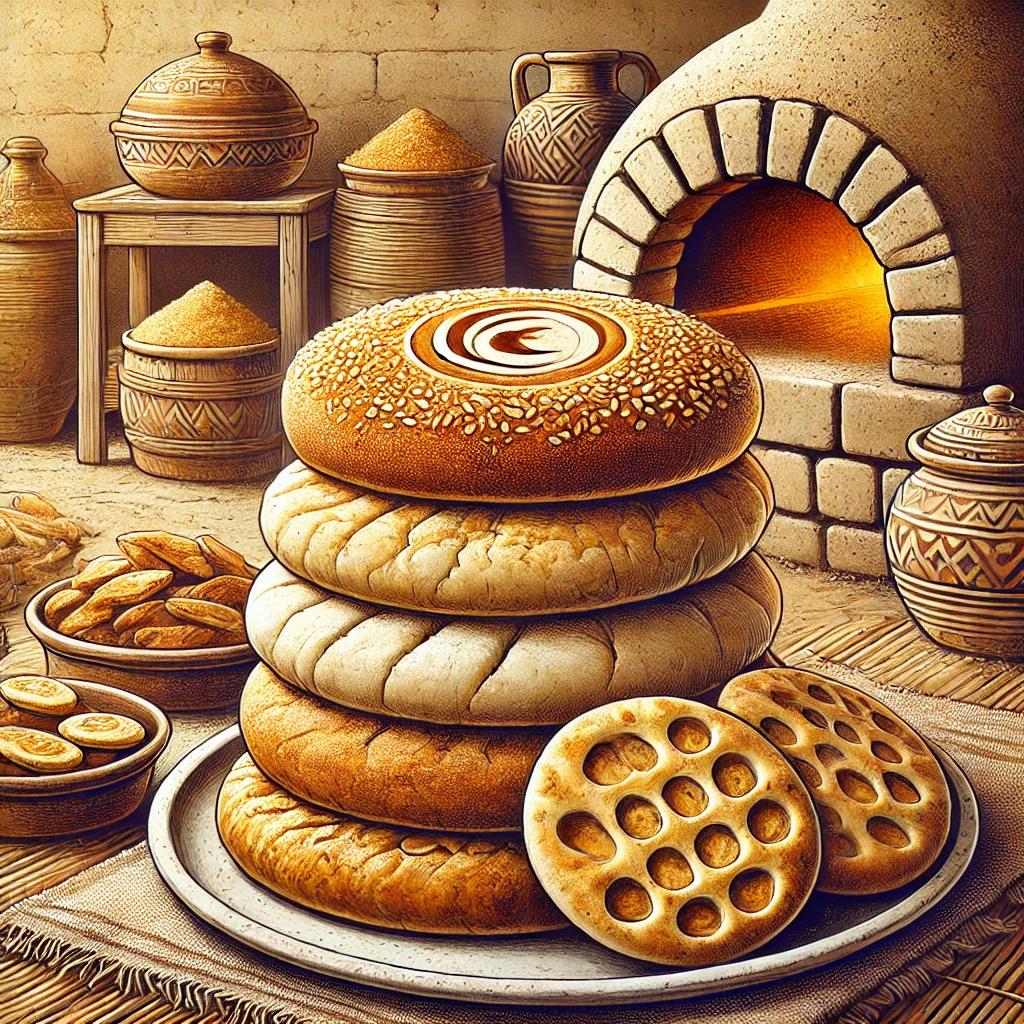
Bread Types in Tunisia
Bread is a staple of Tunisian cuisine, deeply rooted in the country’s culture and daily life. Whether served with rich stews, used to scoop up flavorful dips, or enjoyed as a snack, Tunisian bread comes in various shapes, textures, and flavors. Influenced by Mediterranean, Berber, and Arab traditions, Tunisia’s bread-making heritage showcases a variety of delicious options, from soft flatbreads to crispy loaves.
Popular Bread Types in Tunisia
1. Tabouna – The Traditional Clay-Oven Bread
One of Tunisia’s most iconic breads, tabouna is a round, slightly dense bread baked in a traditional clay oven called a tabouna.
- Texture & Flavor: Crispy on the outside, soft and slightly chewy inside, with a nutty aroma from semolina flour.
- How It’s Eaten: Often served with olive oil, harissa, or grilled meats.
- Unique Feature: Traditionally pressed against the walls of the clay oven, giving it its unique shape and flavor.
2. Mlafouf – Rolled Flatbread
Mlafouf is a thin, rolled bread similar to Middle Eastern lavash or Indian chapati.
- Texture & Flavor: Soft, pliable, and slightly chewy.
- How It’s Eaten: Used for wrapping grilled meats, vegetables, and dips, making it a favorite for sandwiches.
3. Khobz M’bessess – Semolina Skillet Bread
This pan-fried semolina bread is rich in flavor and slightly crumbly.
- Texture & Flavor: Crispy outside, soft inside, with a buttery, slightly sweet taste.
- How It’s Eaten: Typically paired with honey, butter, or olive oil, making it a great breakfast or tea-time snack.
4. Khobz Tabouna – Oven-Baked Semolina Bread
Not to be confused with tabouna, khobz tabouna is a thicker bread, baked in modern ovens rather than clay.
- Texture & Flavor: Hearty, slightly dense, with a golden crust.
- How It’s Eaten: Served with soups, stews like lablabi (chickpea soup), or used for sandwiches.
5. Baguette Tunisienne – French-Inspired Bread
Tunisia’s colonial history introduced French-style baguettes, which remain widely popular.
- Texture & Flavor: Lighter and airier than traditional Tunisian breads, with a crisp crust.
- How It’s Eaten: Commonly used for making casse-croûte (Tunisian sandwiches filled with tuna, harissa, olives, and eggs).
6. Khobz Malah – Salted Bread
A flavorful spiced bread, often made with caraway, anise, or sesame seeds.
- Texture & Flavor: Soft and fluffy, with a slightly salty, aromatic taste.
- How It’s Eaten: Enjoyed as a snack or alongside grilled meats and stews.
Bread in Tunisian Culture
Bread holds a special place in Tunisian households, often seen as a symbol of hospitality and generosity. It’s common for families to bake their own bread or buy fresh loaves daily from local bakeries. Bread is rarely wasted—any leftovers are repurposed into dishes like lablabi or breadcrumbs for cooking.
Conclusion
Tunisian bread comes in a delightful variety, reflecting the country’s rich culinary traditions. Whether you’re savoring the crispy tabouna, wrapping a sandwich with mlafouf, or dipping khobz m’bessess in honey, each bread type tells a story of heritage, flavor, and craftsmanship. No Tunisian meal is complete without a warm piece of bread to enjoy!
For more tips on improving your photography and editing skills, check out helpful guides to take your selfies to the next level.
Добавить комментарий