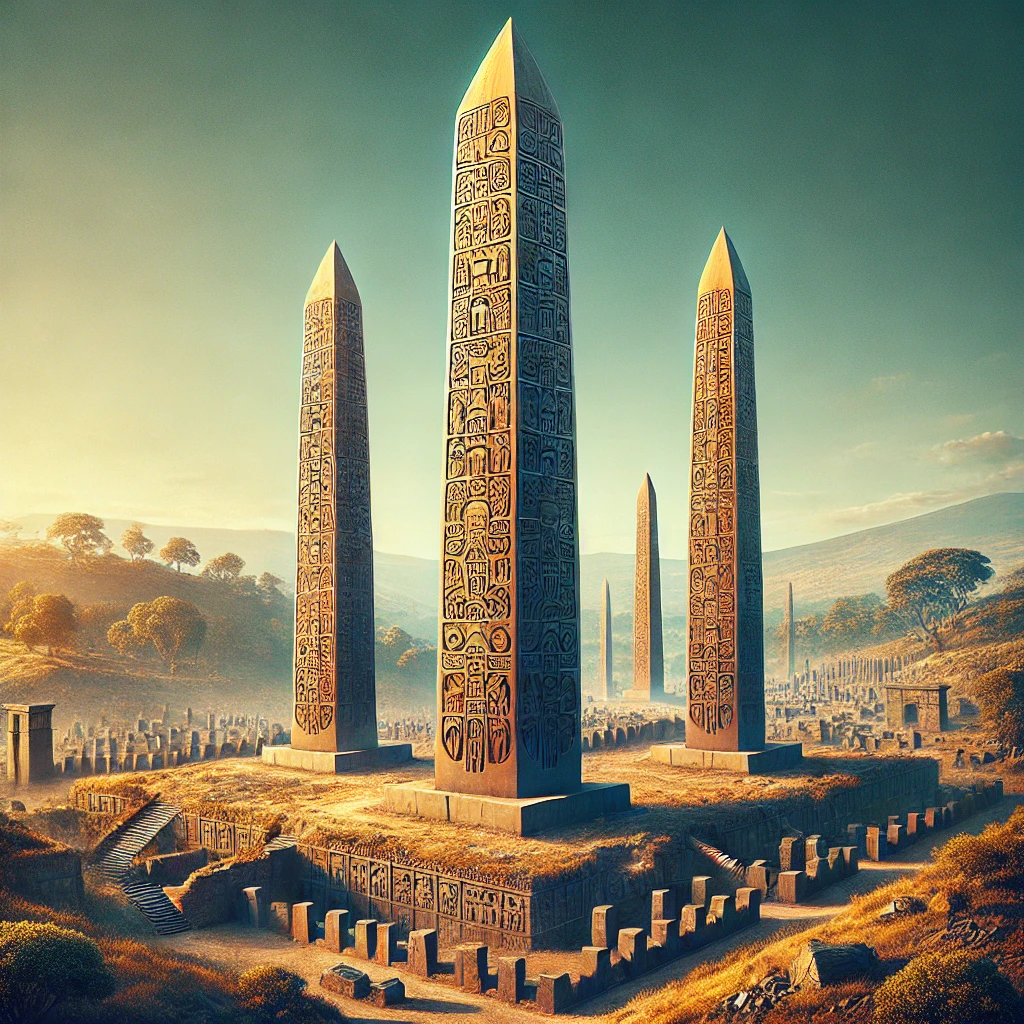
Aksum Obelisks in Ethiopia
The Aksum Obelisks stand as some of the most remarkable monuments of ancient Africa, showcasing the architectural and engineering brilliance of the Aksumite Empire (1st–8th century AD). Located in Aksum, Ethiopia, these towering stone pillars, or stelae, are believed to be royal funerary monuments, marking the tombs of Aksumite rulers and elites.
1. Historical Significance of the Aksum Obelisks
Aksum was one of the great civilizations of the ancient world, a major trading empire that controlled key routes connecting Africa, the Middle East, and Asia. The obelisks reflect:
- The power and wealth of Aksumite rulers.
- The cultural and religious influences of the time, with links to early Christianity.
- The advanced engineering skills used to carve, transport, and erect massive stone structures.
2. The Most Famous Aksum Obelisks
The Great Stele (Fallen Obelisk)
- Originally stood 33 meters (108 feet) tall and weighed around 500 tons, making it one of the tallest monolithic obelisks ever attempted.
- It collapsed, possibly during installation, and now lies in several pieces.
Obelisk of Aksum (Returned from Italy)
- Stands 24 meters (79 feet) high and weighs about 160 tons.
- Taken to Italy in 1937 by Mussolini’s forces during the Italian occupation and reinstalled in Aksum in 2005 after years of negotiations.
- Features false doors and windows, symbolizing multi-story Aksumite palaces.
King Ezana’s Stele
- The only obelisk that remains standing since ancient times, at 21 meters (69 feet) tall.
- Believed to mark the tomb of an Aksumite ruler, possibly King Ezana, who converted to Christianity in the 4th century AD.
3. Engineering and Construction
The obelisks were:
- Carved from a single piece of granite at a quarry outside Aksum.
- Transported using wooden rollers and manpower.
- Erected by digging a foundation and tilting the stone into place.
4. A UNESCO World Heritage Site
Today, the Aksum Obelisks are protected as part of the Aksum UNESCO World Heritage Site, attracting visitors from around the world who come to witness Ethiopia’s rich historical and cultural legacy.
Visiting the Aksum Obelisks
- The best time to visit is between October and March, when the weather is cooler.
- The Aksum Archaeological Museum provides deeper insights into the empire’s history.
- The nearby Church of St. Mary of Zion, said to house the Ark of the Covenant, adds to Aksum’s historical significance.
For more tips on improving your photography and editing skills, check out helpful guides to take your selfies to the next level at ocean.co.ua.
Добавить комментарий