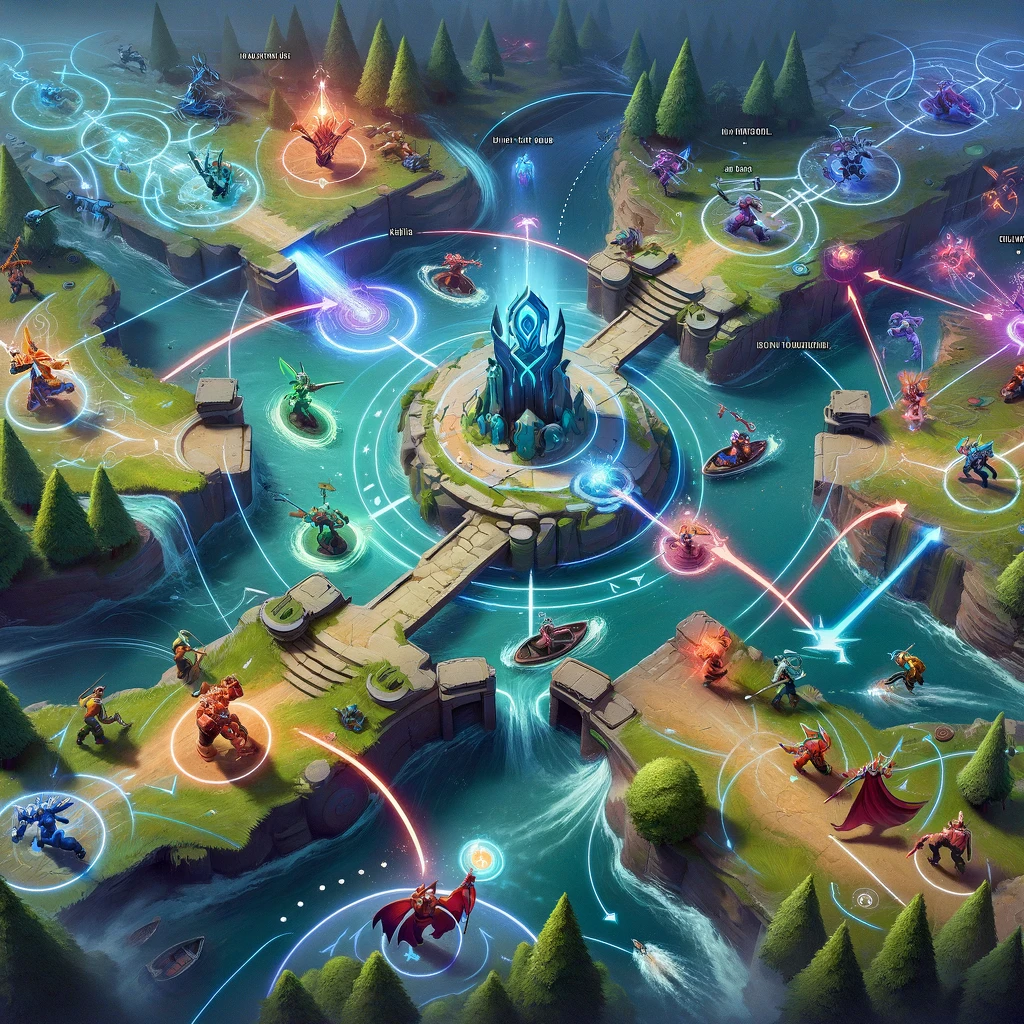
Rune control is a pivotal aspect of Dota 2 gameplay, offering significant advantages to your team through resource management, map control, and strategic leverage. Power Runes spawn every two minutes in the river, starting at the 4-minute mark, providing temporary but powerful buffs, while Bounty Runes provide gold to the entire team and spawn every 3 minutes at four fixed locations. Here’s a strategic guide to mastering rune control in Dota 2.
Pre-Game and Early Game Strategy
- Communication: Inform your team of your intention to secure runes. Coordination with teammates is crucial for effective rune control.
- Positioning: Before runes spawn, position yourself and your teammates strategically near the rune spots. Supports or roamers are often best positioned to secure runes, but mid-laners also significantly benefit from Power Runes.
- Warding: Place Observer Wards near rune spots to provide vision, allowing your team to see when and where runes spawn, and to spot any enemy attempts to secure them.
Mid-Laner’s Role in Rune Control
- Timing Pushes: Push the mid lane just before the rune spawns (around X:45 seconds). This forces the opposing mid-laner to choose between losing creeps to the tower or contesting the rune.
- Bottle: If you have a Bottle, securing runes becomes even more critical. Not only do runes refill your Bottle, but they also provide the opportunity to heal and gain an advantage in lane or make ganks more effective.
Support’s Role in Rune Control
- Securing and Denying Runes: Supports should try to secure runes for their team or deny them from the enemy, especially if your mid-laner has a Bottle. Rotating before the rune spawn time is essential.
- Contesting Bounty Runes: Supports can contest enemy Bounty Runes with good warding and by understanding the enemy’s positioning. Sometimes, it’s safer to secure your own Bounty Runes rather than risk an unfavorable engagement.
Team Fights and Rune Control
- Power Runes as Engagement Tools: Some Power Runes, like Double Damage or Haste, can be decisive factors in initiating team fights. Securing these runes before a fight can give your team a significant advantage.
- Rune Spawning as a Trap: Use rune spawns as opportunities to ambush enemy heroes who may attempt to secure them without proper vision or backup.
Late Game and Rune Control
- Prioritizing Vision: In the late game, controlling vision around the rune spots can provide your team with essential pick-off opportunities. Consider using Smoke of Deceit for unexpected engagements around these areas.
- Controlling Outposts: Holding control over Outposts near the rune spots can offer quick TP locations for rune control and provide additional vision.
Additional Tips
- Timing Teleports: Use Teleport Scrolls strategically to contest or secure runes. However, be mindful of leaving lanes unattended, which could lead to lost experience and gold.
- Hero Abilities: Some heroes can secure or steal runes from a distance with their abilities (e.g., Clockwerk’s Rocket Flare, Pudge’s Hook). These heroes can be particularly effective in rune control without fully committing to the rune spot.
- Prioritize Safety: While securing runes is important, always prioritize the safety of your hero. Dying for a rune is seldom worth the trade-off, especially if it leads to giving the enemy team a significant advantage.
Effective rune control requires awareness, strategic planning, and team coordination. By prioritizing rune control as part of your game strategy, you can secure valuable resources and advantages that can lead to winning lanes and, ultimately, the game.
Добавить комментарий