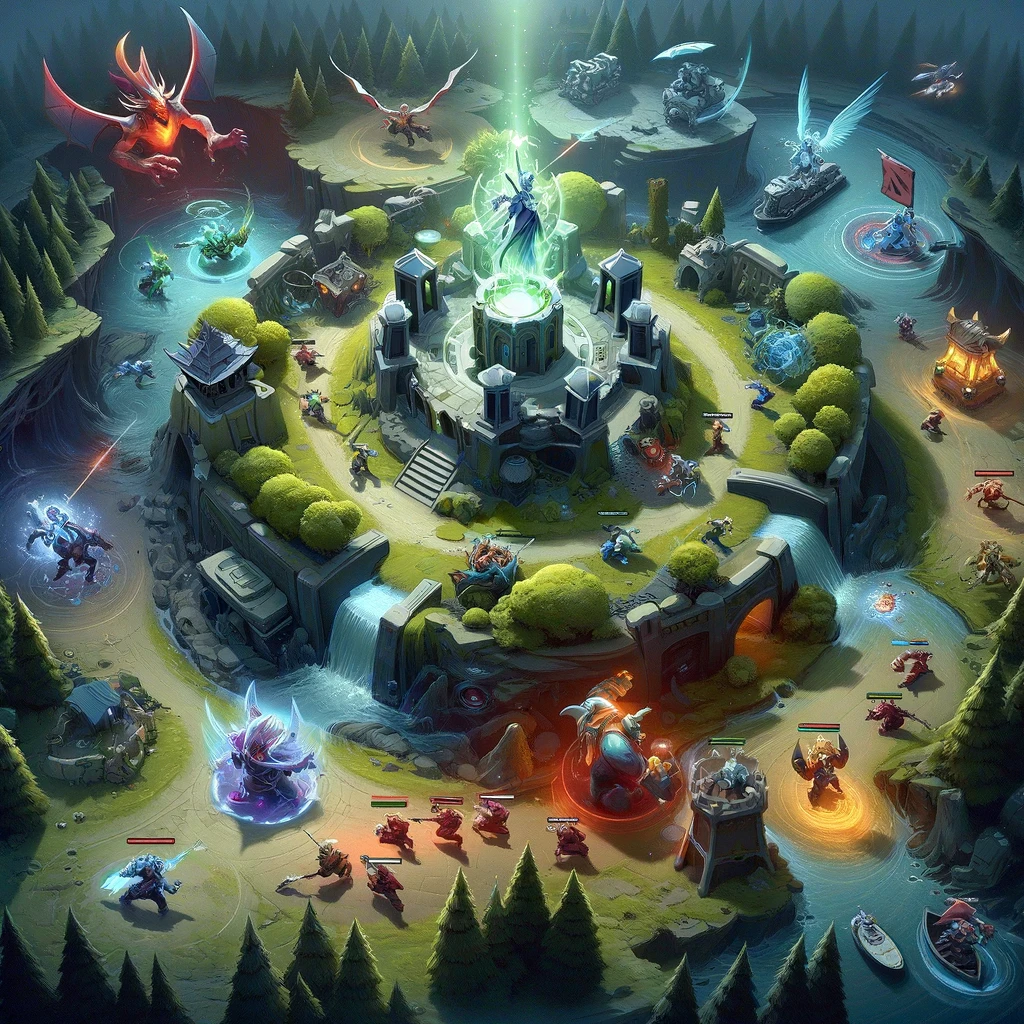
Transitioning into the mid game in Dota 2, typically marked by the end of the laning phase around the 10-15 minute mark, requires a shift in strategy from the initial focus on farming and lane control. This phase is crucial for setting the tempo and positioning your team for the late game. Here’s a comprehensive guide to navigating the mid game effectively, focusing on objectives, team composition, and map control.
Objectives Over Kills
While securing kills is important, the mid game’s primary focus should shift towards taking objectives such as towers, Roshan, and controlling outposts. These objectives not only provide gold and map control but also restrict the enemy’s movement and farming capabilities.
- Tower Pushing: After winning a team fight or when the enemy team is out of position, prioritize taking down towers to open up the map.
- Roshan Control: Securing Roshan provides your team with the Aegis of the Immortal, an advantage in team fights, and potential to push high ground.
Map Control and Vision
The mid game is about expanding and controlling territory. Achieving this requires strategic warding and de-warding to maintain vision over key areas of the map.
- Warding: Place Observer Wards around objectives, enemy jungle camps, and common movement paths to spot enemy movements and set up ganks.
- De-warding: Removing enemy vision limits their information and makes it riskier for them to farm or contest objectives.
Farm Distribution and Itemization
As the game progresses, ensuring your cores are adequately farmed is crucial. This involves efficient farm distribution among the team and adapting item builds based on the game’s state.
- Farm Distribution: Cores should focus on farming lanes and the jungle efficiently, while supports create space and secure map control. It’s essential to minimize downtime by always farming, pushing, or seeking advantageous fights.
- Adaptive Itemization: Item builds should adapt to the current game. This might mean prioritizing BKB against heavy magic damage or getting an early Pipe of Insight to push against spell-reliant teams.
Team Composition and Fights
Understanding your team’s strengths and the enemy’s weaknesses is crucial for deciding when and where to take fights.
- Pickoffs: Use smoke of deceit and vision advantage to find and pick off isolated enemies, creating space for objectives or safer farming.
- Team Fights: Engage in team fights where you have a clear advantage, whether through vision, positioning, or having key ultimates available. Avoid fights in unfavorable conditions, such as when key abilities are on cooldown or when you’re outnumbered.
Split Pushing and Space Creation
When direct confrontation is not favorable, consider split pushing to apply pressure on multiple lanes, forcing the enemy team to split up and react, which can create advantageous fights for your team elsewhere.
- Space Creation: Supports and offlaners can focus on creating space for their carry to farm by pushing lanes, forcing rotations, and placing aggressive wards to track enemy movements.
Communication and Adaptation
Effective communication and the ability to adapt to the evolving game state are paramount in the mid game.
- Communication: Keep your team informed about enemy positions, item timings, and when you’re ready to fight or push.
- Adaptation: Be ready to change your strategy based on how the game is progressing. This might mean shifting focus from farming to pushing or vice versa, based on your team’s power spikes and the state of the game.
Successfully navigating the mid game in Dota 2 sets the stage for securing late-game objectives and ultimately, the Ancient. By focusing on objectives, maintaining map control, efficiently distributing resources, and adapting to the dynamic nature of each match, you can lead your team to victory during this critical phase of the game.
Добавить комментарий