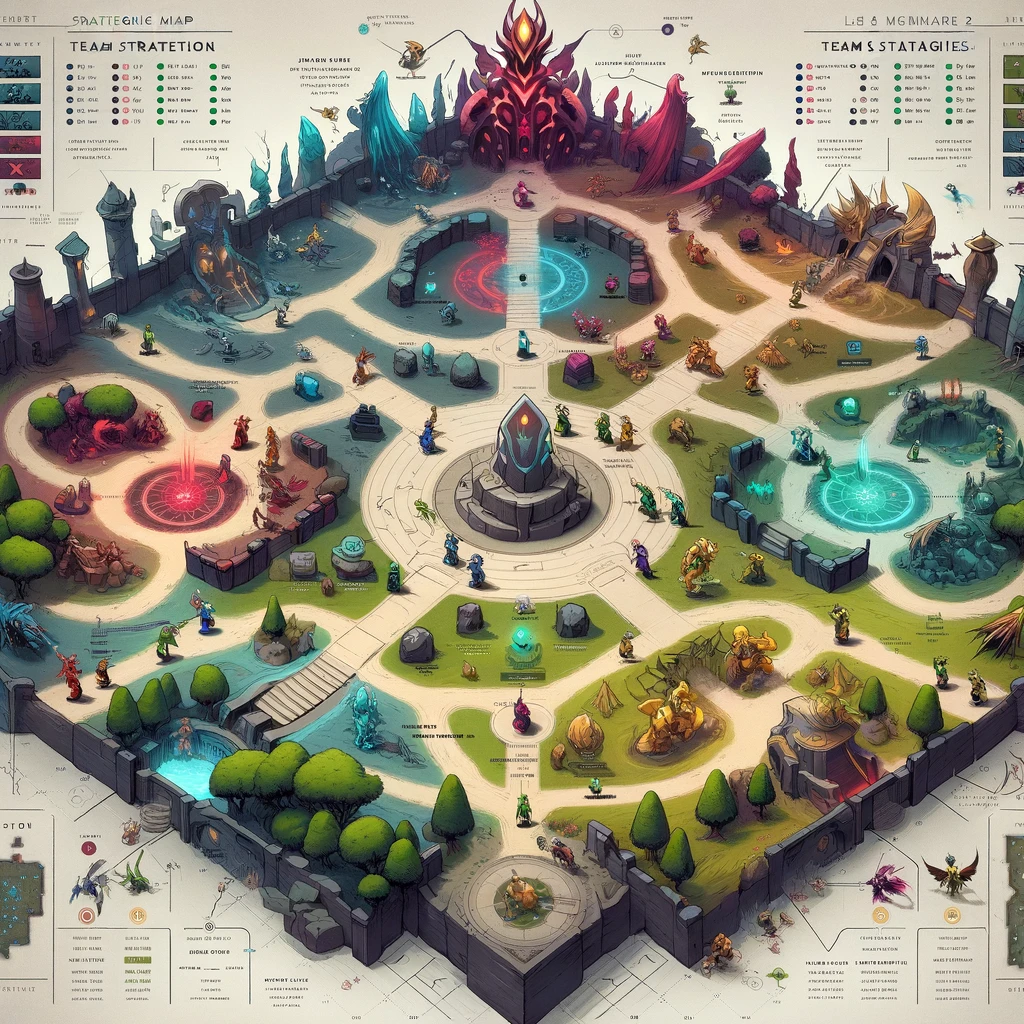
Competing in a Dota 2 tournament requires a deep understanding of the game, well-prepared strategies, and exceptional teamwork. Whether you’re participating in a local tournament or aspiring for higher competitive levels, having a comprehensive strategy is essential. Here’s how you can develop and implement effective Dota 2 tournament strategies:
1. Pre-Tournament Preparation:
- Study the Meta: Understand the current Dota 2 meta, including favored heroes, common item builds, and prevailing strategies. The meta can vary between public matchmaking and professional play, so focus on trends in recent tournaments.
- Analyze Opponents: If possible, research your potential opponents. Watch their recent matches to understand their playstyle, preferred heroes, and strategic approaches.
- Hero Pool Expansion: Each team member should have a competent hero pool within their role, allowing for flexibility in drafting. Practice with meta heroes and potential counter-picks.
- Team Synergy Practice: Regular practice sessions focusing on team coordination, communication, and execution of planned strategies are crucial. Try different team compositions and strategies to find what works best.
2. Drafting Strategy:
- First Phase: Use these picks to secure versatile heroes that don’t give away your strategy. Consider banning heroes that strongly counter your preferred playstyle or that the enemy team excels with.
- Counter-Picking: Reserve at least one of your later picks for a counter to the enemy’s core heroes. Counter-picking can provide a significant lane advantage and disrupt the enemy’s strategy.
- Team Composition: Ensure your team has a balanced composition with a good mix of damage types, initiation, sustain, and push potential. Don’t focus solely on countering enemy heroes; your team should have a clear objective and synergy.
3. Early Game Strategy:
- Lane Setup: Decide your lane matchups based on the drafting phase. Sometimes, unconventional lane setups (e.g., aggressive tri-lanes, dual mid) can give you an unexpected advantage.
- Warding: Early vision around key areas like runes, jungle entries, and potential gank paths can secure your lanes and provide opportunities for early kills.
- First Objectives: Identify your first objectives, whether it’s securing first blood, dominating a specific lane, or obtaining early runes. These objectives should align with your overall game plan.
4. Mid-Game Movements:
- Smoke Ganks: Utilize Smoke of Deceit for surprise attacks or to place deep wards in the enemy’s territory. Successful ganks can transition into taking objectives.
- Objective Control: Focus on taking towers, Roshan, and controlling the map. Prioritize objectives that align with your team’s power spikes and item timings.
5. Late Game and High Ground Siege:
- Vision and Pickoffs: Maintaining vision around key areas and securing pickoffs are crucial before attempting high ground sieges. Avoid diving too deep without sufficient vision.
- Sieging Strategy: Have a clear plan for sieging high ground, whether it involves chip damage, waiting for Roshan, or forcing a team fight. Patience is key; overextending can lead to a costly wipe.
6. Adaptation and Communication:
- Adaptation: Be ready to adapt your strategy based on how the game unfolds. If an initial plan isn’t working, discuss alternatives and adjust your approach.
- Clear Communication: Ensure communication is clear, concise, and constructive. Everyone should be aware of the team’s objectives, movements, and when to engage or retreat.
7. Post-Game Analysis:
- After each match, review the game as a team. Discuss what went well, what didn’t, and why. Use this analysis to refine your strategies and preparations for future matches.
Participating in Dota 2 tournaments is an opportunity to test your skills, strategies, and teamwork under competitive conditions. Preparation, adaptability, and effective execution are key components of successful tournament play. Remember, every match is a learning opportunity, regardless of the outcome.
Добавить комментарий