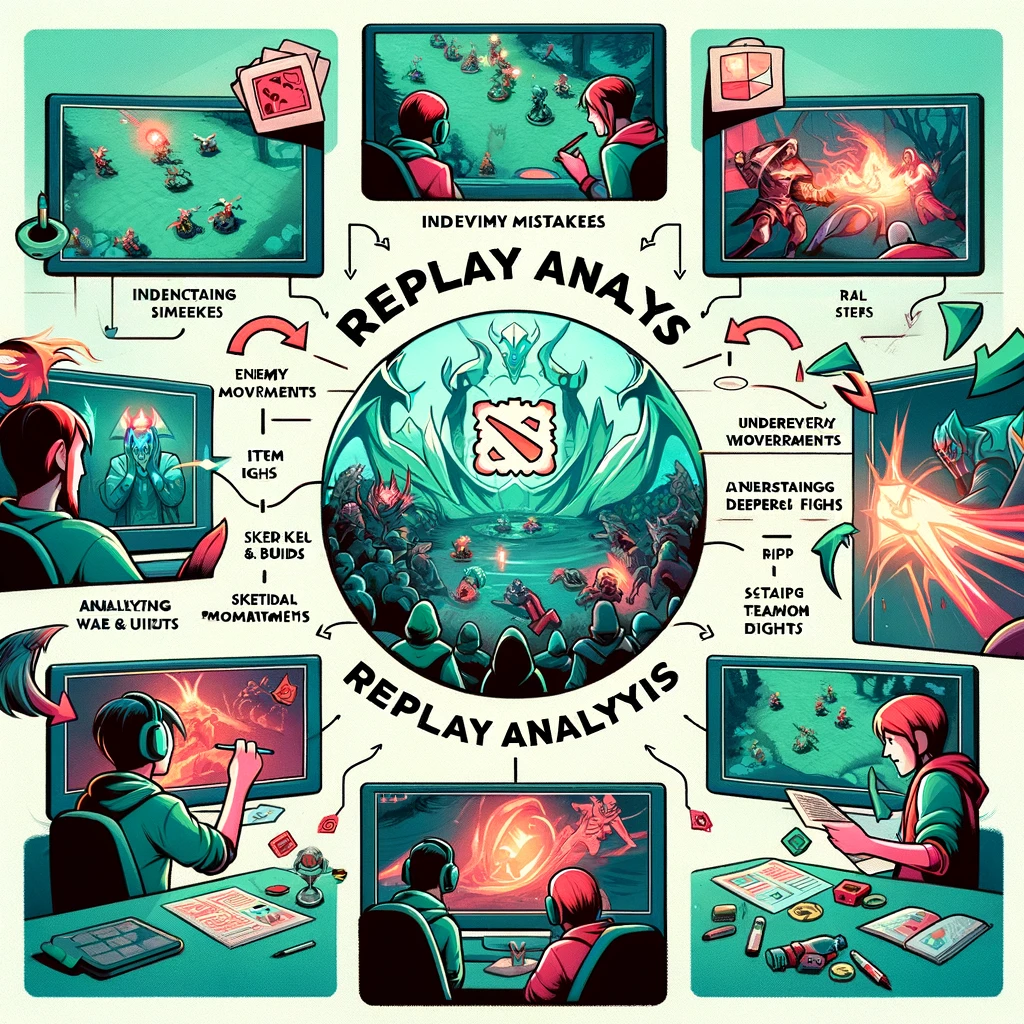
Analyzing Dota 2 replays is a powerful tool for improvement, offering insights into decision-making, positioning, and overall game strategy. By breaking down your own gameplay or watching higher-level players, you can identify mistakes, uncover missed opportunities, and learn advanced tactics. Here’s how to approach Dota 2 replay analysis effectively:
1. Choosing Replays:
- Your Own Games: Focus on matches where you struggled or felt unsure about your decisions. Both wins and losses can be insightful, but close games or losses often provide the most valuable learning opportunities.
- High-Level Games: Watch replays from professional Dota 2 players or high MMR matches. Pay attention to players who excel in your preferred roles or heroes.
2. Initial Overview:
- Start by reviewing the match statistics and scoreboards to get an overview of the game’s progression in Dota 2. Look at key metrics like net worth, experience graphs, and item timings to understand the game’s flow and turning points.
3. Lane Phase Analysis:
- Last-Hitting and Denying: Note the efficiency in last-hitting/denying and compare it to your opponents in Dota 2. Look for missed opportunities to secure farm or deny experience.
- Harassment and Trading: Evaluate how well you managed to harass your opponent and trade damage. Good trading can significantly impact the lane outcome.
4. Movement and Map Awareness:
- Rotations: Analyze your rotations and ganks. Were they effective? Could your timing or target selection have been better in Dota 2?
- Warding: Look at ward placements and their impact on map control. Did you or your team miss key warding opportunities?
- Map Awareness: Note instances where better map awareness could have prevented deaths or secured kills.
5. Team Fights and Positioning:
- Break down major team fights in Dota 2. Assess your positioning, target prioritization, and ability usage. Could you have approached these engagements differently for a better outcome?
- Pay attention to the use of vision and high ground advantage during fights.
6. Objective Focus:
- Evaluate your focus on objectives like towers, Roshan, and barracks. Did you prioritize objectives appropriately, or were there missed opportunities to secure an advantage in Dota 2?
7. Itemization and Skill Builds:
- Review your item choices and skill builds throughout the game. Consider if alternative builds could have offered more utility or impact against the specific enemy lineup in Dota 2.
8. Advanced Tactics:
- Look for the use of smoke ganks, split pushing, and buyback strategies. Analyzing how and when these tactics are employed can offer insights into higher-level strategic play in Dota 2.
9. Overall Decision Making:
- Reflect on the critical decisions made during the game. Were there safer or more aggressive plays that could have changed the game’s outcome? Decision-making is a key aspect of improving in Dota 2.
10. Taking Notes and Setting Goals:
- Keep a journal of insights and areas for improvement identified through replay analysis. Set specific, actionable goals for your next Dota 2 matches based on these observations.
Tools and Resources:
- Utilize in-game tools like the player perspective feature to focus on individual gameplay. Third-party tools and websites can also offer additional stats and analysis for a deeper understanding.
Analyzing Dota 2 replays is a continuous learning process. Regularly dedicating time to this practice can accelerate your improvement, helping you become a more strategic and aware player.
Добавить комментарий