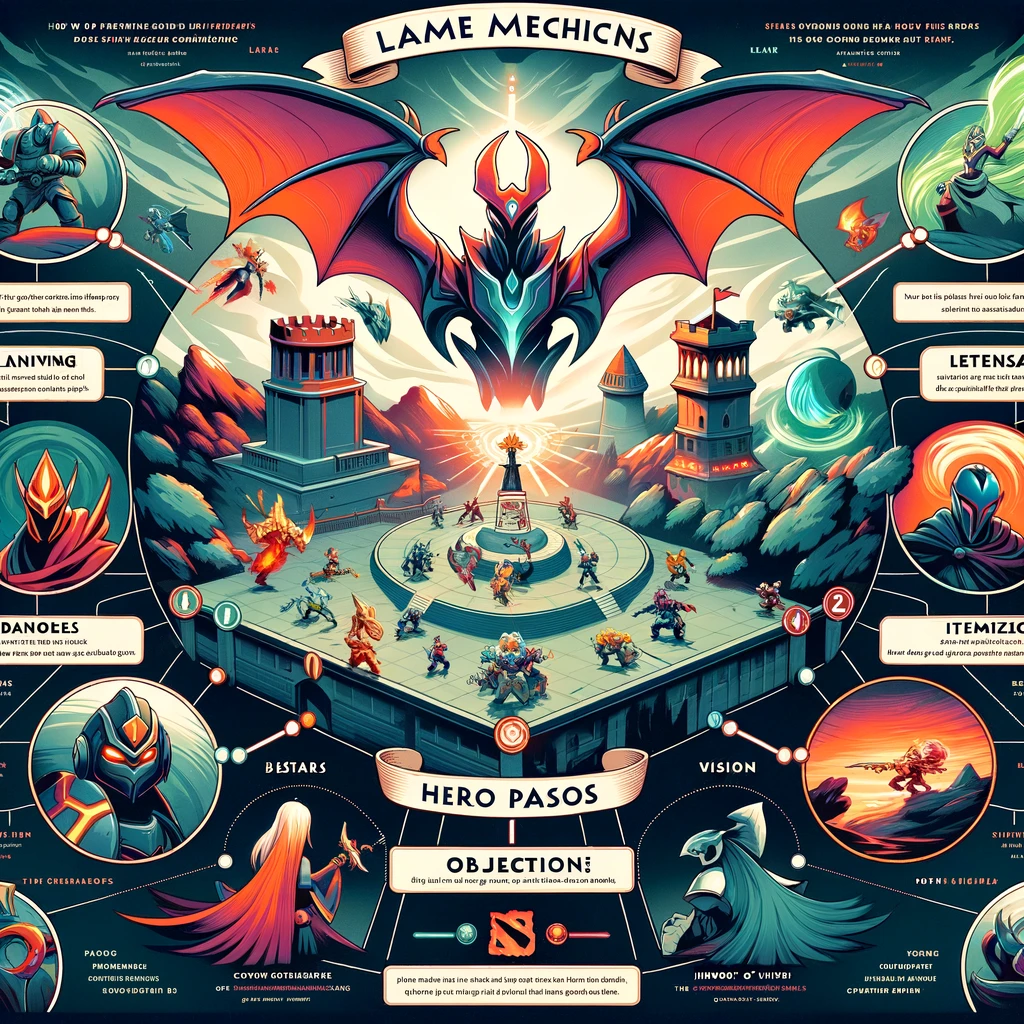
Learning Dota 2’s game mechanics is fundamental to progressing from a beginner to an experienced player. The game’s depth comes from its complex mechanics, which can seem daunting at first but become more intuitive with practice and study. Here’s a structured guide to understanding and mastering Dota 2’s game mechanics:
1. Understanding the Basics:
- Heroes: Dota 2 features over 100 heroes, each with unique abilities and roles. Learning at least the basic function of each hero helps in both playing as and against them.
- Laning Phase: The game begins with the laning phase, where heroes gather in two teams across three lanes. Understanding the dynamics of each lane and the importance of last-hitting/denying creeps for gold and experience is crucial.
2. Roles and Positions:
- Dota 2’s heroes are often categorized into five positions, from the carry (Position 1) who needs the most farm to succeed, to the hard support (Position 5) whose primary role is to assist the team with wards, heals, and disables. Learning these roles helps in forming balanced teams and effective strategies.
3. Itemization:
- Core vs. Support Items: Different heroes require different items to be effective. Core heroes often prioritize damage or survivability items, while support heroes focus on utility items to aid their team.
- Situational Items: Adapting your item build based on the enemy team composition and the state of the game is a vital skill in Dota 2.
4. Map Awareness:
- Keeping an eye on the minimap for enemy movements can prevent ganks and set up successful counter-attacks. Vision control through Observer and Sentry Wards is a key mechanic for map awareness.
5. Understanding Objectives:
- Beyond killing enemy heroes, Dota 2’s primary objectives include destroying towers, barracks, and ultimately the Ancient. Balancing the pursuit of these objectives with farming and team fighting is a complex but essential skill.
6. Team Fights and Positioning:
- Engaging in team fights requires understanding your hero’s role, the timing for using abilities, and positioning to maximize effectiveness while minimizing vulnerability.
7. Roshan:
- The Roshan pit is a strategic point of interest for both teams. Securing Roshan grants the Aegis of the Immortal, Cheese, and other items, providing a significant advantage.
8. Creep and Tower Aggro:
- Managing aggro is important for controlling lane equilibrium, protecting yourself from unnecessary damage, and manipulating enemy positions.
9. Game Phases (Early, Mid, Late):
- Each phase of the game has different priorities, from laning and farming in the early game to pushing and high-stake team fights in the late game. Adapting your strategy to the game’s phase is essential.
10. Teleports and Mobility:
- Understanding when and where to teleport can save allies, secure kills, or defend objectives. Mobility is a key aspect of Dota 2 strategy.
Continuous Learning and Adaptation:
Dota 2 is a game that’s constantly evolving, with patches that can shift the meta and introduce new heroes or items. Staying updated with these changes and continuously learning is part of the game’s challenge and appeal.
Practice and Patience:
Mastering Dota 2’s mechanics takes time and practice. Utilize resources like tutorial videos, professional gameplay analysis, and community guides. Practicing with a specific focus (e.g., last-hitting, map awareness) in mind can lead to noticeable improvement over time.
Understanding and mastering these game mechanics will significantly enhance your Dota 2 gameplay, allowing you to make smarter decisions, execute more effective strategies, and ultimately enjoy the game more fully.
Добавить комментарий