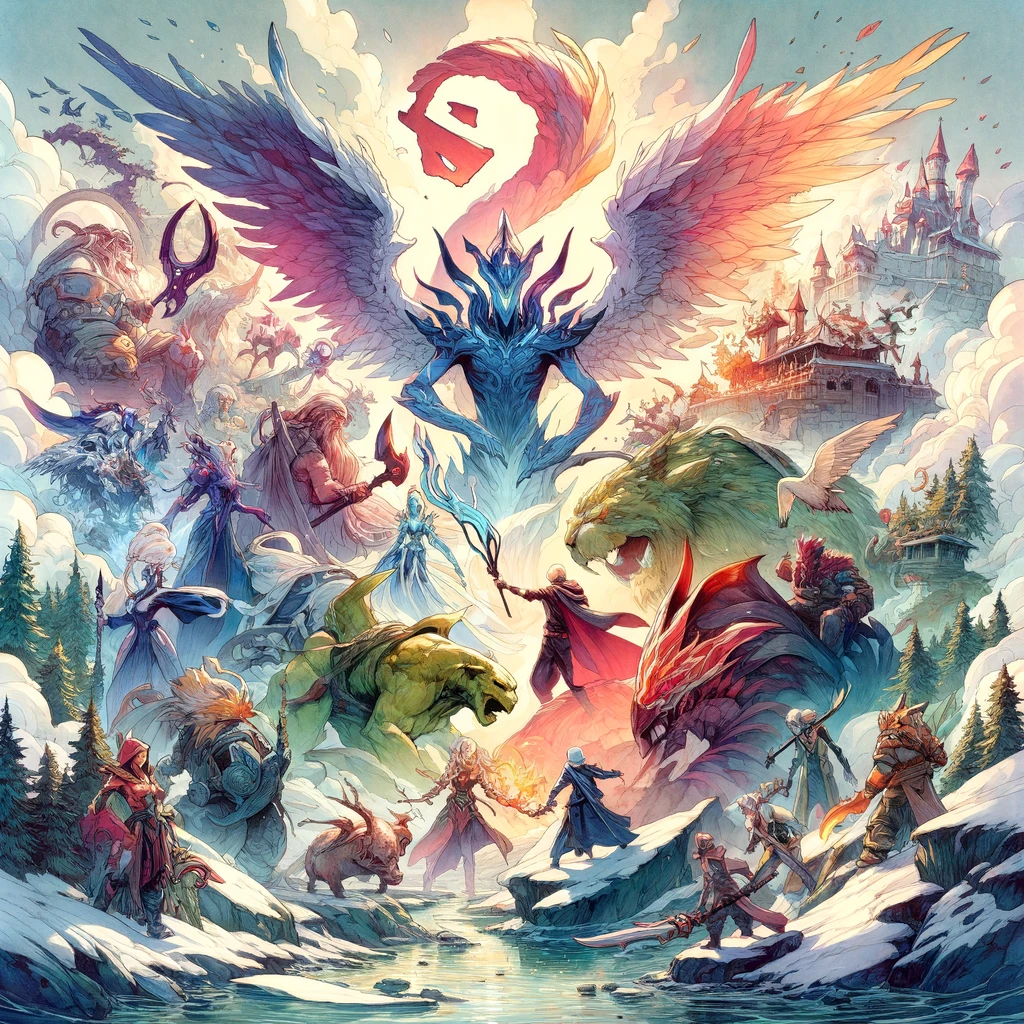
Dota 2’s art style is a captivating blend of fantasy elements, intricate detail, and a color palette that serves not only to beautify the game but also to enhance gameplay clarity. The art style of Dota 2 has been carefully crafted to immerse players in its vast universe while maintaining an organized chaos that is both visually appealing and functionally practical during the heat of battle. Let’s delve into the key aspects of Dota 2’s art style and how they contribute to the game’s overall experience.
Character Design and Diversity:
Dota 2 features a wide array of heroes, each with a unique design that reflects their lore, abilities, and role within the game. The character designs range from majestic and noble to dark and sinister, offering a hero for every player’s taste. The diversity in design helps players quickly identify heroes on the battlefield, a crucial aspect in a game where split-second decisions can be decisive. The design team’s attention to detail in skins, animations, and special effects further enriches the characters, making each hero feel distinct and alive.
Environment and Map Design:
The Dota 2 map is a masterpiece of environmental design, balancing aesthetic beauty with gameplay functionality. The map is divided into two halves, the Radiant and the Dire, each with its own unique environmental theme. The Radiant side boasts a vibrant, lush landscape, while the Dire features a darker, more barren terrain. This contrast not only enriches the game’s lore but also aids players in navigation and strategy. The layout of lanes, jungles, and the river that bisects the map are designed to promote strategic movement and team engagements.
Color Palette and Visual Clarity:
Dota 2 employs a color palette that highlights important elements on the screen without overwhelming the player. Heroes, creeps, and key items stand out against the background, ensuring that players can quickly assess the situation and react accordingly. The use of color also extends to the game’s UI, which is designed to provide crucial information without detracting from the action. Visual clarity is maintained even during intense team fights, where multiple abilities and items are used simultaneously.
Lighting and Shadows:
The game’s lighting system plays a significant role in creating atmosphere and depth in the Dota 2 world. The dynamic day-night cycle not only changes the visual appearance of the map but also affects gameplay, with certain heroes gaining advantages during the night. Shadows and light effects are used to emphasize the time of day, weather conditions, and special events, adding a layer of immersion and strategy to the game.
Art and Community Interaction:
Dota 2’s art style extends beyond the game itself, inspiring a vibrant community of artists and creators. The Steam Workshop allows players to submit their own designs for items, skins, and even new heroes, some of which are incorporated into the game. This interaction encourages creativity within the community and ensures that the game’s visual content remains fresh and diverse.
In conclusion, Dota 2’s art style is a crucial element of its success, providing a visually stunning and functionally effective backdrop for one of the most popular and enduring games in the esports arena. The careful balance between aesthetic appeal and gameplay clarity showcases the thoughtful design principles that Valve has implemented, making Dota 2 not only a challenging competitive game but also a work of digital art.
Добавить комментарий