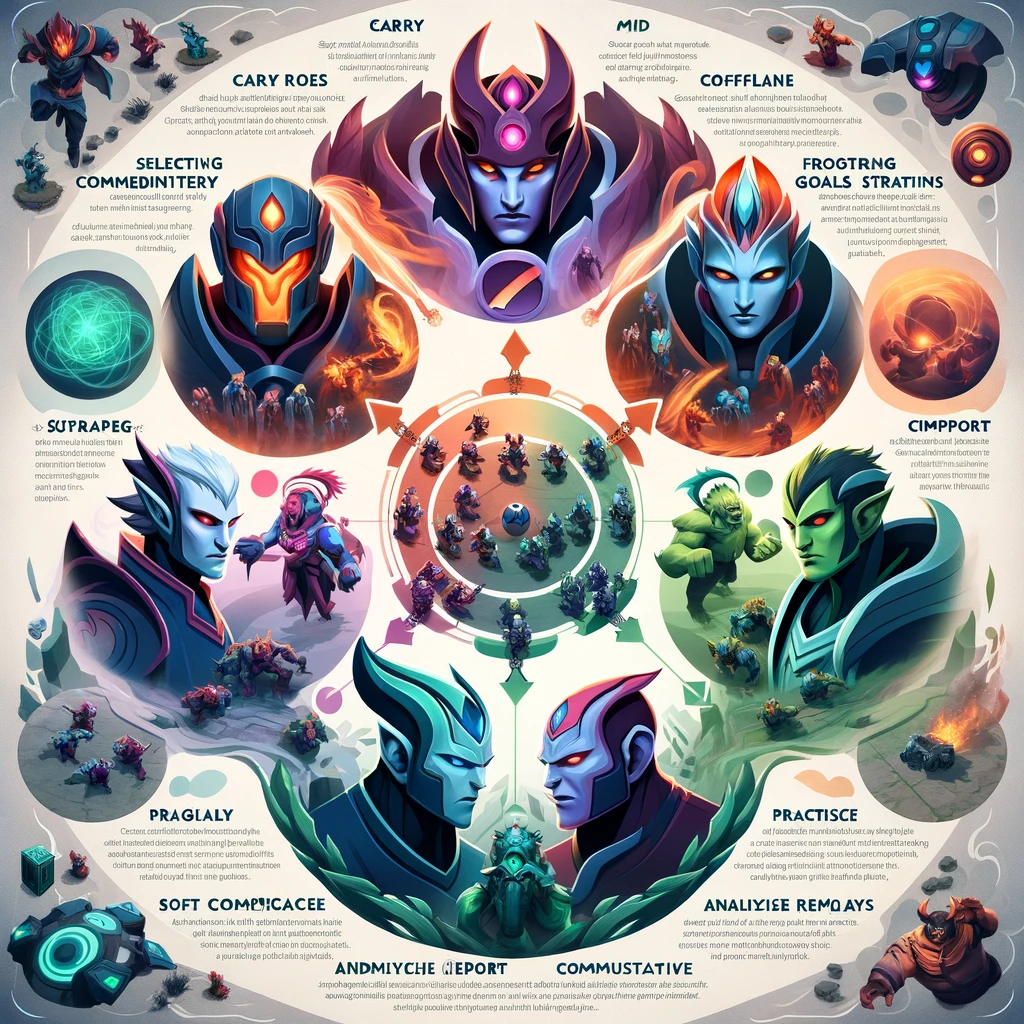
Building a successful Dota 2 team involves more than just gathering skilled players. It requires a mix of talent, communication, role compatibility, and teamwork. Here’s a guide to help you construct a well-rounded Dota 2 team that can work together effectively and improve over time.
1. Identify Player Roles:
- Every Dota 2 team needs a balance of roles: Carry (Position 1), Midlaner (Position 2), Offlaner (Position 3), Soft Support (Position 4), and Hard Support (Position 5). Identify players who are comfortable and skilled in each role.
- Ensure that each player understands their role’s responsibilities: farming priorities, map control, warding duties, and ganking objectives.
2. Skill and Experience:
- Assess the skill level and experience of potential team members. While having high-skill players is beneficial, their experience in team play and understanding of the Dota 2 meta are equally important.
- Look for players who are not only skilled individually but also have a good understanding of game mechanics, hero matchups, and strategy.
3. Communication and Chemistry:
- Effective communication is vital in Dota 2. Choose players who communicate clearly and positively, and who are open to giving and receiving feedback.
- Team chemistry is crucial. Players should be able to get along, trust each other, and have a mutual respect. This can be developed over time but starting with a friendly and respectful base will help.
4. Commitment and Availability:
- Team members should have similar levels of commitment. Discuss each player’s availability for practice sessions, scrimmages, and tournaments.
- Consistency is key in Dota 2. Regular practice sessions help in developing teamwork and understanding among players.
5. Strategic Mindset:
- Look for players who not only understand Dota 2 strategies but are also willing to adapt and experiment with new tactics. A strategic mindset can set your team apart, especially in adapting to new patches and meta shifts.
- Encourage a culture of continuous learning where team members analyze replays, stay updated with the current meta, and discuss strategies.
6. Leadership:
- Having a clear leader or captain in a Dota 2 team can streamline decision-making and strategy formulation. The captain should be someone respected by the team, with a good understanding of the game and strong leadership qualities.
- Leadership can also be rotational or situational based on heroes, roles, and individual player strengths.
7. Practice and Review:
- Organize regular practice sessions to work on team synergy, role execution, and strategic understanding in Dota 2. Use scrims against other teams to test your strategies under competitive conditions.
- Review replays together to identify strengths and areas for improvement. Constructive criticism and open discussions can help in rectifying mistakes and enhancing team performance.
8. Set Goals and Evaluate Progress:
- Set short-term and long-term goals for your Dota 2 team. These could range from improving individual skills to achieving certain ranks or winning tournaments.
- Regularly evaluate your progress toward these goals. Celebrate achievements to boost morale and address shortcomings with a plan for improvement.
9. Adapt and Evolve:
- Be prepared to adapt your strategies, player roles, and even roster as your team evolves. Flexibility can help your Dota 2 team stay relevant and competitive as the game changes.
- Encourage innovation and creativity in gameplay. Allowing team members to suggest new ideas and strategies can lead to unique playstyles and a competitive edge.
Building a Dota 2 team is a journey filled with challenges and learning experiences. Patience, persistence, and a positive attitude can go a long way in developing a cohesive and competitive team. Remember, the goal is to grow together, enjoy the game, and achieve your collective goals.
Добавить комментарий