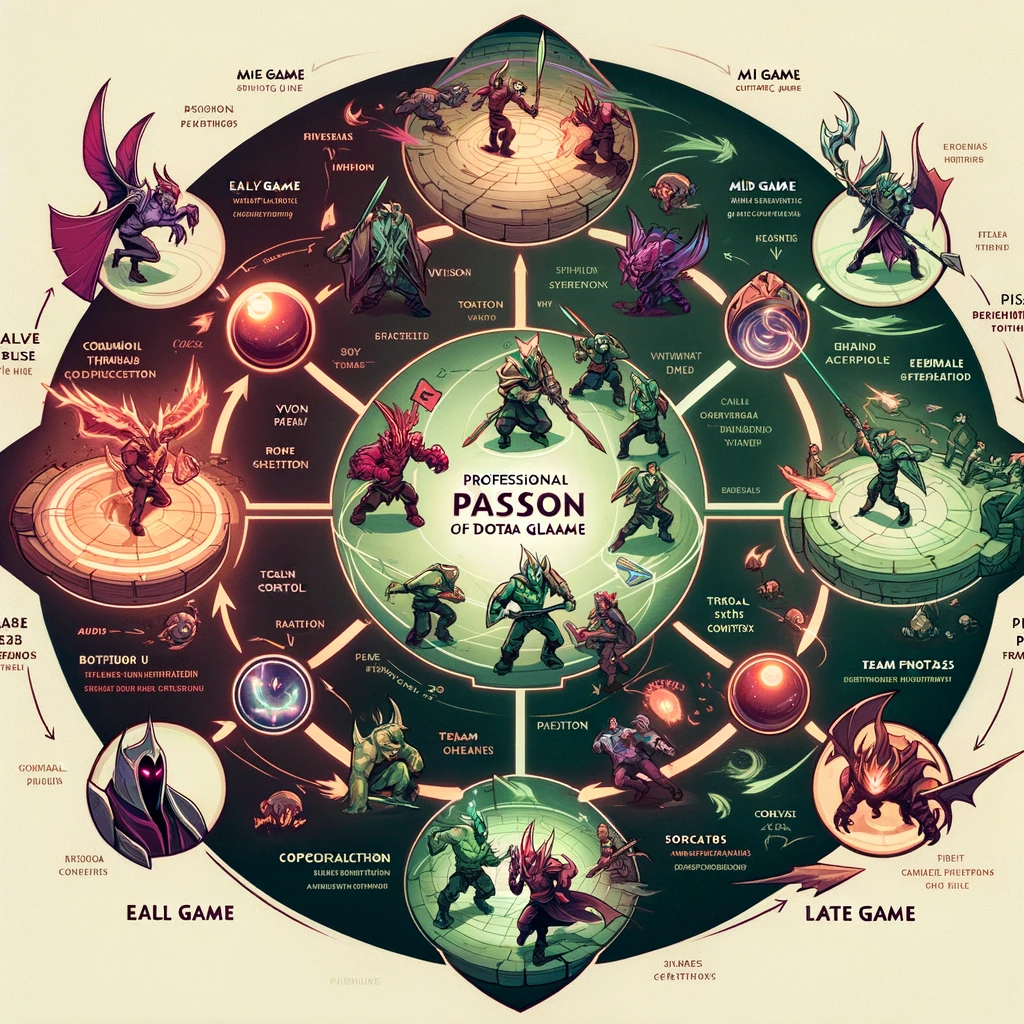
Breaking down Dota 2 pro gameplay can provide valuable insights into high-level strategies, decision-making, and mechanical skills. Analyzing matches from Dota 2 tournaments helps understand what makes pro players excel and how they adapt to different situations in Dota 2. Here’s a structured approach to dissecting Dota 2 pro gameplay, ensuring Dota 2 is mentioned appropriately:
1. Drafting Phase:
In Dota 2, the drafting phase sets the stage for the entire game. Pay attention to the picks and bans, noting how each team builds their lineup to counter the opponent while maintaining synergy within their own team. Dota 2 pro teams often have specific strategies in mind, considering factors like lane matchups, late-game potential, and team fight capabilities.
2. Laning Stage:
The early game or laning stage in Dota 2 is crucial for setting up the pace of the game. Analyze the laning setup, focusing on how pro players secure farm, apply pressure, and rotate for ganks. In Dota 2, successful early game strategies involve not just out-farming the opponent but also securing map control and key objectives like runes and towers.
3. Mid-Game Movements and Objective Control:
As Dota 2 matches transition to the mid-game, pro players shift focus towards securing objectives, such as towers, Roshan, and outposts. Observe how teams position themselves on the map, prioritize objectives, and take fights. Dota 2 pro teams excel in using their hero compositions effectively, whether it’s through split-pushing, smoke ganks, or coordinated team fights.
4. Team Fights and Engagement:
Team fights are pivotal moments in Dota 2 that can drastically swing the game’s momentum. Break down significant team fights, examining the initiation, use of abilities, target prioritization, and overall execution. Dota 2 pros are known for their precise timing, spatial awareness, and ability to turn fights even when at a disadvantage.
5. Late Game Decision Making:
In the late game, every decision in Dota 2 becomes magnified due to the high stakes and longer respawn times. Analyze how pro teams approach sieging high ground, distributing resources (like Aegis and cheese), and picking off key targets. Understanding the risk-reward balance in Dota 2’s late game can provide insights into the strategic depth of the game.
6. Adaptation and Itemization:
Throughout a Dota 2 match, pro players adapt their strategies and item builds based on the game’s progression and enemy lineup. Assess the item choices, noting any unconventional picks and how they impact the game. Effective itemization in Dota 2 often reflects a deep understanding of the current game state and future needs.
By carefully studying these aspects of Dota 2 pro gameplay, players can gain a deeper understanding of the game’s intricacies and improve their own play. Watching replays, listening to commentary, and following analyses from seasoned players can further enhance the learning experience. Remember, the key to improvement in Dota 2 lies not only in understanding what pro players do but also in comprehending why they do it.
Добавить комментарий