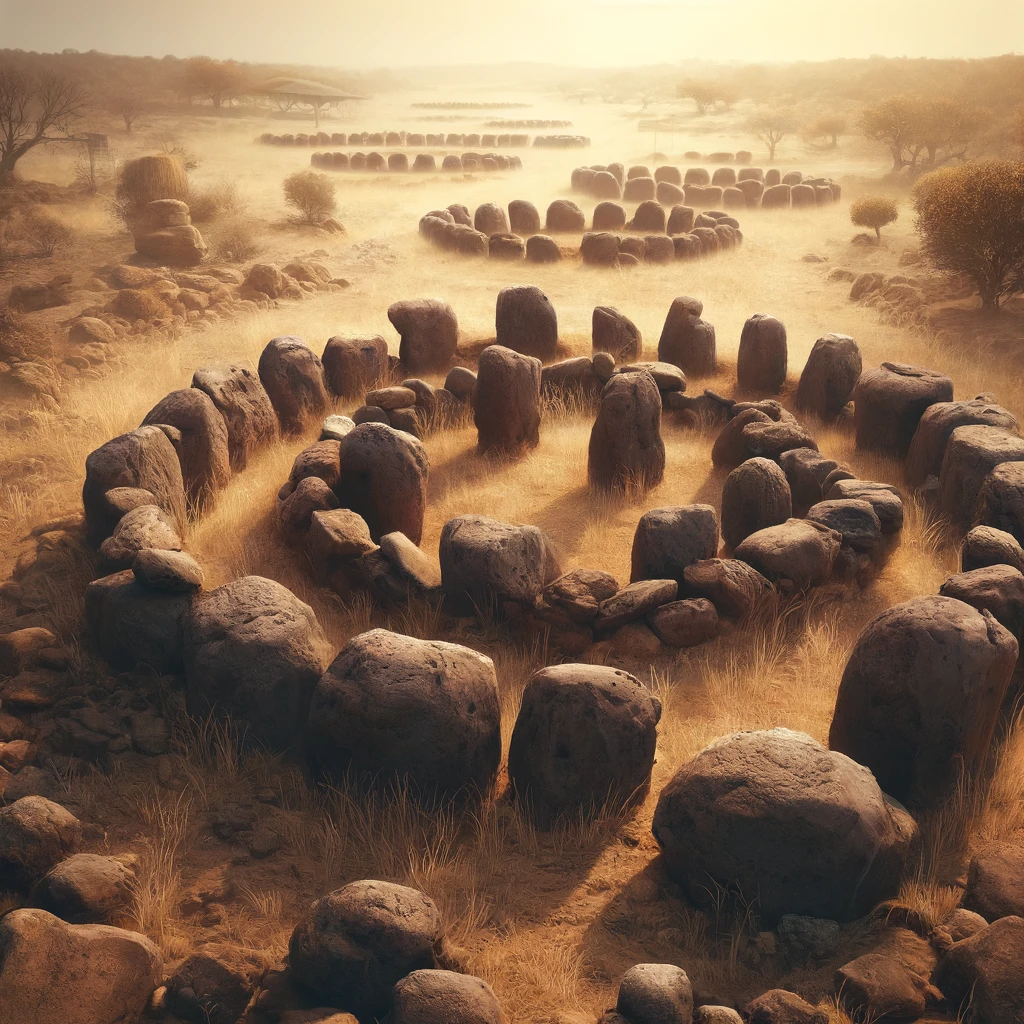
Stone Circles of Senegambia in Senegal and Gambia
The Stone Circles of Senegambia are one of West Africa’s most mysterious and fascinating archaeological sites. Located across Senegal and The Gambia, these ancient stone monuments consist of over 1,000 circles spread across approximately 30,000 square kilometers, making them the largest concentration of megalithic stone circles in the world. Recognized as a UNESCO World Heritage Site, these circles provide a glimpse into the region’s early civilizations and their burial traditions.
1. Origins and Historical Significance
Dating back between 300 BC and 1600 AD, the stone circles are believed to be the work of early West African societies. While their exact purpose remains uncertain, researchers suggest they were used as:
- Burial sites for rulers or significant figures.
- Ceremonial or spiritual locations linked to ancestor worship.
- Markers of territorial or political significance within early African kingdoms.
2. Main Stone Circle Sites
The stone circles are concentrated in four major locations, each featuring impressive arrangements of laterite stone pillars, some standing up to 2.5 meters high.
1. Wassu (The Gambia)
- The most famous site in The Gambia, located in Wassu Village.
- Includes 50 stone circles with well-preserved vertical pillars.
- Home to the Wassu Museum, which provides historical insights and local legends.
2. Kerbatch (The Gambia)
- Features slightly smaller stone formations.
- Close to the Wassu site, making it accessible for visitors.
3. Sine Ngayène (Senegal)
- The largest stone circle site with over 1,100 standing stones.
- Includes a double circle, a unique feature found only at this site.
4. Wanar (Senegal)
- Known for its taller, more slender pillars and alignment differences.
- Believed to be one of the oldest sites in the Senegambian stone circle complex.
3. Construction and Megalithic Engineering
- The stones were carved from laterite, a hard, iron-rich rock common in the region.
- They were cut, shaped, and transported using tools and methods that remain largely unknown.
- The largest stones weigh several tons, highlighting the skill and organization of the builders.
4. Cultural and Spiritual Legacy
The stone circles remain an important part of local heritage, with oral traditions linking them to ancient kings and warriors. Some communities consider the sites sacred, believing they hold spiritual energy or serve as ancestral resting places.
5. Visiting the Stone Circles of Senegambia
- Best time to visit: The dry season (November to April) offers the best travel conditions.
- Guided tours are available at Wassu and Sine Ngayène, providing deeper insights into the history and theories behind the circles.
- Local communities often share legends and folklore about the sites, adding to their mystical allure.
A UNESCO World Heritage Site
In 2006, UNESCO recognized the Stone Circles of Senegambia as a World Heritage Site, highlighting their archaeological, historical, and cultural importance. Despite their significance, much of their history remains a mystery, making them one of Africa’s most intriguing ancient landmarks.
For more tips on improving your photography and editing skills, check out helpful guides to take your selfies to the next level at ocean.co.ua.
Добавить комментарий