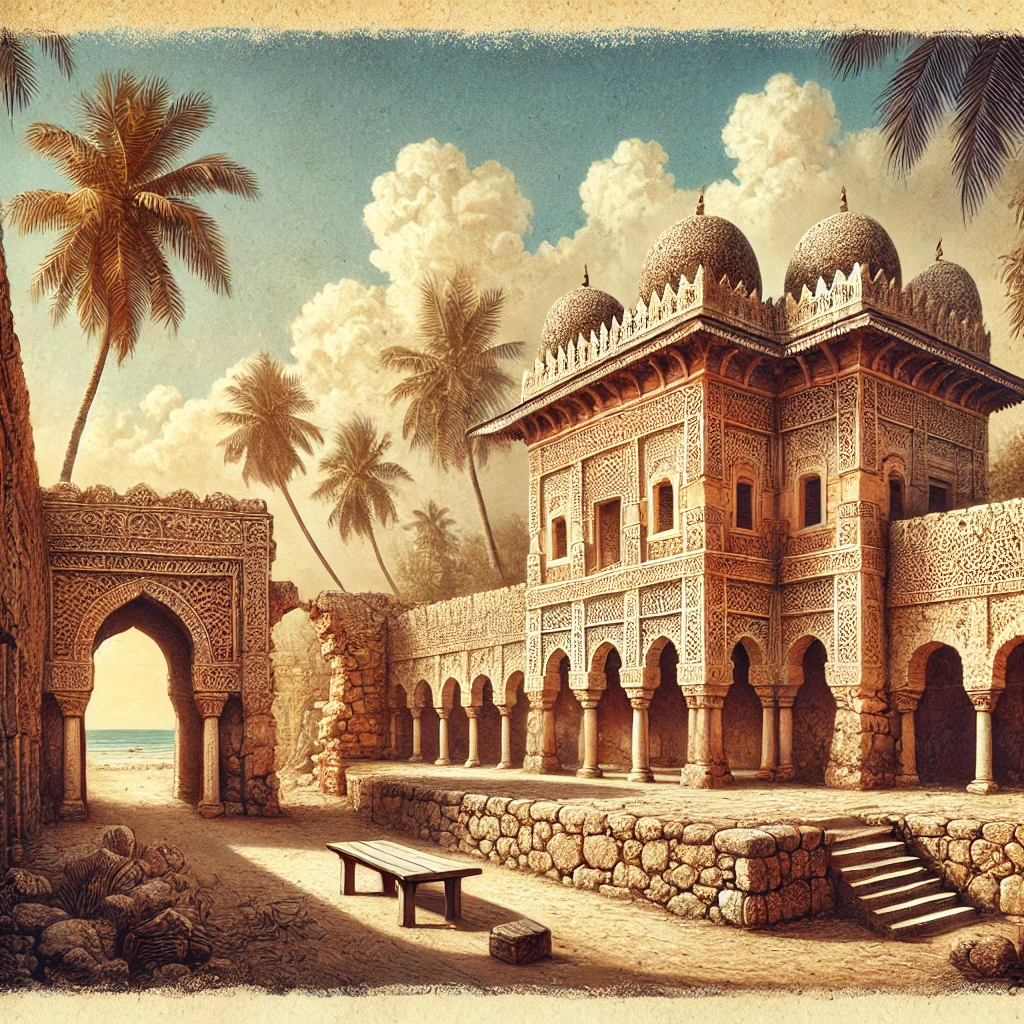
Kilwa Kisiwani Ruins in Tanzania
The Kilwa Kisiwani Ruins, located off the southern coast of Tanzania, are among the most significant historical sites in East Africa. Once a thriving Swahili trading city between the 9th and 16th centuries, Kilwa Kisiwani was a powerful hub of commerce, connecting Africa, Arabia, India, and beyond. Today, the ruins stand as a UNESCO World Heritage Site, offering a glimpse into the region’s rich past.
Historical Background
- Founded in the 9th century, Kilwa Kisiwani became a dominant trading city by the 13th–15th centuries.
- It was part of the Swahili Coast trade network, dealing in gold, ivory, slaves, and Persian ceramics.
- The city flourished under Sultan al-Hasan bin Sulaiman in the 14th century, during which many of its most famous structures were built.
- The Portuguese briefly occupied Kilwa in the 16th century, but its influence declined after trade routes shifted and Zanzibar rose in prominence.
Key Ruins of Kilwa Kisiwani
1. Great Mosque of Kilwa
- The largest and oldest standing mosque in East Africa, originally built in the 11th century and expanded in the 14th century.
- Features a dome and coral stone arches, reflecting Islamic architectural influences from Arabia and Persia.
2. Husuni Kubwa Palace
- A 14th-century palace, once the grand residence of Kilwa’s rulers.
- Included over 100 rooms, courtyards, and swimming pools, showcasing the wealth of the city’s elite.
3. Husuni Ndogo
- A fortified structure, possibly used for military or administrative purposes.
- Its construction with coral stone highlights the city’s advanced building techniques.
4. Gereza Fort
- Built by the Portuguese in the 16th century, later used by Omani rulers as a military stronghold.
- Overlooks the Indian Ocean, symbolizing Kilwa’s strategic maritime importance.
5. Makutani Palace
- A ruined palace complex showcasing Kilwa’s royal lifestyle.
- Thought to have been an administrative center during its peak.
Cultural and Historical Significance
- Trade and Wealth: Kilwa was a key player in the Indian Ocean trade, dealing in gold from Great Zimbabwe and textiles from India.
- Islamic Influence: The city was a major center for the spread of Islam in East Africa, seen in its mosques and Arabic inscriptions.
- Architectural Heritage: The use of coral stone and Persian-inspired designs made Kilwa one of the most architecturally advanced cities of its time.
Conservation Challenges
- Coastal erosion threatens the stability of the ruins.
- Climate change and rising sea levels put the island at risk.
- UNESCO and Tanzanian authorities are working to preserve the site through restoration efforts.
Conclusion
The Kilwa Kisiwani Ruins are a testament to Tanzania’s rich history and the legacy of the Swahili Coast civilization. As a once-thriving trade center that connected Africa to the world, Kilwa remains an essential site for understanding the region’s past. Visiting the ruins today offers a fascinating journey through centuries of trade, culture, and architectural brilliance.
For more tips on improving your photography and editing skills, check out helpful guides to take your selfies to the next level.
Добавить комментарий