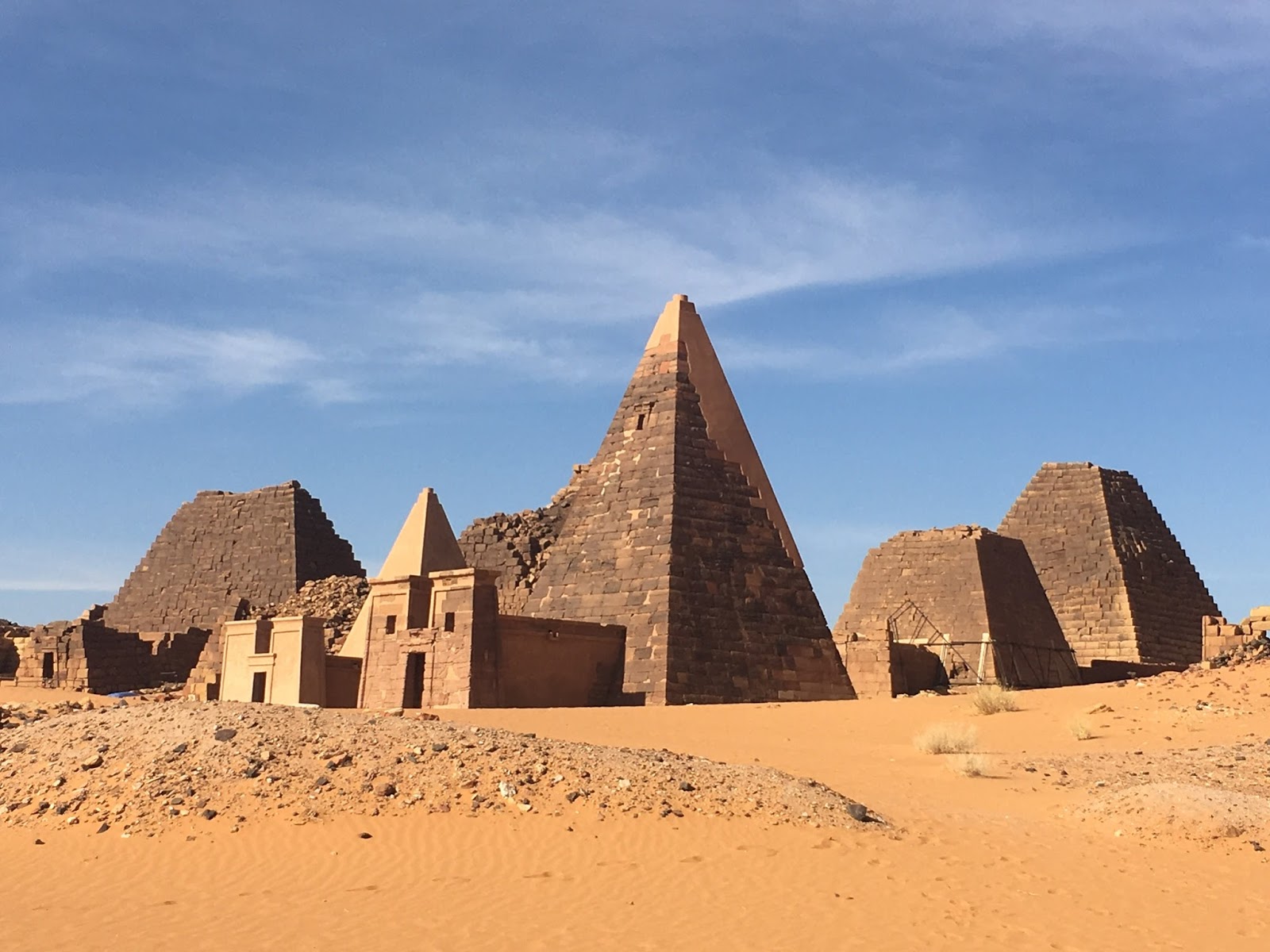
Pyramids of Meroë in Sudan
The Pyramids of Meroë, located in modern-day Sudan, are among the most remarkable yet lesser-known ancient wonders of Africa. These pyramids, built by the Kingdom of Kush between 300 BCE and 350 CE, serve as royal tombs for the Kushite kings and queens. Unlike the massive pyramids of Egypt, Meroë’s pyramids are smaller, steeper, and more numerous, making them a unique treasure of African history.
1. History of the Pyramids of Meroë
- The Kushite Kingdom thrived along the Nile River in what is now northern Sudan.
- The city of Meroë became the capital of Kush around 590 BCE, following the decline of Napata.
- The rulers of Meroë built over 200 pyramids, more than in all of Egypt!
- These pyramids served as royal tombs for kings, queens, and nobles of the Kushite dynasty.
2. Architectural Features of Meroë’s Pyramids
- The pyramids are smaller and steeper than Egyptian pyramids, with heights ranging from 6 to 30 meters (20 to 100 feet).
- They are built using sandstone blocks, often decorated with hieroglyphic inscriptions and relief carvings.
- Many of the pyramids have a small funerary chapel at their base, where offerings were placed.
- Unlike the Egyptian pyramids, which have underground burial chambers, the tombs at Meroë were built beneath or near the pyramids.
3. Who Were the Kushites?
- The Kushite civilization was a powerful African kingdom that once ruled over Egypt as the 25th Dynasty (c. 747–656 BCE).
- The Kushites adopted many Egyptian customs, including pyramid building, but also developed their own distinct culture.
- They were skilled in ironworking, trade, and warfare, controlling key trade routes between Africa, the Middle East, and the Mediterranean.
- The most famous Kushite rulers include King Taharqa (who ruled both Kush and Egypt) and Queen Amanitore, a powerful Kandake (queen regent).
4. UNESCO World Heritage Site
- The Pyramids of Meroë were designated a UNESCO World Heritage Site in 2011.
- The site includes the Northern, Southern, and Western pyramid fields, with over 200 pyramids in total.
- Despite their historical significance, the pyramids remain less crowded than Egypt’s pyramids, making them a hidden gem for travelers.
5. Destruction and Restoration Efforts
- In the 19th century, Italian explorer Giuseppe Ferlini destroyed several pyramids while searching for treasure.
- Some structures have been partially restored, but many remain untouched, preserving their ancient beauty.
- Sudanese and international archaeologists are working to preserve and protect the site.
6. Visiting the Pyramids of Meroë
- Best Time to Visit: November to February (cooler months).
- Location: About 230 km (140 miles) northeast of Khartoum, the capital of Sudan.
- What to Expect:
- A stunning desert landscape with pyramids rising from golden sands.
- A peaceful, uncrowded experience, unlike Egypt’s busy tourist sites.
- Opportunity to see ancient carvings, hieroglyphs, and burial chambers.
- How to Get There: Hire a local guide or take a 4×4 tour from Khartoum.
7. Why the Pyramids of Meroë Matter
✅ More pyramids than Egypt – showcasing an overlooked African civilization.
✅ Unique Kushite architecture – distinct from Egyptian pyramid designs.
✅ Rich cultural history – a powerful kingdom that once ruled parts of Egypt.
✅ Off-the-beaten-path destination – a must-visit for history lovers and adventure seekers.
The Pyramids of Meroë stand as a testament to Africa’s rich history, proving that ancient wonders extend far beyond Egypt.
For more tips on improving your photography and editing skills, check out helpful guides to take your selfies to the next level.
Добавить комментарий