Olduvai Gorge in Tanzania and Early Human History
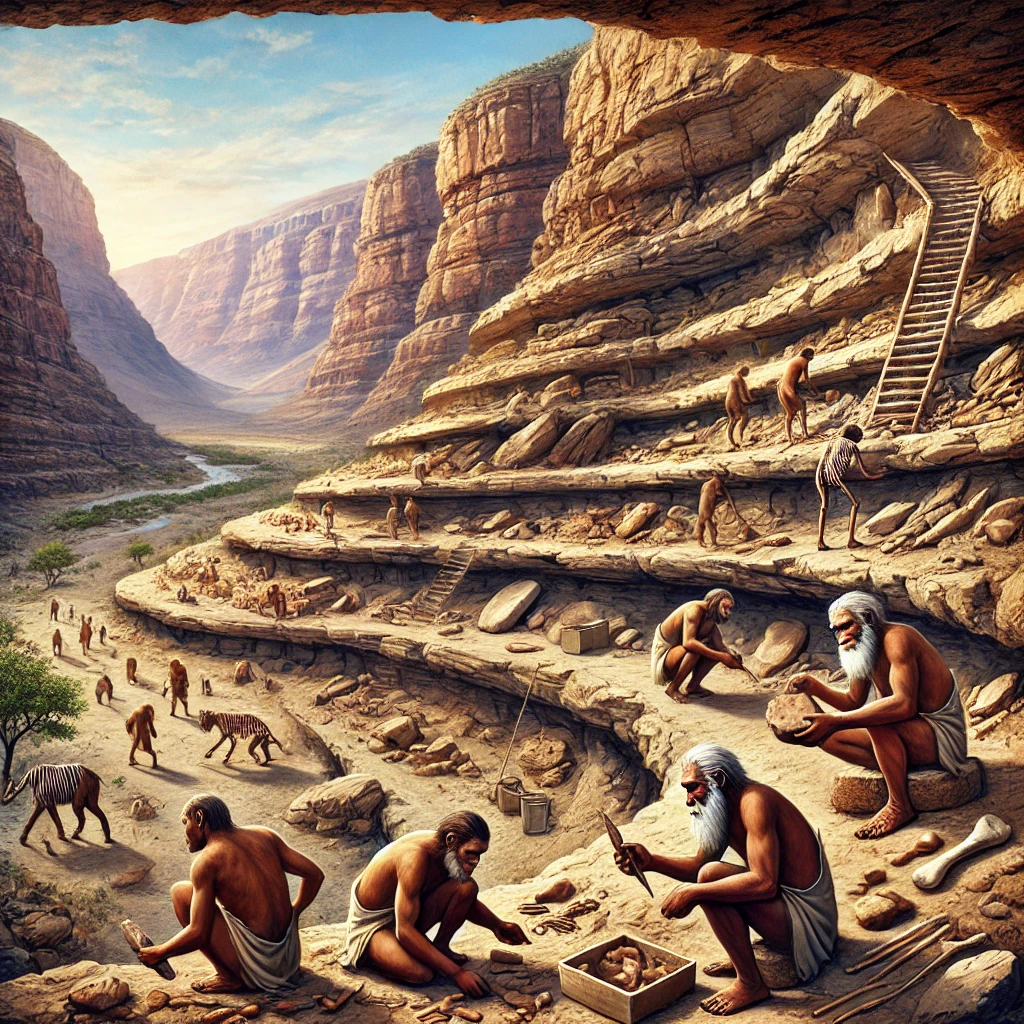
Olduvai Gorge, often called the “Cradle of Mankind,” is one of the most significant archaeological sites in the world. Located in northern Tanzania, within the Great Rift Valley, this site has provided crucial evidence about early human evolution, dating back nearly two million years. Discovered and excavated extensively by Louis and Mary Leakey, Olduvai Gorge has transformed our understanding of human ancestry and the development of early tools, culture, and migration.
1. The Importance of Olduvai Gorge
Olduvai Gorge is a deep ravine stretching about 48 kilometers and reaching depths of 90 meters. It was formed by erosion, exposing layers of sediment that contain preserved fossils and artifacts. These discoveries help scientists trace the evolution of early humans and their way of life.
2. Major Discoveries
a) Early Hominin Fossils
Some of the most groundbreaking fossils found at Olduvai Gorge include:
- Paranthropus boisei (Nutcracker Man) – Discovered by Mary Leakey in 1959, this robust hominin had large teeth adapted for chewing tough plant material.
- Homo habilis (Handy Man) – Found in 1960, this species is believed to be one of the first toolmakers, marking a major step in human evolution.
- Homo erectus – Fossil evidence suggests this species lived in Olduvai Gorge and later migrated out of Africa, contributing to modern human ancestry.
b) Early Stone Tools
Olduvai Gorge is famous for yielding some of the earliest stone tools, classified as part of the Oldowan tool culture (about 2.6 to 1.7 million years ago). These simple but effective tools included:
- Choppers and flakes for cutting meat and plants.
- Hammerstones for breaking bones to access marrow, an important nutrient source.
The discovery of these tools suggests that early humans were developing intelligence and survival strategies.
c) Evidence of Early Human Behavior
Archaeological layers at Olduvai Gorge also reveal early evidence of:
- Hunting and scavenging, showing that hominins consumed meat.
- Use of fire, providing insights into cooking and social interactions.
- Temporary shelters, indicating early humans were beginning to establish settlements.
3. Impact on Our Understanding of Human Evolution
Olduvai Gorge has helped confirm key theories in human evolution, including:
- Africa as the birthplace of humanity (supporting the “Out of Africa” theory).
- The gradual development of larger brains and complex social structures in early humans.
- The transition from simple tool use to more advanced technology, leading to modern human civilizations.
4. Visiting Olduvai Gorge Today
Olduvai Gorge remains a popular tourist destination and research site. The Olduvai Gorge Museum, located near the excavation sites, showcases:
- Fossil replicas and artifacts.
- Interactive exhibits on early human evolution.
- Guided tours of the archaeological sites.
Conclusion
Olduvai Gorge stands as a monument to human origins, providing invaluable insights into the first steps of human development. Its fossils, tools, and ancient remains have reshaped our understanding of early life, confirming Africa’s central role in human evolution.
For more tips on improving your photography and editing skills, check out helpful guides to take your selfies to the next level.
Добавить комментарий