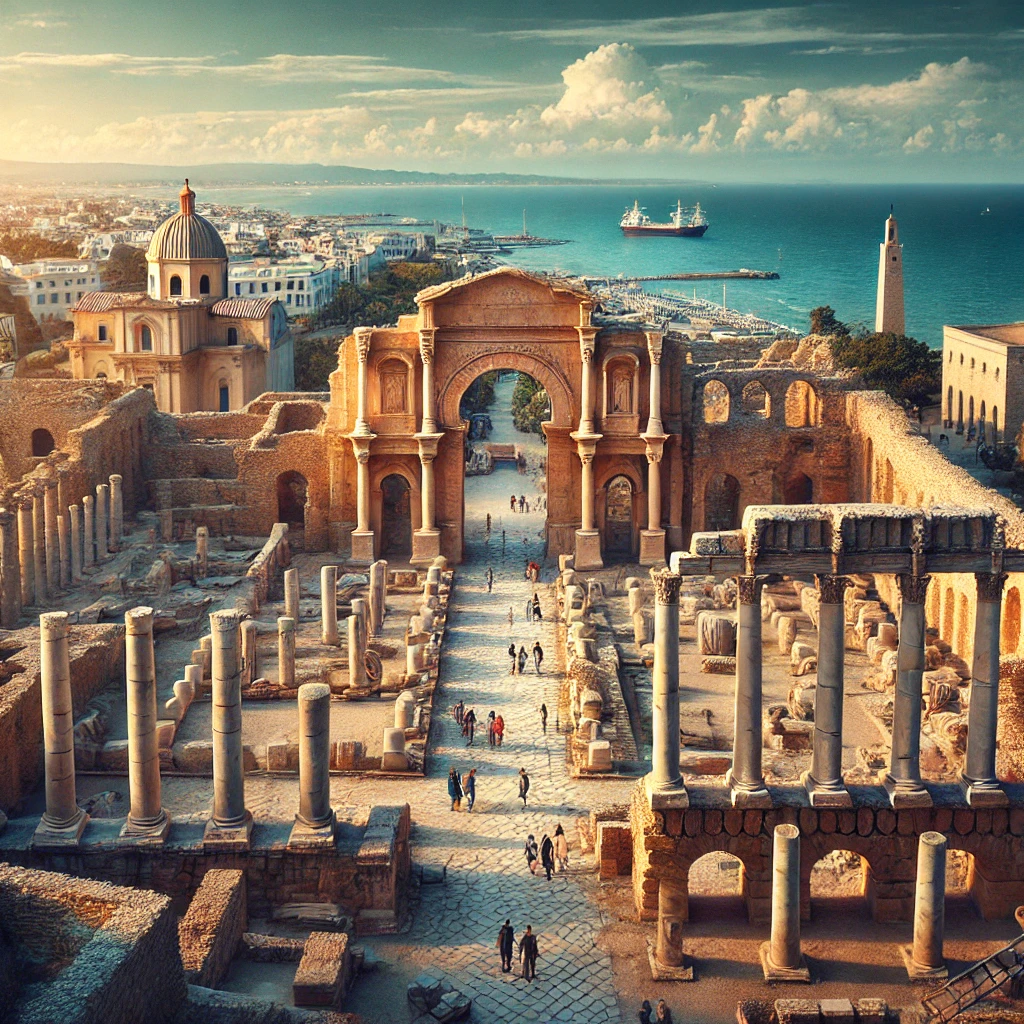
Ancient City of Carthage in Tunisia
The ancient city of Carthage, located near modern-day Tunis, was one of the most powerful civilizations of the ancient world. Founded by the Phoenicians in 814 BC, Carthage grew into a dominant maritime empire before being destroyed by the Romans in 146 BC. Today, its ruins stand as a UNESCO World Heritage Site, offering a glimpse into a once-mighty city that shaped Mediterranean history.
History of Carthage
- Phoenician Founding (814 BC)
- According to legend, Queen Dido of Tyre founded Carthage.
- It became a major trading hub, controlling sea routes across the Mediterranean.
- Carthaginian Empire (6th–3rd Century BC)
- Carthage expanded across North Africa, Spain, and Sicily.
- Known for its powerful navy and advanced shipbuilding techniques.
- The city’s economy thrived on trade, agriculture, and metalwork.
- The Punic Wars with Rome (264–146 BC)
- Carthage fought three Punic Wars against Rome.
- Hannibal Barca, Carthage’s greatest general, famously crossed the Alps with war elephants to attack Rome.
- In 146 BC, Rome destroyed Carthage, burning it to the ground.
- Roman Carthage (146 BC – 7th Century AD)
- Carthage was rebuilt as a major Roman city, featuring baths, aqueducts, and an amphitheater.
- It became one of the most important cities in the Roman Empire.
- Byzantine & Islamic Rule (7th Century Onward)
- Carthage fell to the Byzantines before being conquered by the Arabs in the 7th century.
- Eventually, it was abandoned as Tunis rose to prominence.
Top Sites to Visit in Carthage Today
1. Antonine Baths
- One of the largest Roman bath complexes in Africa.
- Offers stunning views of the Mediterranean.
2. Byrsa Hill & Carthage National Museum
- The ancient citadel of Carthage, once the political and military center.
- The museum holds artifacts, mosaics, and sculptures from the Punic and Roman eras.
3. Punic Ports
- Carthage’s advanced naval and commercial ports, key to its maritime dominance.
- Features the remains of ship docking stations and storage facilities.
4. Tophet of Carthage
- A sacred burial site where Punic child sacrifices were believed to have taken place.
- Contains ancient urns, steles, and inscriptions.
5. Roman Amphitheater
- Once held 30,000 spectators for gladiator fights and performances.
- A smaller version of Rome’s Colosseum, showcasing Roman architectural brilliance.
Legacy of Carthage
- Hannibal’s military strategies are still studied in modern warfare.
- Influences on Tunisian culture, language, and architecture remain.
- Today, Carthage is a major archaeological and tourist destination, attracting history lovers from around the world.
Conclusion
The ancient city of Carthage is a must-visit for anyone interested in history, offering a blend of Phoenician, Roman, and Byzantine ruins. Walking through its remains, visitors can relive the epic battles, trade networks, and cultural achievements that made Carthage one of the most significant civilizations of the ancient world.
For more tips on improving your photography and editing skills, check out helpful guides at ocean.co.ua to take your selfies to the next level.
Добавить комментарий