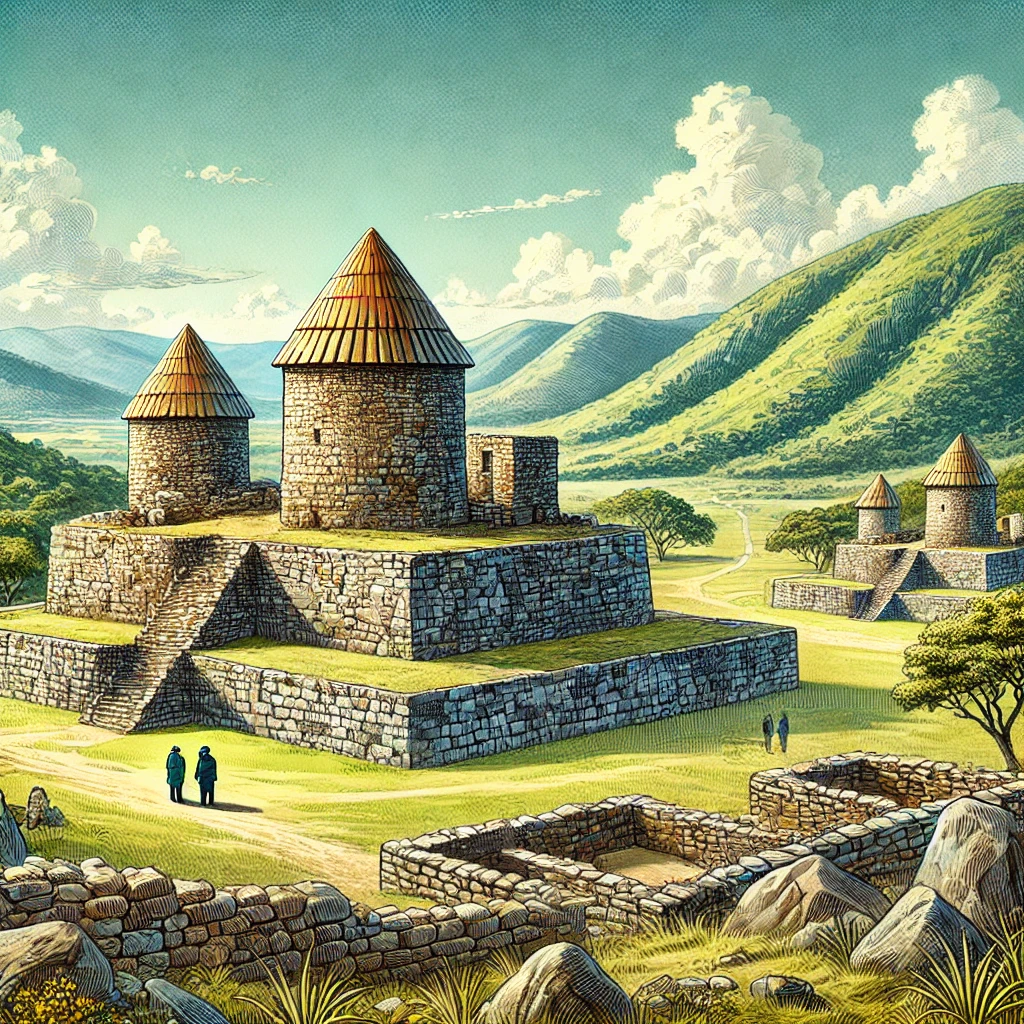
Ruins of Great Zimbabwe in Zimbabwe
The Ruins of Great Zimbabwe are one of Africa’s most fascinating and historically significant archaeological sites. Once the capital of the Kingdom of Zimbabwe (circa 11th–15th century), these ancient stone ruins tell the story of a powerful civilization that thrived through trade, craftsmanship, and architectural ingenuity. Recognized as a UNESCO World Heritage Site, Great Zimbabwe remains a symbol of African heritage and ingenuity.
History of Great Zimbabwe
- Origins: The city was built between the 11th and 15th centuries by the Shona people, who developed a thriving society based on cattle herding, mining, and long-distance trade.
- Trade Hub: Archaeological evidence suggests trade links with China, Persia, and India, as seen in artifacts like Chinese porcelain and Arabian glass beads.
- Decline: By the 16th century, Great Zimbabwe was abandoned due to resource depletion, climate changes, or political instability, though the exact reason remains debated.
Key Features of the Ruins
1. The Great Enclosure
- The largest stone structure in sub-Saharan Africa, featuring massive granite walls up to 11 meters high.
- Thought to have been a royal palace or ceremonial center.
- The Conical Tower, one of its most recognizable structures, symbolizes power and prosperity.
2. Hill Complex (Acropolis)
- Considered the religious and political center of Great Zimbabwe.
- Contains natural rock formations and walled enclosures, likely used by kings or spiritual leaders.
- Offers panoramic views of the surrounding landscape.
3. Valley Ruins
- A collection of smaller stone structures where commoners and traders lived.
- Evidence of iron smelting, pottery, and jewelry making, showing the city’s economic strength.
Cultural and Historical Significance
- Symbol of African Civilization: Great Zimbabwe challenges colonial myths that denied African societies the ability to build grand structures.
- National Identity: Zimbabwe derives its name from Great Zimbabwe, and the Zimbabwe Bird, a soapstone carving found in the ruins, is the national emblem.
- Tourism and Heritage: Today, the ruins attract visitors, historians, and archaeologists, offering insight into Africa’s medieval past.
Conservation Challenges
Despite its historical value, Great Zimbabwe faces threats such as:
- Weathering and erosion of the stone walls.
- Human impact due to tourism and local settlements.
- Preservation efforts led by UNESCO and Zimbabwe’s government aim to protect and restore the site.
Conclusion
The Ruins of Great Zimbabwe stand as a powerful testament to Africa’s rich history and architectural brilliance. This ancient city remains a source of pride for Zimbabwe and the African continent, showcasing the legacy of a once-thriving civilization. Exploring its stone walls, towers, and hidden chambers offers a fascinating journey into the past, revealing the ingenuity and resilience of its builders.
For more tips on improving your photography and editing skills, check out helpful guides to take your selfies to the next level.
Добавить комментарий