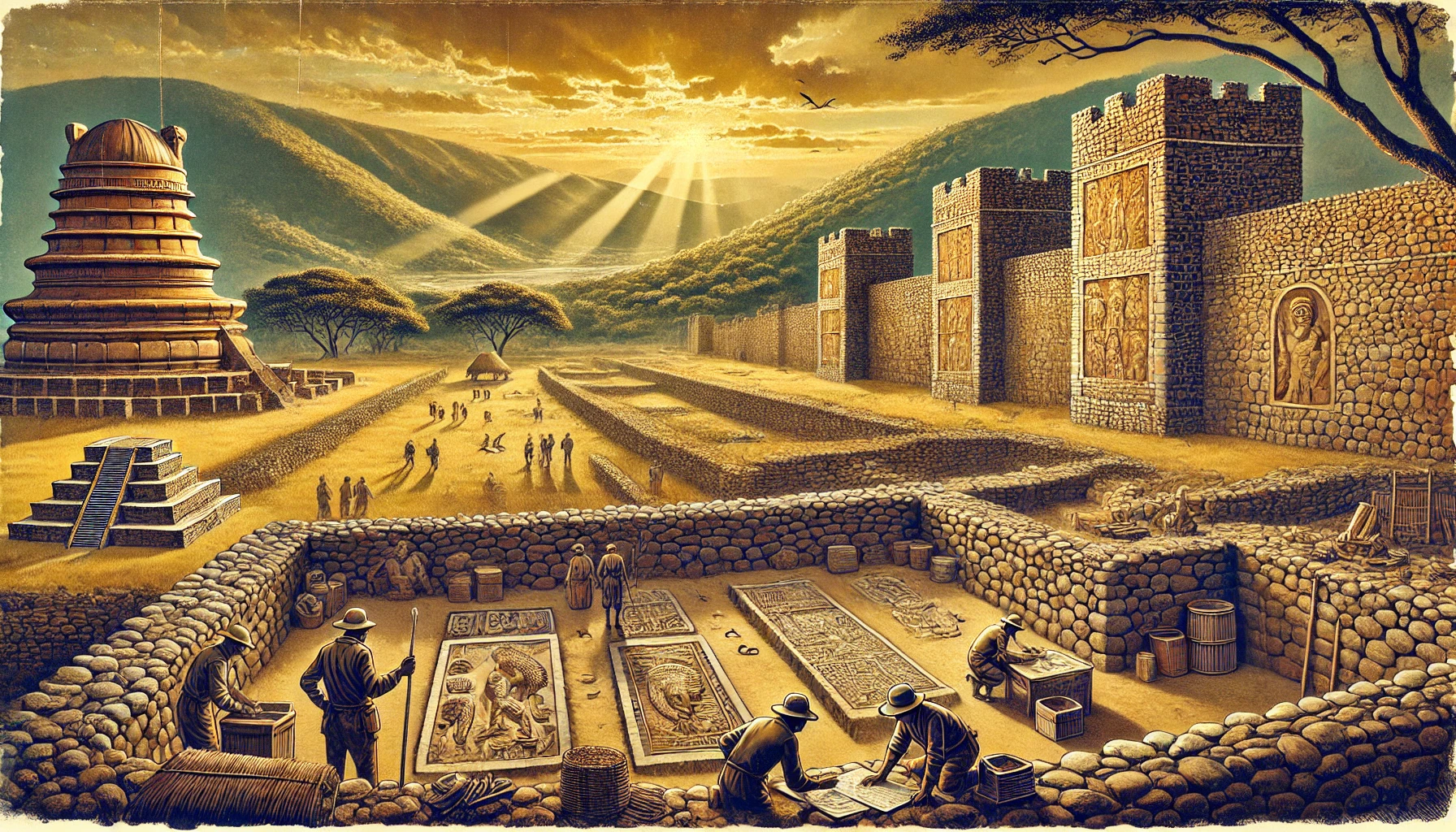
History of Great Zimbabwe Ruins
The Great Zimbabwe Ruins stand as one of Africa’s most significant archaeological and historical landmarks. Located in southeastern Zimbabwe, these ancient stone structures date back to between the 11th and 15th centuries and were once the center of a powerful kingdom. The ruins provide a glimpse into the region’s rich past, showcasing advanced architecture, trade networks, and the cultural heritage of the Shona civilization.
1. Origins and Rise of Great Zimbabwe
- The Shona people began constructing Great Zimbabwe around the 11th century.
- The city flourished due to its strategic location along trade routes connecting the interior of Africa to the Indian Ocean coast.
- Gold, ivory, and other goods were traded with merchants from Swahili city-states, Arabia, and China.
- At its peak, the city may have housed between 10,000 and 20,000 people, making it one of the largest settlements in pre-colonial Africa.
2. Architectural Marvel of Great Zimbabwe
Great Zimbabwe is famous for its dry-stone walls, built without mortar. The ruins are divided into three main areas:
The Hill Complex
- The oldest part of the ruins, located on a rocky hill.
- Believed to have been a royal or religious center, possibly housing the king or spiritual leaders.
- Features a sacred enclosure, which may have been used for ceremonies.
The Great Enclosure
- A massive circular stone structure with walls up to 11 meters (36 feet) high.
- Includes the Conical Tower, whose purpose remains uncertain, but may have had ritual or symbolic significance.
- Thought to have been a royal palace or a gathering place for important events.
The Valley Ruins
- Consists of smaller stone buildings that likely served as homes for the elite.
- The surrounding areas also contained huts made from mud and thatch, which housed the general population.
3. Decline of Great Zimbabwe
- Around the 15th century, Great Zimbabwe began to decline.
- Possible reasons include:
- Overpopulation and resource depletion (lack of firewood, grazing land, and water).
- Trade route shifts that redirected commerce away from the city.
- Political instability or internal conflicts.
- By the 16th century, the city was largely abandoned, though the Shona people continued to inhabit surrounding areas.
4. European Discovery and Colonial Myths
- The ruins were first documented by Portuguese explorers in the 16th century.
- In the 19th century, European explorers and archaeologists “rediscovered” the site.
- Colonial officials falsely claimed that Great Zimbabwe was built by foreign civilizations (such as the Phoenicians or Arabs), refusing to acknowledge its African origins.
- Modern archaeology has confirmed that Great Zimbabwe was built by indigenous African people, specifically the Shona, disproving earlier myths.
5. Legacy and Significance
- UNESCO World Heritage Site: Great Zimbabwe was designated a UNESCO World Heritage Site in 1986.
- Symbol of National Identity: The name “Zimbabwe” was adopted by the country upon independence in 1980, and the ruins are depicted on the national flag.
- Inspiration for Future Civilizations: The architectural and cultural achievements of Great Zimbabwe influenced later African states, such as the Mutapa Empire.
Why Great Zimbabwe Matters Today
Great Zimbabwe is more than just an archaeological site—it is a testament to Africa’s rich history and ingenuity. Its ruins stand as evidence of a once-thriving civilization that built impressive stone structures, engaged in global trade, and developed a complex society long before European colonization.
For more tips on improving your photography and editing skills, check out helpful guides to take your selfies to the next level.
Добавить комментарий