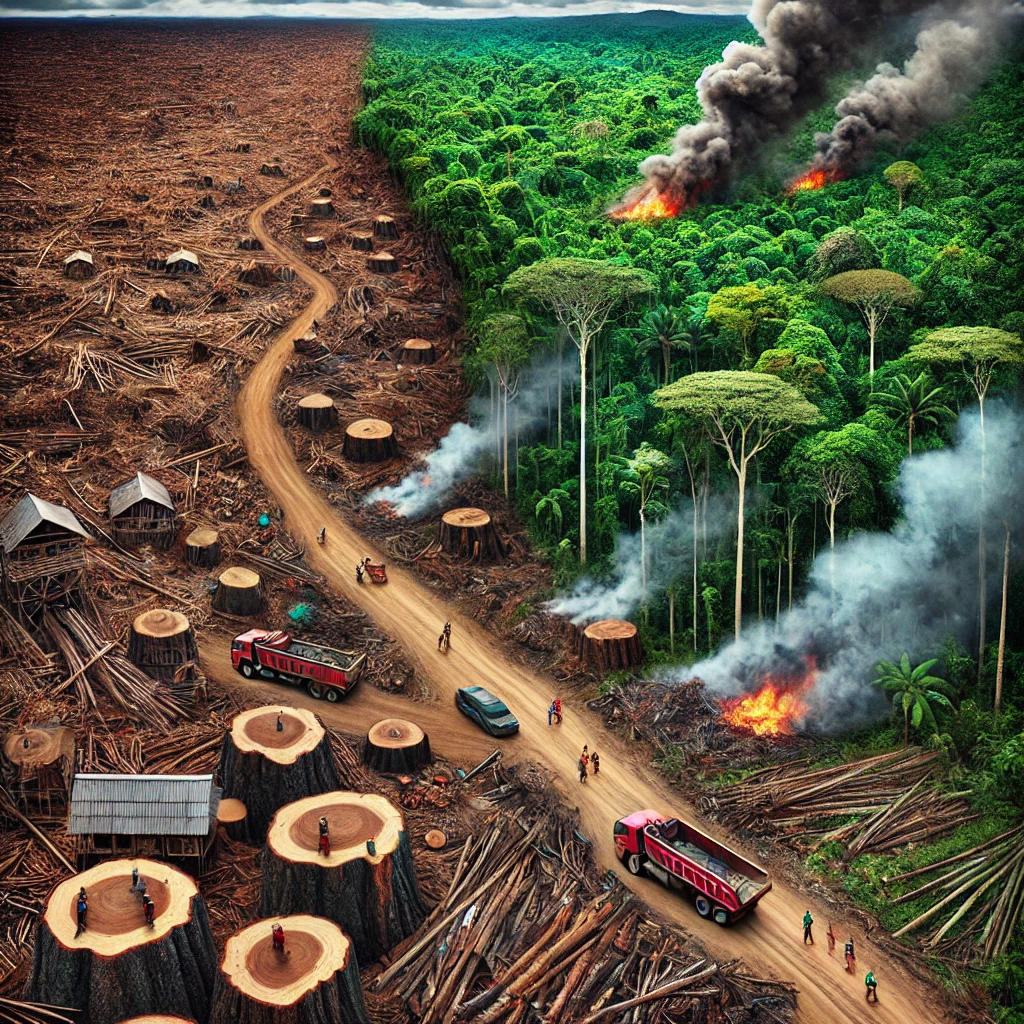
Deforestation Rates in DR Congo
The Democratic Republic of the Congo (DR Congo) is home to the second-largest rainforest in the world, the Congo Basin, which plays a crucial role in regulating the global climate and supporting biodiversity. However, deforestation rates in DR Congo have been accelerating, driven by agriculture, logging, and infrastructure expansion. Here’s a closer look at the causes, impacts, and efforts to combat deforestation in DR Congo.
1. The Scale of Deforestation in DR Congo
- DR Congo loses an estimated 500,000 to 600,000 hectares of forest per year.
- In 2022, the country recorded a loss of approximately 1.2 million hectares of tree cover, making it the second-highest deforestation rate in the world, after Brazil.
- The Congo Basin rainforest absorbs massive amounts of carbon dioxide, but ongoing deforestation threatens this vital carbon sink.
2. Causes of Deforestation
Several factors contribute to the rapid deforestation in DR Congo:
A. Slash-and-Burn Agriculture
- Around 90% of deforestation is linked to subsistence farming.
- Farmers clear forests using slash-and-burn techniques to grow crops like cassava, maize, and bananas.
- Without sustainable farming practices, the land quickly depletes, forcing farmers to clear new areas.
B. Logging (Both Legal and Illegal)
- DR Congo has vast timber reserves, and both legal and illegal logging contribute to deforestation.
- High-value hardwoods like mahogany and afrormosia are exported, often without proper oversight.
- Weak law enforcement allows illegal loggers to operate freely.
C. Charcoal Production
- Over 90% of DR Congo’s population relies on wood and charcoal for cooking fuel.
- The demand for charcoal leads to widespread tree-cutting, especially near major cities like Kinshasa and Goma.
D. Mining and Infrastructure Development
- Mining for minerals such as cobalt, copper, and gold leads to large-scale forest clearance.
- Road construction and urban expansion also contribute to forest loss.
3. Environmental and Social Impacts
Deforestation in DR Congo has severe consequences:
- Loss of Biodiversity: The Congo Basin is home to endangered species like forest elephants, bonobos, and okapis. Habitat destruction threatens their survival.
- Climate Change Acceleration: The forest serves as a carbon sink, but its destruction releases carbon dioxide, worsening global warming.
- Displacement of Indigenous Communities: Many Indigenous groups depend on the forest for their livelihood. Deforestation disrupts their way of life.
- Soil Degradation and Desertification: The loss of trees leads to soil erosion, reducing land fertility and increasing desertification risks.
4. Efforts to Combat Deforestation
Despite the challenges, there are initiatives aimed at slowing deforestation:
A. Reforestation and Conservation Projects
- Programs like REDD+ (Reducing Emissions from Deforestation and Forest Degradation) provide incentives for communities to protect forests.
- Conservation groups work to establish protected areas and national parks.
B. Sustainable Farming Practices
- Agroforestry initiatives encourage farmers to plant crops alongside trees, reducing the need for new deforestation.
C. Alternative Energy Solutions
- Promoting solar and clean cooking technologies can reduce reliance on charcoal.
D. Strengthening Forest Laws
- The government and international organizations are working to combat illegal logging by increasing monitoring and enforcement.
5. The Future of DR Congo’s Forests
Without urgent action, deforestation in DR Congo could have devastating consequences for both the country and the planet. However, with strong policies, sustainable practices, and international support, it is possible to balance economic development with environmental conservation.
For more tips on improving your photography and editing skills, check out helpful guides to take your selfies to the next level.
Добавить комментарий