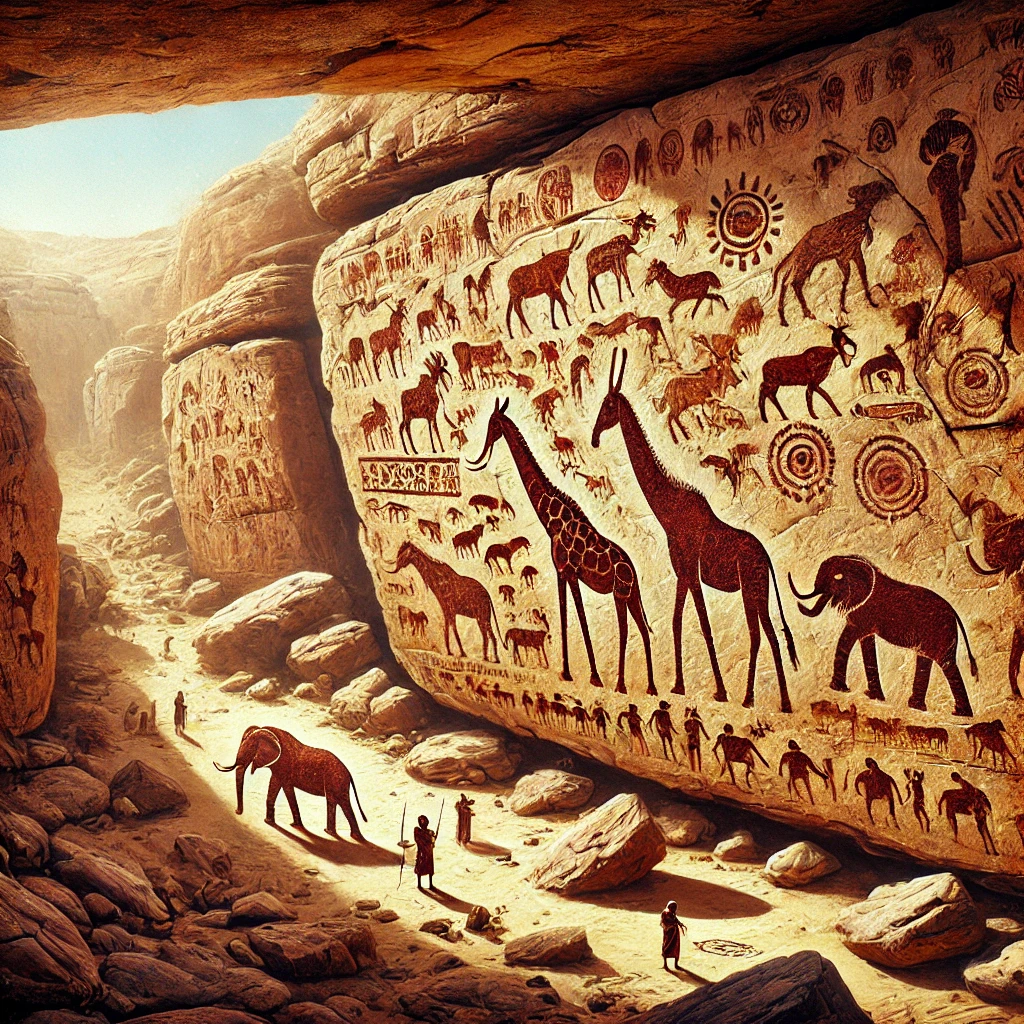
Rock Paintings in Chad
Chad is home to some of Africa’s most impressive and well-preserved rock paintings, offering a fascinating glimpse into the lives, beliefs, and environments of ancient civilizations. These prehistoric artworks, scattered across the vast Sahara Desert, depict animals, humans, and ritual scenes, showcasing a time when the region was lush and teeming with life. Among Chad’s most famous rock art sites, the Ennedi Plateau and Tibesti Mountains stand out as must-visit destinations for history and archaeology enthusiasts.
1. The Ennedi Plateau: A Rock Art Treasure Trove
Located in northeastern Chad, the Ennedi Plateau is a UNESCO World Heritage site known for its dramatic sandstone formations and thousands of ancient rock paintings.
- What You’ll See:
- Detailed depictions of animals such as giraffes, elephants, and antelopes, suggesting that the Sahara was once a fertile savanna.
- Human figures engaging in hunting, ceremonies, and daily activities.
- Scenes painted in red, yellow, and white pigments, some dating back over 7,000 years.
- Why It’s Important:
- The paintings provide evidence of climate change in the Sahara, showing a time when the region was far more habitable.
- The artwork reflects the evolution of human societies, from hunter-gatherers to early pastoralists.
2. The Tibesti Mountains: Rock Art in the Land of the Tubu
The Tibesti Mountains, home to the nomadic Tubu people, contain stunning rock engravings and paintings that date back thousands of years.
- Notable Sites:
- Bardai and Zouar: Areas rich in petroglyphs (rock carvings) showing camels, warriors, and religious symbols.
- Emi Koussi, the highest peak in the Sahara, is surrounded by caves and rock shelters adorned with ancient paintings.
- Why It’s Important:
- The rock art in Tibesti illustrates the adaptation of early societies to desertification and changing landscapes.
- Many carvings feature camels, suggesting the later arrival of trans-Saharan trade routes.
3. Meaning and Interpretation of Chad’s Rock Paintings
Experts believe these paintings served multiple purposes:
- Religious or spiritual significance, possibly depicting gods, rituals, or ceremonies.
- Historical records of human migration, wildlife, and early domestication of animals.
- Artistic expression, showcasing the creativity and storytelling of early societies.
4. Conservation and Challenges
Despite their importance, Chad’s rock paintings face threats from:
- Erosion and weathering, due to harsh desert conditions.
- Human activities, including vandalism and illegal excavations.
- Lack of resources for preservation and research.
UNESCO and local organizations are working to document and protect these invaluable historical sites for future generations.
Conclusion
The rock paintings of Chad offer a window into a prehistoric world where the Sahara was green, thriving, and full of life. From the cave paintings of the Ennedi Plateau to the petroglyphs of Tibesti, these artworks provide a unique perspective on Africa’s ancient cultures and the shifting climate of the region.
For more tips on improving your photography and editing skills, check out helpful guides to take your selfies to the next level.
Добавить комментарий