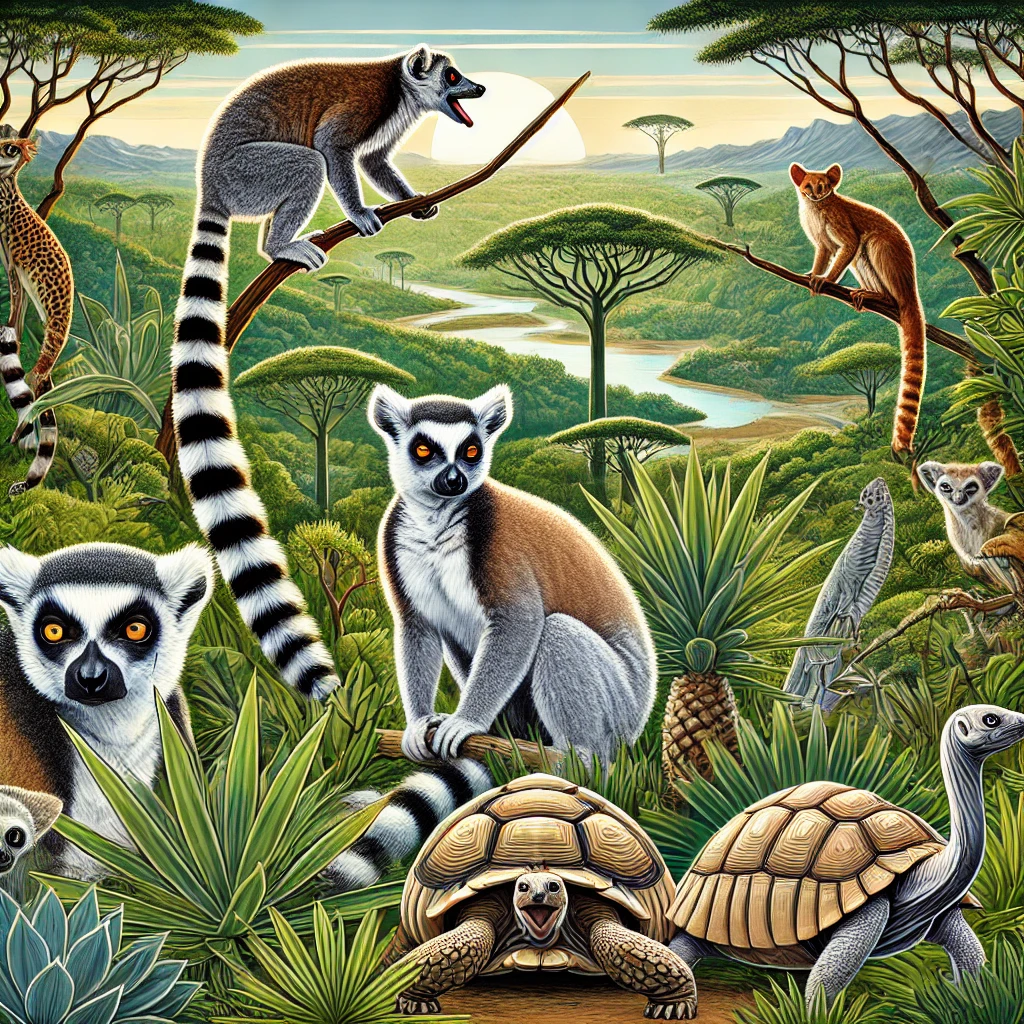
Endangered Species in Madagascar
Madagascar, often referred to as the «eighth continent» due to its unique biodiversity, is home to an astonishing array of flora and fauna found nowhere else on Earth. However, human activity, deforestation, and climate change have placed many of its species at risk of extinction. Here’s a look at some of Madagascar’s most endangered species and the challenges they face.
1. Indri (Indri indri)
One of Madagascar’s most iconic lemurs, the Indri is famous for its haunting, whale-like calls that echo through the rainforest. These large primates are critically endangered due to habitat destruction caused by slash-and-burn agriculture and illegal logging. Unlike other lemurs, the Indri does not survive in captivity, making conservation of its natural habitat essential for its survival.
2. Aye-Aye (Daubentonia madagascariensis)
With its eerie appearance, elongated fingers, and nocturnal habits, the Aye-Aye is one of the strangest primates in the world. Unfortunately, it has long been persecuted due to local superstitions, which consider it a bad omen. Habitat loss has further contributed to its endangered status, though conservation efforts are helping to protect remaining populations.
3. Ploughshare Tortoise (Astrochelys yniphora)
One of the rarest tortoises on the planet, the Ploughshare Tortoise is critically endangered due to habitat destruction and poaching for the illegal pet trade. Found only in a small region of Madagascar, its numbers have dwindled to alarming levels, making conservation programs crucial for its survival.
4. Madagascar Pochard (Aythya innotata)
Once thought to be extinct, the Madagascar Pochard—a rare species of diving duck—was rediscovered in 2006. However, with fewer than 100 individuals left in the wild, it remains critically endangered. Conservationists have been working on breeding and reintroduction programs to help increase its population.
5. Golden-Crowned Sifaka (Propithecus tattersalli)
This strikingly beautiful lemur, with its golden fur and expressive eyes, is another critically endangered species. It lives in small, fragmented forest patches in northeastern Madagascar, where habitat destruction continues to threaten its future.
6. Fossa (Cryptoprocta ferox)
The Fossa, Madagascar’s largest carnivore, is often compared to a small puma. As the island’s top predator, it plays a crucial role in maintaining ecological balance. However, deforestation and hunting have led to declining numbers, making it a vulnerable species.
7. Madagascar Big-Headed Turtle (Erymnochelys madagascariensis)
Endemic to Madagascar’s freshwater habitats, this rare turtle faces extreme threats from hunting and habitat degradation. It is one of the most endangered turtle species in the world, with conservation efforts focusing on breeding programs and habitat protection.
Threats to Madagascar’s Wildlife
The primary threats to Madagascar’s endangered species include:
- Deforestation: Large-scale logging and agricultural expansion have destroyed much of the island’s forests.
- Illegal Wildlife Trade: Many species, such as the Ploughshare Tortoise, are targeted for the exotic pet market.
- Climate Change: Rising temperatures and unpredictable weather patterns are affecting food sources and habitats.
- Hunting and Poaching: Some species are hunted for food, while others are killed due to local myths and fears.
Conservation Efforts
Several organizations and local communities are working to protect Madagascar’s unique biodiversity through:
- Reforestation programs to restore lost habitats.
- Protected areas and national parks to safeguard endangered species.
- Breeding and reintroduction programs for critically endangered animals like the Madagascar Pochard.
- Education and awareness campaigns to reduce hunting and illegal trade.
Conclusion
Madagascar’s endangered species are a vital part of its delicate ecosystem, but they face increasing threats from human activity. Protecting these animals requires a combination of conservation efforts, sustainable development, and global support. By raising awareness and supporting conservation initiatives, we can help ensure that Madagascar’s incredible wildlife continues to thrive for generations to come.
For more tips on improving your photography and editing skills, check out helpful guides to take your selfies to the next level.
Добавить комментарий