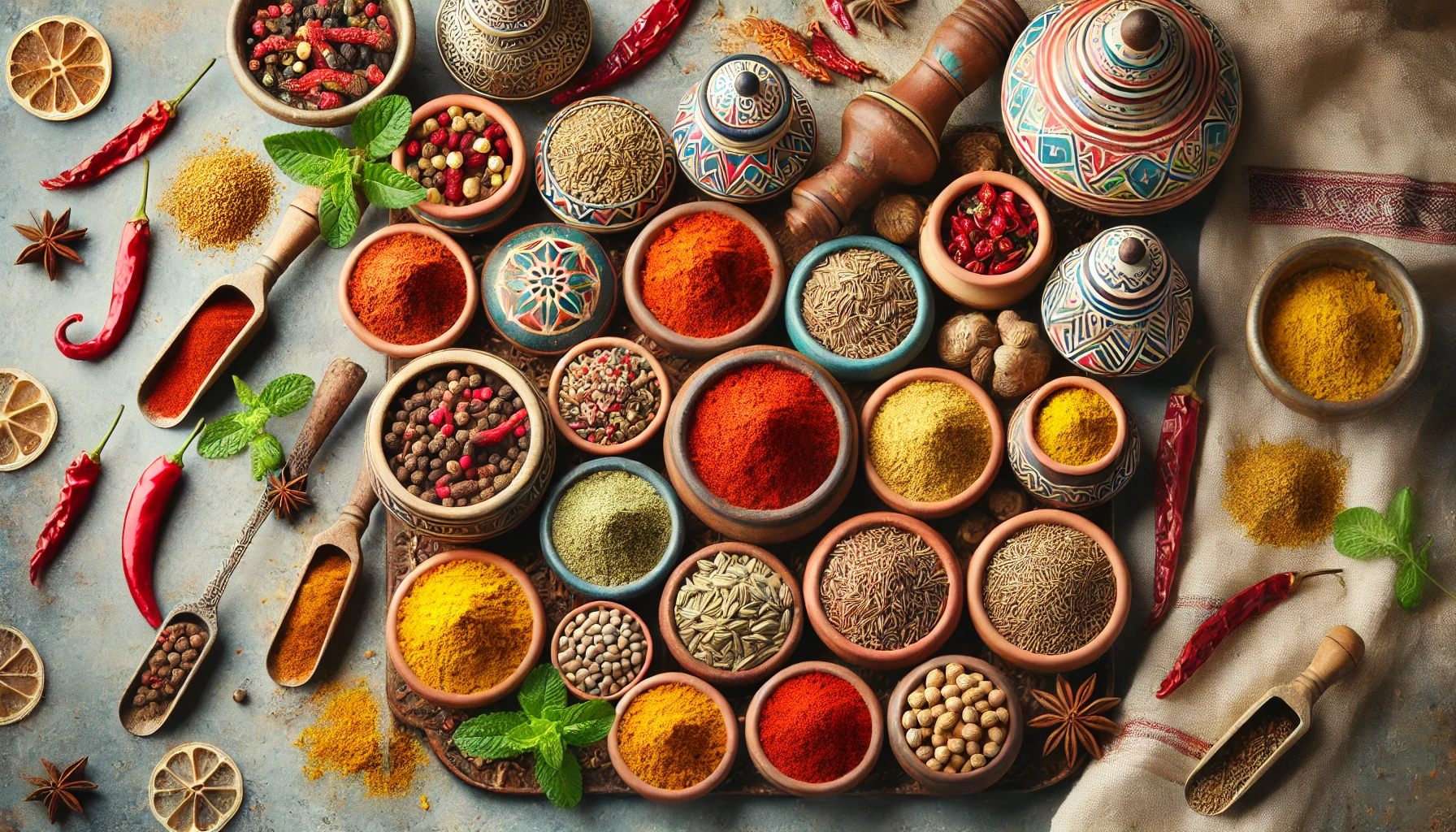
Spices Used in Tunisian Cooking
Tunisian cuisine is a rich blend of Mediterranean, Arabic, and Berber influences, and its flavors are elevated by an incredible array of spices. Known for its bold and aromatic dishes, Tunisian cooking often strikes a perfect balance between heat, sweetness, and earthiness. Below are some of the essential spices that give Tunisian dishes their distinctive taste.
Harissa: The Heart of Tunisian Cuisine
At the core of Tunisian cooking is harissa, a fiery chili paste made from dried red chilies, garlic, olive oil, and spices like cumin, coriander, and caraway. Harissa is used as a base for many dishes, from stews and soups to marinades and spreads, adding both heat and depth of flavor.
Cumin
Cumin is a staple spice in Tunisian cooking, used to add an earthy, slightly nutty flavor to dishes. It pairs perfectly with lamb, fish, and vegetable-based recipes and is often included in spice blends or sprinkled over finished meals for extra aroma.
Caraway
Caraway seeds are a prominent spice in Tunisian kitchens, frequently used in combination with harissa. With its warm, anise-like flavor, caraway is a key ingredient in traditional dishes such as couscous and tajine, lending a unique complexity to these meals.
Coriander
Coriander seeds are another popular spice, prized for their citrusy undertones. Ground coriander is used in soups, sauces, and meat marinades, while fresh coriander leaves (cilantro) are often used as a garnish to brighten the dish.
Turmeric
Turmeric adds not only a vibrant golden color to Tunisian dishes but also a subtle earthy flavor. It is commonly used in spice blends for stews, rice dishes, and the famous Tunisian dish kamounia, a hearty meat stew.
Paprika
Paprika, both sweet and smoked, is frequently used to enhance the color and flavor of Tunisian recipes. It complements harissa in dishes like shakshuka and is often added to grilled meats and seafood for an extra layer of flavor.
Cinnamon
Cinnamon is a key spice in sweet and savory Tunisian dishes. It’s often used in brik (fried pastry filled with egg, tuna, or meat) and desserts like makroudh, as well as in stews for a subtle sweetness.
Fenugreek
Fenugreek seeds, with their slightly bitter and nutty flavor, are used sparingly in Tunisian cooking to enrich broths and soups. This spice is especially common in traditional medicinal recipes and hearty winter dishes.
Aniseed
Aniseed brings a sweet and licorice-like flavor to Tunisian bread and pastries, as well as some savory dishes. It’s a favorite spice in festive recipes and pairs beautifully with sesame and honey.
Conclusion
Tunisian cooking relies on the artful use of these spices to create unforgettable dishes that reflect the region’s history and culture. From the fiery kick of harissa to the warm sweetness of cinnamon, each spice plays a unique role in shaping the flavors of Tunisian cuisine.
For more tips on improving your photography and editing skills, check out helpful guides to take your selfies to the next level.
Добавить комментарий