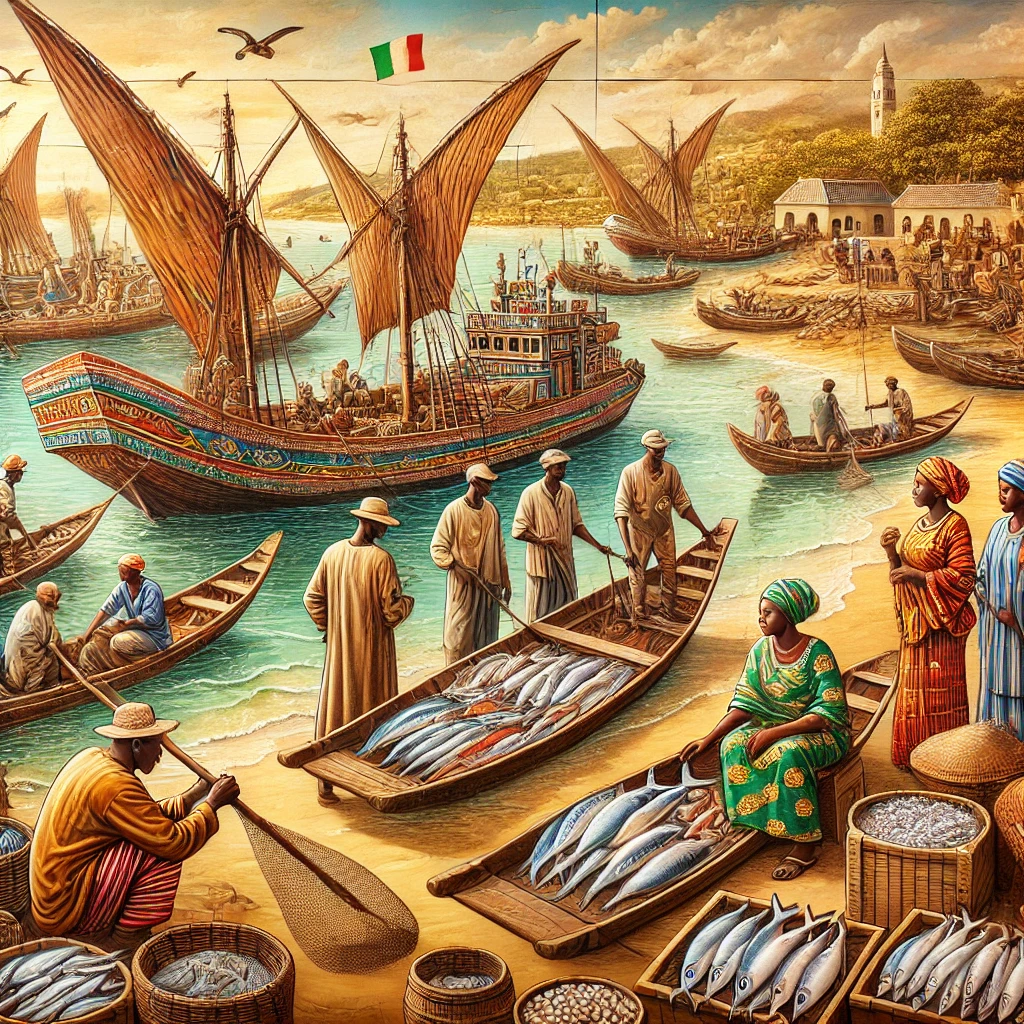
Fishing Industry in Senegal
The fishing industry is one of Senegal’s most vital economic sectors, supporting millions of livelihoods and contributing significantly to the country’s food security and exports. Situated along the Atlantic Ocean, Senegal boasts rich fishing grounds that have historically made it a hub for both artisanal and industrial fishing activities. Here’s a closer look at the industry’s importance, challenges, and future prospects.
1. The Role of Fishing in Senegal’s Economy
Fishing contributes nearly 3% to Senegal’s GDP and provides employment for approximately 600,000 people, directly and indirectly. Artisanal fishing, in particular, plays a crucial role, with small-scale fishermen accounting for the majority of the country’s catch. The sector is also a key source of protein for the local population, with fish making up around 70% of the animal protein consumed in Senegal.
Additionally, Senegal exports a variety of fish products, including tuna, shrimp, and small pelagic fish such as sardinella. These exports are vital for generating foreign exchange, with Europe and Asia being the primary markets.
2. Artisanal Fishing: A Backbone of the Industry
Artisanal fishing is deeply rooted in Senegalese culture. Fishermen in traditional wooden boats, known as pirogues, set out daily to bring in fresh catches. This type of fishing supports coastal communities and fosters strong communal ties.
However, the artisanal sector is facing growing challenges, including:
- Overfishing: The depletion of fish stocks due to increased demand and unregulated fishing activities.
- Competition: Industrial fleets, including foreign trawlers, often operate in areas designated for small-scale fishermen, leading to tensions.
- Climate Change: Rising sea temperatures and changing ocean currents are disrupting fish migration patterns, affecting the availability of key species.
3. Industrial Fishing: Balancing Growth and Sustainability
Senegal has attracted several industrial fishing companies, both local and foreign, to its waters. While this has contributed to economic growth, it has also raised concerns about sustainability. Foreign trawlers, often operating under fishing agreements, are accused of exploiting resources at unsustainable rates.
The government has taken steps to regulate the industry, including:
- Enforcing fishing quotas to prevent overexploitation.
- Establishing Marine Protected Areas (MPAs) to allow fish stocks to recover.
- Encouraging investments in sustainable aquaculture to reduce pressure on wild fish stocks.
4. Aquaculture: A Growing Opportunity
With wild fish stocks under pressure, aquaculture is emerging as a viable alternative. Senegal is investing in fish farming to diversify its fishing industry and ensure long-term sustainability. Species such as tilapia and catfish are being farmed in controlled environments, creating new opportunities for employment and food production.
5. Challenges Facing the Industry
Despite its importance, the fishing industry in Senegal is grappling with several challenges:
- Illegal, Unreported, and Unregulated (IUU) Fishing: Foreign vessels engaging in illegal fishing practices pose a major threat to local fishermen and marine biodiversity.
- Infrastructure Deficits: Many fishing communities lack modern processing and storage facilities, leading to significant post-harvest losses.
- Economic Pressures: Global competition and fluctuating fish prices impact the profitability of exports.
6. Efforts Toward Sustainability
Senegal’s government, along with international organizations, is working to address these issues through initiatives such as:
- Empowering local fishing communities to monitor and manage resources.
- Promoting sustainable fishing techniques and equipment.
- Strengthening international cooperation to combat IUU fishing.
Conclusion
The fishing industry in Senegal is both a lifeline and a sector in need of reform. While it continues to support millions of people and generate significant revenue, overfishing, climate change, and illegal practices threaten its long-term viability. By balancing economic growth with sustainability and empowering local communities, Senegal can ensure that its fishing industry thrives for generations to come.
For more tips on improving your photography and editing skills, check out helpful guides to take your selfies to the next level.
Добавить комментарий