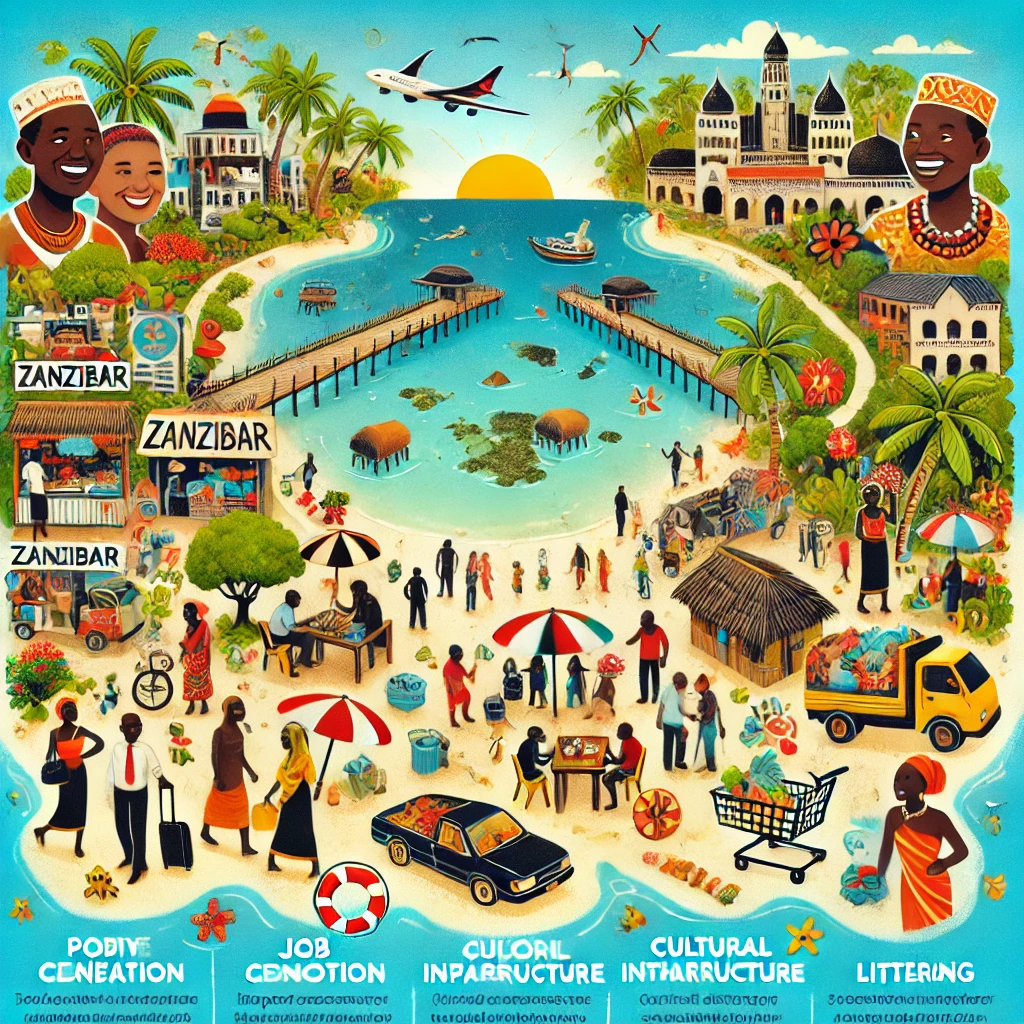
Tourism’s Impact on Zanzibar
Zanzibar, an exotic archipelago off the coast of Tanzania, is a dream destination for many travelers, known for its pristine beaches, vibrant culture, and rich history. However, like many popular tourist spots, the growing influx of visitors has had both positive and negative effects on the region. Let’s dive into the impacts of tourism on Zanzibar and explore the balance between development and sustainability.
1. Economic Benefits
Tourism plays a critical role in Zanzibar’s economy, contributing significantly to employment and revenue. The hospitality sector, including hotels, restaurants, and tour operators, provides jobs for thousands of locals. Additionally, the sale of locally made crafts, spices, and artwork supports small businesses and families. For many Zanzibaris, tourism is a vital source of livelihood.
2. Cultural Preservation and Exchange
Tourism has created opportunities to celebrate and preserve Zanzibar’s unique heritage. Stone Town, a UNESCO World Heritage Site, attracts visitors interested in its rich history and Swahili architecture. Cultural festivals like the Zanzibar International Film Festival (ZIFF) showcase local talent while encouraging cross-cultural exchange. Tourists also help to keep traditional practices alive by supporting activities like spice tours and dhow sailing.
3. Environmental Concerns
While tourism boosts the economy, it also puts pressure on Zanzibar’s fragile environment. Unregulated development, such as the construction of beachfront resorts, threatens the island’s ecosystems, including coral reefs and mangroves. Additionally, increased waste generation and pollution from tourist activities can harm marine life and reduce the pristine quality of Zanzibar’s beaches.
4. Overtourism
In peak seasons, overtourism can strain local infrastructure, from roads to water supplies. This can lead to challenges for residents, who sometimes face higher living costs and limited access to resources. The popularity of certain areas, like Nungwi Beach, has made them overcrowded, reducing the quality of experience for both locals and visitors.
5. Socio-Cultural Impacts
Tourism introduces foreign influences, which can lead to changes in local traditions and social dynamics. While exposure to new ideas can foster growth, it also risks diluting the authenticity of Zanzibar’s culture. Increased tourism may also contribute to income inequality, as profits often concentrate in the hands of a few investors rather than benefiting the wider community.
6. Sustainable Tourism Initiatives
In response to these challenges, Zanzibar is working to promote sustainable tourism. Efforts include eco-friendly hotels, marine conservation projects, and community-based tourism that empowers locals. Travelers are encouraged to respect the environment and support businesses that prioritize sustainability. For example, visiting locally owned accommodations or participating in ethical wildlife tours can help minimize the negative impact of tourism.
Conclusion
Tourism is both a blessing and a challenge for Zanzibar. While it brings economic growth and cultural exchange, it also creates environmental and social pressures that need to be managed carefully. By adopting sustainable practices and encouraging responsible travel, Zanzibar can continue to thrive as a top destination while protecting its natural beauty and cultural heritage for generations to come.
For more tips on improving your photography and editing skills, check out helpful guides to take your selfies to the next level.
Добавить комментарий