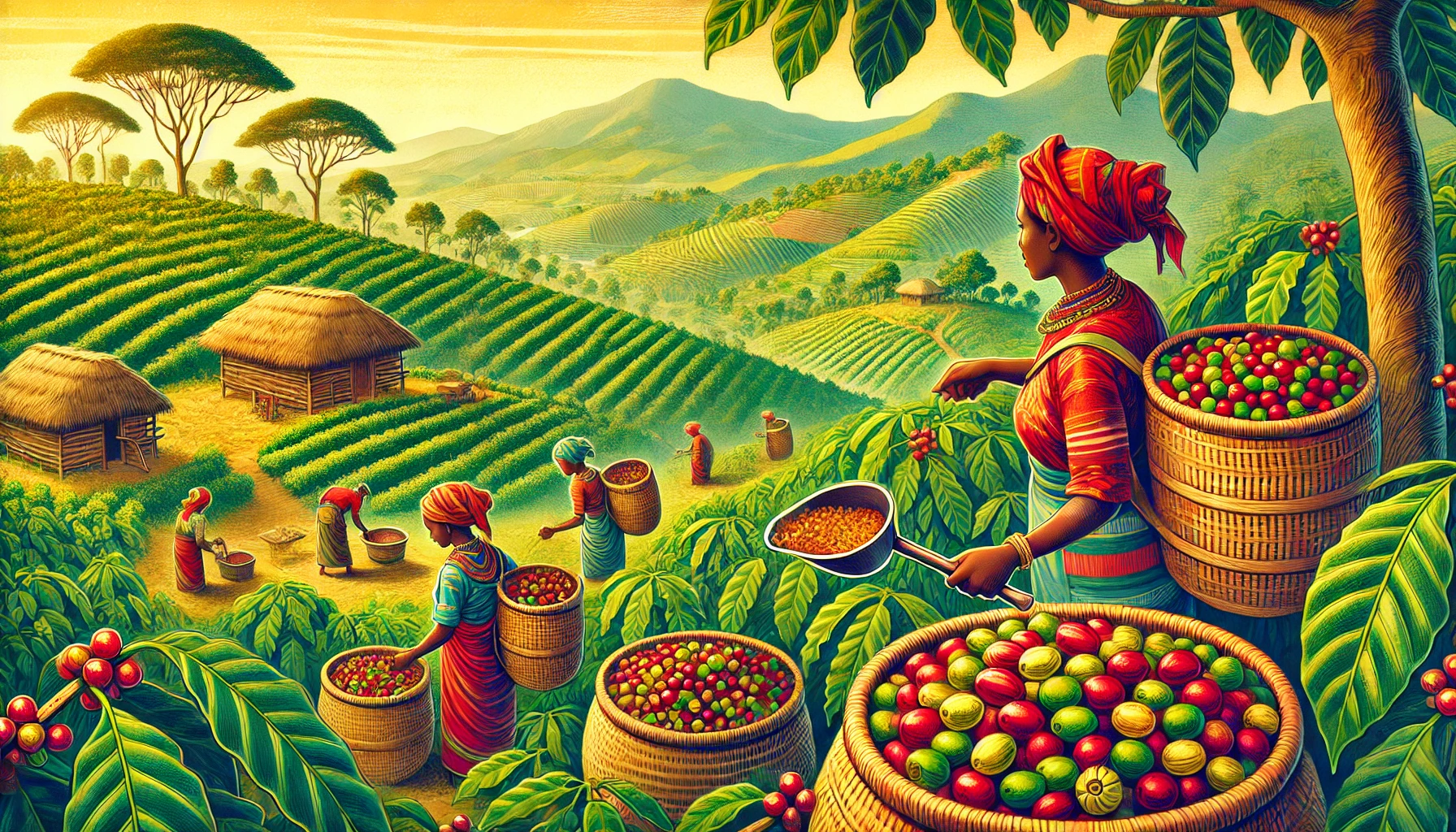
Coffee Production in Ethiopia
Ethiopia is often referred to as the birthplace of coffee, and its production is deeply intertwined with the country’s culture, history, and economy. Known for its rich flavors and unique varieties, Ethiopian coffee is celebrated worldwide for its exceptional quality. Let’s explore the fascinating world of coffee production in Ethiopia, from its origins to its global influence.
1. The Origins of Ethiopian Coffee
Ethiopia is widely regarded as the home of Arabica coffee, the world’s most popular coffee variety. According to legend, coffee was discovered in the 9th century by a goat herder named Kaldi, who noticed his goats became unusually energetic after eating the red cherries of a certain plant. This discovery eventually led to coffee’s global journey as one of the most beloved beverages.
2. Major Coffee-Growing Regions
Ethiopia’s diverse geography and climate make it ideal for coffee cultivation. The country’s coffee is typically grown in high-altitude regions, which contributes to its unique flavor profiles. The most notable coffee-growing regions include:
Sidama
Sidama is known for producing some of Ethiopia’s most famous coffees, with flavors often described as bright and citrusy. The region’s high altitudes and rich volcanic soils make it ideal for growing premium Arabica beans.
Yirgacheffe
Yirgacheffe coffee is considered among the best in the world, celebrated for its floral and fruity notes. This region primarily uses the washed (or wet) processing method, which enhances the clarity and brightness of the coffee’s flavors.
Harrar
Harrar is famous for its wild, naturally processed coffees, which often feature bold flavors with hints of chocolate and berry. Coffees from this region are highly sought after for their intense and distinctive taste.
Jimma
The Jimma region produces both washed and natural coffees, known for their full-bodied and slightly fruity profiles. It is one of Ethiopia’s largest coffee-growing areas.
Limu
Limu coffee is prized for its balanced flavor profile, with sweet, wine-like notes and a smooth body. Coffees from this region are often grown in shaded forests, contributing to their complexity.
3. Coffee Farming Practices
Ethiopian coffee is often grown using traditional, organic farming methods. The majority of Ethiopia’s coffee is produced by smallholder farmers who cultivate coffee on small plots of land. There are three primary methods of coffee cultivation in Ethiopia:
- Forest Coffee: Grown wild under natural forest canopies, this coffee is organic and highly sustainable.
- Garden Coffee: Grown near homes, garden coffee is cultivated with some level of human intervention, including pruning and weeding.
- Plantation Coffee: Large-scale farms owned by cooperatives or private enterprises produce this type of coffee, often with modern agricultural techniques.
4. Coffee Processing Methods
Ethiopia employs two primary coffee processing methods, each influencing the flavor and character of the final product:
- Natural (Dry) Processing: The coffee cherries are dried whole, allowing the fruit’s sugars to infuse the beans. This method produces coffee with fruity, wine-like flavors and a heavier body.
- Washed (Wet) Processing: The cherries are pulped and washed to remove the fruit before drying. This process results in a cleaner, brighter flavor profile with citrus and floral notes.
5. Coffee and Ethiopian Culture
Coffee is more than just a crop in Ethiopia; it’s a cultural cornerstone. The Ethiopian coffee ceremony is a vital tradition where coffee is roasted, brewed, and served in a ritualistic process. It’s a symbol of hospitality and community, often accompanied by conversation and shared experiences.
6. Global Influence of Ethiopian Coffee
Ethiopia is one of the world’s largest coffee producers, exporting millions of kilograms annually. Ethiopian coffee is highly valued on the global market for its unique flavor profiles and high quality. Single-origin Ethiopian beans are a staple for specialty coffee roasters worldwide, with varieties like Sidama and Yirgacheffe commanding premium prices.
7. Challenges and Sustainability
While Ethiopian coffee is celebrated globally, the industry faces challenges such as climate change, fluctuating prices, and limited infrastructure. Many organizations and cooperatives are working to address these issues by promoting sustainable farming practices, supporting smallholder farmers, and investing in fair trade initiatives.
8. Why Ethiopian Coffee is Unique
Ethiopian coffee is unmatched in its diversity and flavor complexity. The combination of high altitudes, fertile soils, and traditional farming methods produces beans with a wide range of taste profiles—from floral and citrusy to rich and chocolatey. Whether you’re savoring a cup of Yirgacheffe or exploring the bold flavors of Harrar, Ethiopian coffee offers a sensory experience like no other.
For more tips on improving your photography and editing skills, check out helpful guides to take your selfies to the next level.
Добавить комментарий