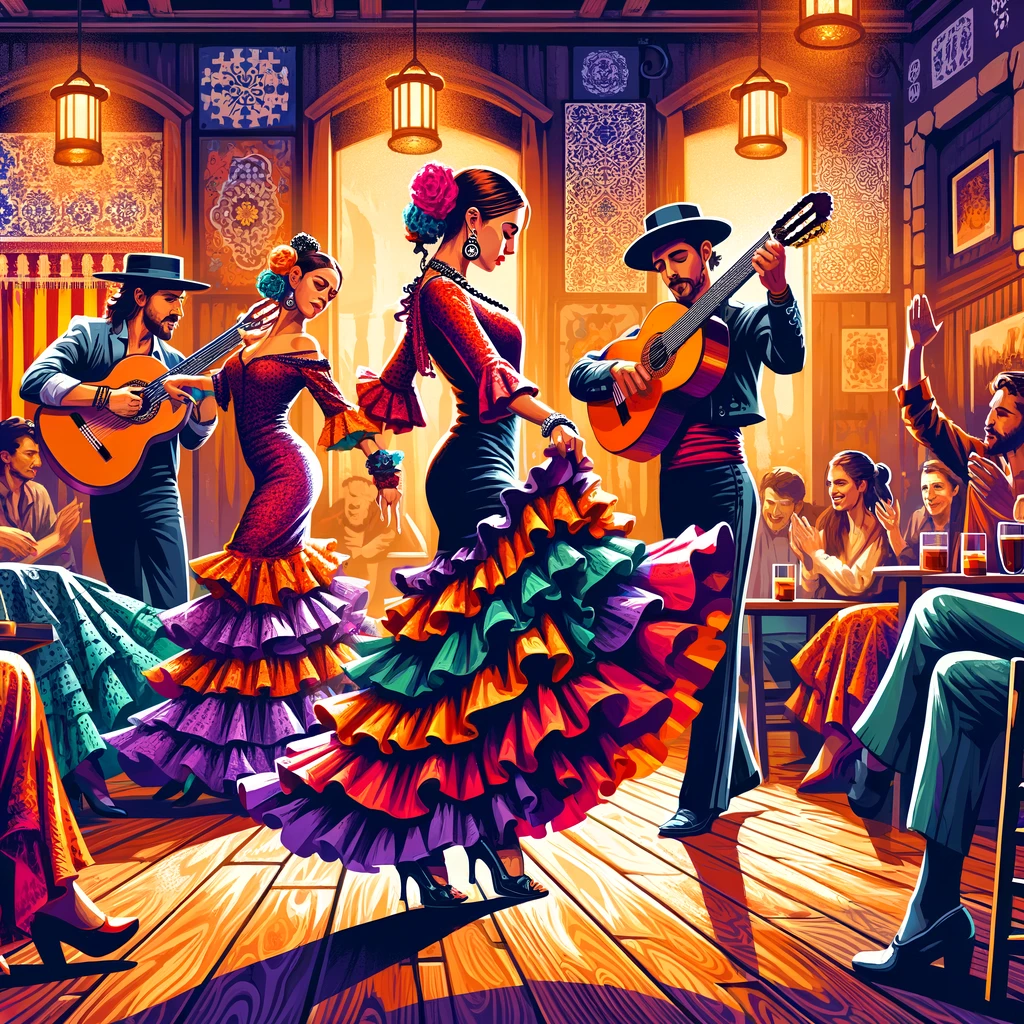
Traditional Dance Shows in Spain
Spain is a country with a rich cultural heritage, and its traditional dances reflect the passion, history, and diversity of its regions. From the fiery rhythms of flamenco in Andalusia to the energetic sardana of Catalonia, attending a traditional dance show is a must for experiencing the soul of Spain. Whether you’re exploring bustling cities or quiet towns, here’s your guide to the best traditional dance shows in Spain.
1. Flamenco Shows in Andalusia
a. Overview
- Flamenco, Spain’s most famous dance, originated in Andalusia and combines intricate footwork, passionate singing, and soulful guitar.
b. Best Places to See Flamenco
- Casa Patas (Madrid)
- Why It’s Special: Offers authentic flamenco performances in an intimate setting.
- Location: Calle de los Cañizares, 10, Madrid.
- El Palacio Andaluz (Seville)
- Why It’s Special: A grand venue with elaborate costumes and skilled performers.
- Location: Calle Matemáticos Rey Pastor y Castro, Seville.
- La Carbonería (Seville)
- Why It’s Special: A rustic, off-the-beaten-path venue offering traditional flamenco in a casual setting.
- Location: Calle Céspedes, 21, Seville.
c. Must-Know
- Flamenco features several styles, including the intense cante jondo and more upbeat alegrías.
2. Sardana in Catalonia
a. Overview
- The sardana is a traditional Catalan dance performed in a circle, symbolizing unity and community.
b. Best Places to See Sardana
- Plaça de la Catedral (Barcelona)
- Why It’s Special: Locals gather here on Sundays to perform the sardana, offering an authentic experience.
- Time: Typically held after morning mass.
- Festa Major de Gràcia (Barcelona)
- Why It’s Special: This vibrant neighborhood festival in August features sardana performances alongside other cultural activities.
c. Must-Know
- Sardana is accompanied by the cobla, a traditional wind and brass band.
3. Jota in Aragon
a. Overview
- The jota is a lively dance characterized by fast footwork and dramatic gestures, performed to guitar, castanets, and tambourines.
b. Best Places to See Jota
- Fiestas del Pilar (Zaragoza)
- Why It’s Special: Held in October, this festival includes spectacular jota performances as part of the celebrations.
- Highlight: Dancers in traditional Aragonese costumes.
- Teatro Principal (Zaragoza)
- Why It’s Special: Offers professional performances of traditional jota dance and music.
- Location: Calle Coso, 57, Zaragoza.
c. Must-Know
- The jota is not exclusive to Aragon and has regional variations in Valencia and Castile.
4. Muñeira in Galicia
a. Overview
- The muñeira is a spirited dance from Galicia and Asturias, performed to the sound of gaita (bagpipes).
b. Best Places to See Muñeira
- Festival Internacional do Mundo Celta (Ortigueira, Galicia)
- Why It’s Special: A celebration of Celtic culture, featuring traditional Galician dances and music.
- Time: Held every July.
- Casa das Crechas (Santiago de Compostela)
- Why It’s Special: A cozy venue that showcases traditional Galician music and dance.
- Location: Rua Vía Sacra, 3, Santiago de Compostela.
c. Must-Know
- The muñeira often involves couples or groups, with dancers moving in circles or lines.
5. Paso Doble in Valencia
a. Overview
- The paso doble, inspired by bullfighting, is a dramatic and theatrical dance that evokes the flair of the Spanish corrida.
b. Best Places to See Paso Doble
- Las Fallas Festival (Valencia)
- Why It’s Special: A vibrant celebration in March featuring paso doble performances alongside parades and fireworks.
- Highlight: Dancers often perform in traditional costumes.
- Palau de la Música (Valencia)
- Why It’s Special: Hosts performances of paso doble as part of its cultural programming.
- Location: Passeig de l’Albereda, 30, Valencia.
c. Must-Know
- Paso doble is performed as a ballroom dance internationally but has deep roots in Spanish tradition.
6. Bolero in Madrid
a. Overview
- The bolero is a slow, romantic dance featuring graceful movements and intricate arm gestures, accompanied by guitar and percussion.
b. Best Places to See Bolero
- Teatro de la Zarzuela (Madrid)
- Why It’s Special: Dedicated to Spanish operetta and dance, including traditional bolero performances.
- Location: Calle Jovellanos, 4, Madrid.
- Círculo de Bellas Artes (Madrid)
- Why It’s Special: Hosts cultural events that often include bolero music and dance.
- Location: Calle de Alcalá, 42, Madrid.
c. Must-Know
- Bolero is considered one of the oldest traditional dances in Spain, with origins in the 18th century.
7. Zambra in Granada
a. Overview
- The zambra is a flamenco-inspired dance with Moorish roots, traditionally performed at celebrations in caves around Granada.
b. Best Places to See Zambra
- Sacromonte Caves (Granada)
- Why It’s Special: Watch authentic zambra performances in the atmospheric gypsy caves of Sacromonte.
- Highlight: The intimate setting makes for an unforgettable experience.
- Venta El Gallo (Granada)
- Why It’s Special: A traditional venue offering dinner and zambra shows with stunning views of the Alhambra.
- Location: Camino del Sacromonte, 96, Granada.
c. Must-Know
- Zambra dances often tell stories of love and passion through expressive movements.
8. Fandango in Andalusia
a. Overview
- The fandango is a lively and flirtatious dance that varies across regions but often includes intricate footwork and guitar accompaniment.
b. Best Places to See Fandango
- Andalusian Festivals (Various Locations)
- Why It’s Special: Fandangos are commonly performed during regional fairs and festivals.
- Highlight: Dancers often wear traditional Andalusian attire.
- Museo del Baile Flamenco (Seville)
- Why It’s Special: Features performances that include fandango as part of a broader flamenco repertoire.
- Location: Calle Manuel Rojas Marcos, 3, Seville.
c. Must-Know
- The fandango is considered one of Spain’s oldest folk dances, with its roots in rural Andalusia.
Tips for Enjoying Traditional Dance Shows in Spain
- Book in Advance: Popular venues and festivals sell out quickly, so secure your tickets ahead of time.
- Arrive Early: Many shows have unassigned seating, so arrive early for the best view.
- Combine with Dinner: Many venues, especially flamenco tablaos, offer dinner and show packages for an immersive experience.
- Learn the History: A little background knowledge about the dances enhances your appreciation of the performance.
- Explore Regional Shows: Each region of Spain has its own unique dance traditions—venture beyond flamenco for a full cultural experience.
Final Thoughts
Spain’s traditional dance shows offer a captivating glimpse into its vibrant culture and history. Whether it’s the dramatic footwork of flamenco in Seville, the unity of sardana in Barcelona, or the romantic bolero in Madrid, each performance tells a story of passion and tradition.
For more cultural tips and travel inspiration, check out helpful guides to plan your perfect Spanish adventure.
Добавить комментарий