Why Are American Cities So Car-Dependent?
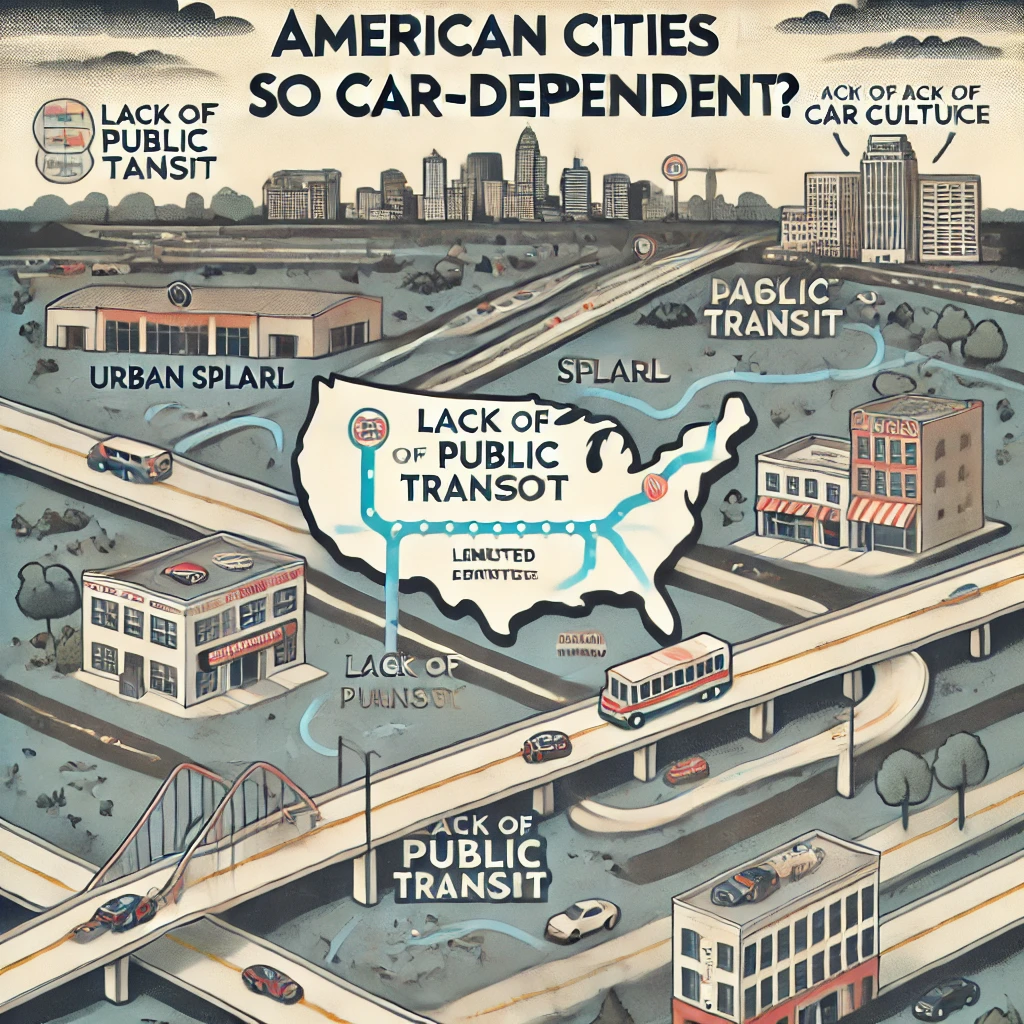
American cities are known for their reliance on cars, with sprawling suburbs, wide highways, and limited public transportation options in many areas. This car-dependence stands in stark contrast to cities in Europe or Asia, where public transit, walking, and cycling play a more central role. But how did American cities become so reliant on cars? The reasons lie in a combination of historical choices, urban planning policies, and cultural preferences. Here’s a closer look at why cars dominate transportation in the US.
1. Urban Sprawl and Suburban Development
One of the biggest reasons for car-dependence in American cities is urban sprawl, where cities spread out over large areas with low-density housing and commercial spaces.
- Post-WWII Suburban Boom: After World War II, millions of Americans moved to the suburbs, where affordable single-family homes were built far from urban centers.
- Low-Density Design: Suburbs were designed with wide streets and separated residential, commercial, and industrial zones, making walking or biking impractical.
- Long Commutes: Because homes, jobs, and services were spread out, cars became a necessity to navigate the vast distances.
Why It Matters: Urban sprawl created environments where cars are often the only viable means of transportation.
2. Highway-Centric Infrastructure
The development of highways and car-centric infrastructure prioritized automobiles over other forms of transportation.
- Federal Highway Act of 1956: This act funded the construction of the Interstate Highway System, connecting cities and suburbs with highways and freeways.
- Decline of Public Transit: As highways expanded, funding for public transportation declined, leading to the dismantling of streetcars and rail systems in many cities.
- Car-Friendly Design: Cities built wide roads, large parking lots, and car-oriented infrastructure, often at the expense of sidewalks, bike lanes, and transit networks.
Why It Matters: The focus on highways and cars left little room for alternative transportation options to thrive.
3. Zoning Laws and Single-Use Planning
Zoning laws in the US have historically promoted single-use planning, where residential, commercial, and industrial areas are separated.
- Residential Zoning: Suburbs were zoned for single-family homes, with restrictions that prevented mixed-use developments (e.g., combining homes, shops, and offices in the same area).
- Car-Centric Development: Shopping malls, office parks, and schools were built far from residential areas, requiring a car to reach them.
- Walkability Challenges: Single-use zoning discouraged compact, walkable neighborhoods where people could live, work, and shop within a short distance.
Why It Matters: Zoning laws reinforced car-dependence by making alternatives like walking and public transit impractical.
4. Decline of Public Transit Systems
In the early 20th century, many American cities had robust public transportation systems, including streetcars and intercity rail networks. However, several factors contributed to their decline:
- The Rise of Automobiles: The affordability of cars, especially after the introduction of the Ford Model T, reduced reliance on public transit.
- Dismantling of Streetcar Systems: Many streetcar networks were purchased and shut down by car and tire companies to promote car sales (known as the «Great American Streetcar Scandal»).
- Underfunding: Over time, public transit systems were neglected and underfunded, leading to reduced service and reliability.
Why It Matters: The decline of public transit forced people to rely on cars, especially in cities that didn’t invest in modernizing transit systems.
5. Cultural Preferences for Cars
Cars are deeply ingrained in American culture, symbolizing freedom, independence, and convenience.
- Car Ownership as a Status Symbol: For decades, owning a car has been seen as a sign of success and social mobility in the US.
- Love for Road Trips: The vast size of the US and the appeal of road trips fostered a cultural attachment to cars.
- Advertising Influence: The auto industry has heavily marketed cars as essential to the «American Dream,» reinforcing their central role in daily life.
Why It Matters: Cultural attitudes toward cars have made them the preferred mode of transportation, even in places where alternatives are available.
6. Low Population Density
The US has a relatively low population density compared to many other countries, which affects transportation systems.
- Spread-Out Cities: American cities cover large geographic areas, making it challenging to build efficient public transportation systems that can serve everyone.
- Limited Transit Viability: In less densely populated areas, public transit is less practical because there aren’t enough riders to justify frequent service.
Why It Matters: Low density reinforces the need for cars to cover the long distances between destinations.
7. Cheap Gasoline and Car Ownership Costs
Historically, gas prices in the US have been lower than in many other countries due to subsidies and abundant oil production.
- Affordable Gas: Lower fuel costs make driving more economical for the average American.
- Subsidized Roads: Public funds are used to maintain roads and highways, keeping driving costs low compared to investing in alternatives like transit.
- Affordable Car Ownership: Compared to countries with higher taxes on cars and gas, owning and maintaining a car is relatively affordable in the US.
Why It Matters: Cheap gas and subsidies for roads make driving the default choice for most Americans.
8. Parking Abundance
American cities are designed with an emphasis on parking, which encourages car use.
- Mandatory Parking Minimums: Many cities require new developments to include a certain number of parking spaces, increasing the availability of parking.
- Free or Low-Cost Parking: Parking is often free or inexpensive, reducing the cost of driving compared to public transit.
- Urban Space for Parking: Large portions of city space are dedicated to parking lots and garages, often at the expense of green spaces or pedestrian-friendly areas.
Why It Matters: Ample parking makes driving more convenient and discourages other transportation modes.
9. Resistance to Change
Efforts to reduce car-dependence and improve public transit often face resistance.
- Political Opposition: Funding for public transportation projects is frequently challenged by politicians and interest groups who prioritize road construction.
- NIMBYism («Not In My Backyard»): Residents often oppose new transit lines, bike lanes, or higher-density developments due to concerns about property values, traffic, or noise.
- Slow Policy Changes: Urban planning changes, like rezoning for mixed-use developments or expanding transit systems, take years or decades to implement.
Why It Matters: Resistance to change delays progress toward creating less car-dependent cities.
10. Focus on Individualism Over Public Goods
The US places a strong cultural emphasis on individualism, which influences transportation preferences.
- Cars as Personal Freedom: Cars allow individuals to travel on their own schedules, without relying on public systems.
- Public Transit Stigma: Public transit is sometimes seen as a «last resort» for those who can’t afford a car, rather than a viable alternative for everyone.
- Investment Priorities: The preference for individual convenience often overshadows investment in shared infrastructure like transit or bike lanes.
Why It Matters: Individualism reinforces car-dependence by prioritizing personal convenience over collective solutions.
Final Thoughts
The car-dependence of American cities is the result of decades of urban planning decisions, cultural preferences, and economic factors. From the postwar suburban boom to zoning laws and cheap gas, these factors have shaped cities around the automobile. While efforts are underway in some cities to promote walkability, cycling, and public transit, reversing decades of car-centric development is a slow and challenging process.
For now, cars remain central to life in most American cities, but embracing alternative transportation modes can help reduce traffic, improve sustainability, and create more livable communities.
For more tips on improving your photography and editing skills, check out helpful guides to take your selfies to the next level.
Добавить комментарий